Water Deer Interaction with Humans - Conservation Impacts
Historically considered 'ecologically neutral', causing negligible environmental impact, water deer were generally deemed weak invaders compared with species such as muntjac and fallow. The UK Government now regards them as a non-native species "considered to be invasive", although their impacts in England remain poorly studied. As populations have grown across parts of central and eastern England in recent years, evidence of impacts on nature reserves has accumulated, with damage to reedbeds, wetland flora, lichen heaths, and ground-nesting birds reported at sites including the Marston Vale, Orford Ness, the Norfolk Broads, and WWT Welney.
The damage threshold appears highly site-dependent, varying with habitat type, season, the presence of other deer species, and local land use – a point explored further, alongside the section on the water deer's agricultural impact. While published data remain sparse and population management is still relatively rare on nature reserves, awareness of the species' potential impacts is clearly growing, and the picture in South Korea -- where water deer are designated a harmful species and culled in their tens of thousands annually -- may offer a cautionary precedent.
Table of contents
- Conservation impacts: an introduction
- Damage thresholds on nature reserves
- Woodwalton Fen: grassland and sallow
- Reedbeds and grazing marshes
- Species impacts and the case for culling
- References
Conservation impacts: an introduction
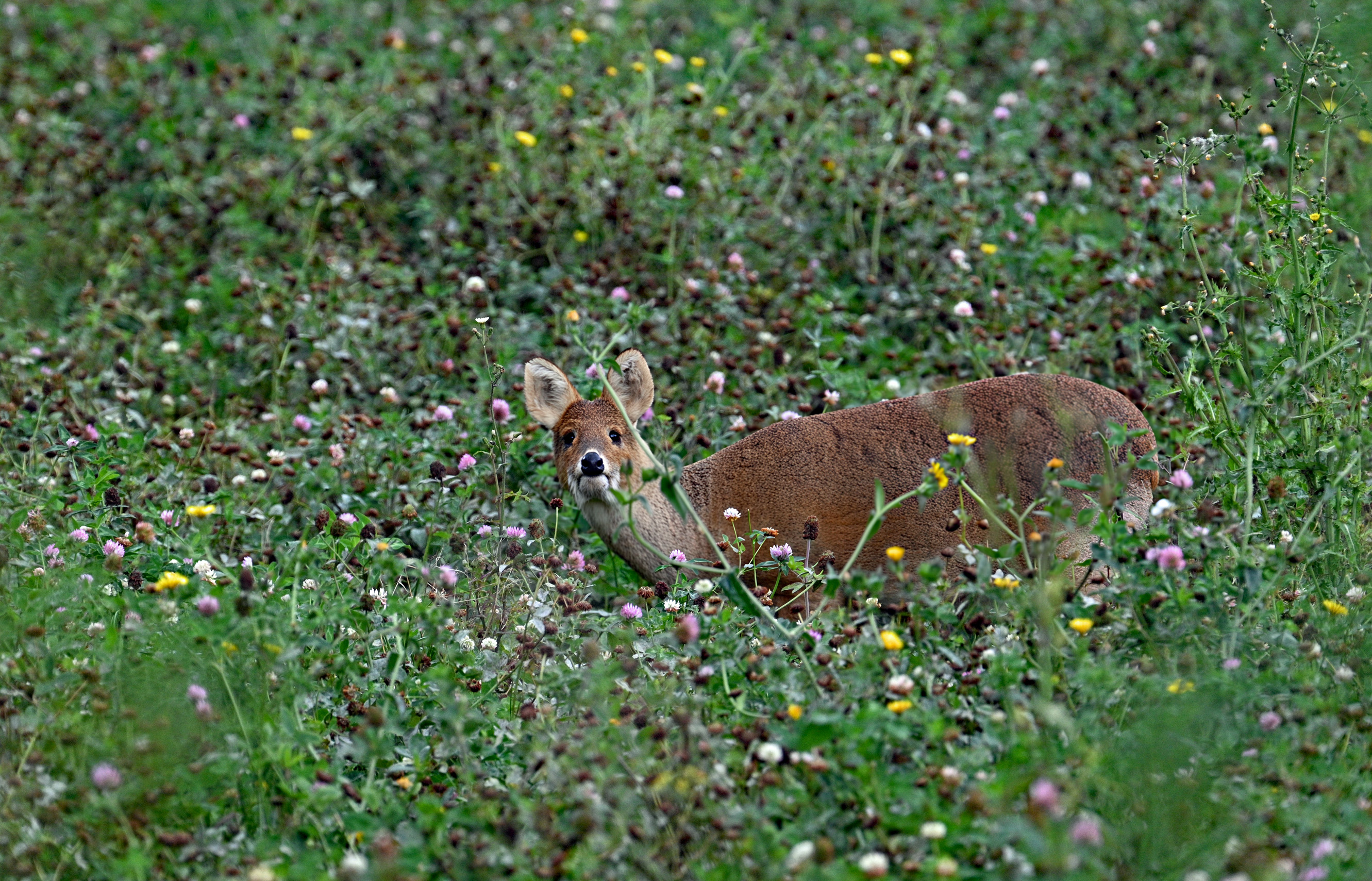
Water deer remain arguably our least-studied deer, with significant gaps in our understanding of their biology, behaviour, and impacts on nature reserves and other conservation interests. Populations have increased considerably in recent years, both here and apparently across parts of their Korean range, and their impact is likely to have grown accordingly, though published data remain scarce. As Arnold Cooke noted in his 2019 book Muntjac and Water Deer, water deer must eat, and their biomass means the potential exists for real impacts on native flora and fauna. Compounding the difficulty is that water deer coexist with other species that feed in similar ways, making it hard (sometimes impossible) to attribute damage to one species without robust monitoring, which currently exists for only a handful of sites. Water deer also tend to move quite widely within their ranges, producing what Bedfordshire gamekeeper Paul Childerley calls "blanket grazing" rather than concentrated hotspots, which makes damage harder to detect and address. What follows is a summary of the available data on water deer's impact on nature reserves and conservation interests; I would be interested to hear from others with experience of the subject.
Damage thresholds on nature reserves
Almost no published assessments of water deer densities or impacts on nature reserves have been published, making it extremely difficult to assess the question of how many deer is too many on a reserve. The only long-term study of this species in the wild in England comes in the form of the four-decade-long observations of Arnold Cooke and Lynne Farrell in and around Woodwalton Fen in Cambridgeshire. Cooke told me that at Woodwalton Fen during the 1970s and 80s, unacceptable grazing impacts became more likely when densities reached around 80 per km2 (0.8 per ha), and this remains the empirical estimate of a damage density threshold of which I'm aware.
Even at Woodwalton, though, deer distribution wasn't fixed. In his unpublished 2019/20 Deer Surveillance Report for Woodwalton Fen, Cooke noted that water deer largely deserted fields on the reserve once livestock were introduced, and that clearing a large stand of elephant grass (Miscanthus sp.) caused the population to fall. Density and damage figures for a given site are therefore best read as a snapshot rather than a constant – land-management changes elsewhere on a reserve (or neighbouring ground) can shift where, and how heavily, deer feed, complicating any straightforward reading of the numbers above.
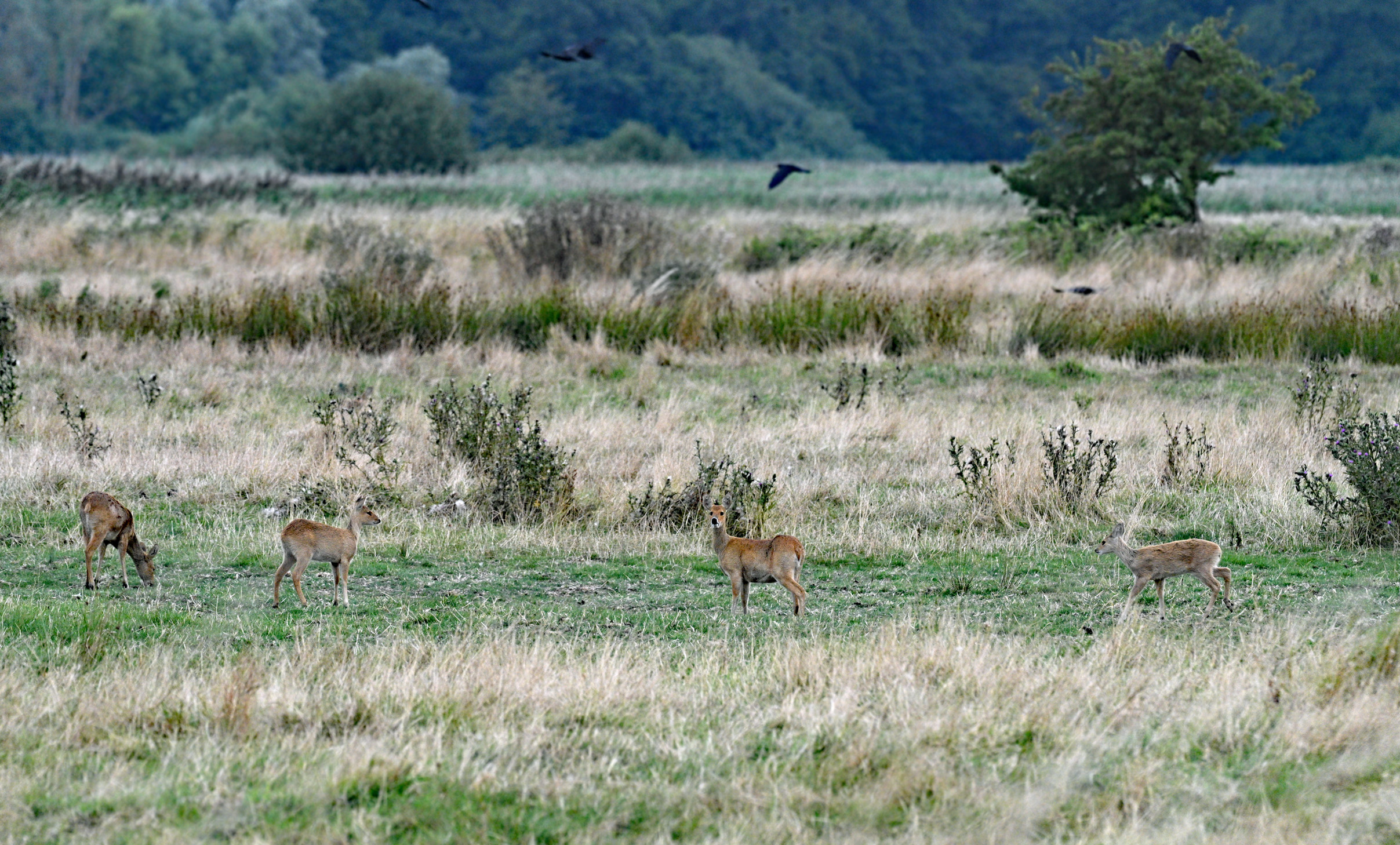
In Muntjac and Water Deer, Cooke recounted discussions with Tim Strudwick, the RSPB warden at Strumpshaw Fen in Norfolk, who had not noticed any problems from water deer grazing or browsing in 2010, despite the local summer density being about 20 per km2 (0.2 per ha). Similarly, in September 2024, Suffolk Wildlife Trust Deer Manager Matt Gooch told me that observational surveys of their reserves in the north-east of the county, where water deer are relatively abundant, revealed no discernible impact. This was true even at Carlton Marshes near Lowestoft, which had at least 100 water deer on the 486 ha (1,200 acres) reserve – a density of 21 per km2 (0.21 per ha).
Nonetheless, impacts of water deer and red deer (Cervus elaphus) activity have recently become apparent on the Broads National Park in Norfolk. In a report to The Broads Authority in 2025, Mike Harding gave a mean site density on the Broads of nearly 8 per km2 (0.08 per ha), but the distribution was not even and Ben Harrower, Director of BH Wildlife Consultancy and part of the team conducting the drone surveys, told me they recorded densities approaching 150 per km2 (1.5 per ha) in the reedbeds. (See also: Population & Abundance – England)
Woodwalton Fen: grassland and sallow

In his International Urban Ecology Review paper on the species in Britain, Arnold Cooke noted that water deer were feeding on newly-sown farm grassland at Woodwalton Fen during the spring of 2009, and while this was of no consequence within the Great Fen conservation project, it could've been important had the intention been to graze the fields commercially with livestock. At the time, Cooke assessed the feeding impact of water deer on the reserve as "intermediate stage", showing slight impact. The only indicator that provided any grounds for concern was damage to the apparently-highly-palatable comfrey (Symphytum officinale) during the autumn – 35% of sample plots showed evidence of grazing, and Cooke noted:
"Although grazing on comfrey itself is not an issue for the reserve's managers, it could indicate that nationally rarer, but locally common, species might potentially be at risk."
While general browsing damage might be low, there are circumstances where water deer may have a more significant impact, such as impairing or preventing the regrowth of sallow (Salix caprea) coppice. In his 2012 report to Nature of Cambridgeshire, Cooke described how browsing altered the vegetation structure on the reserve:
"The impact of the brief, but fairly frequent, episodes of browsing on the willow was often to create and maintain 'micro-lawns' of densely-packed new growth a few centimetres in height and perhaps 10 or more centimetres [4 in.] across. From a distance these resembled patches of moss. These fast growing young stems seemed very palatable to the deer."
In 2010, browsing was considered the reason three of 15 coppiced sallow plots in the north of Woodwalton Fen had unacceptably poor growth. Many more water deer than Reeves's muntjac (Muntiacus reevesi) were recorded in the area, suggesting they were responsible for most of the damage. In a separate study on the reserve, trailcam footage revealed that water deer accounted for almost 61% of browsing events recorded on young sallow coppice regrowth, with muntjac accounting for the remaining 39% – both species all but ignored ivy.

In the spring of 2014, Cooke undertook a small trial to test whether an impact on regrowth was still occurring at the fen. A patch of sallow was selected in an area with a high deer density and, in May, leafing stems were cut at around 40 cm (16 in.) above ground, surrounding vegetation was cut and flattened, and remote cameras were installed. The footage during June and July suggested water deer were more active in the area than muntjac and were responsible for 92% of the browsing. The level of browsing was judged to be unacceptable -- no regrowth exceeded a metre (3.3 ft) -- and while several water deer were identified on the trailcams, a buck with a distinctive broken tusk was responsible for 74% of the damage, suggesting that some individuals may become habitual "problem" animals for sallow regrowth.
Reedbeds and grazing marshes
Writing in the Norfolk Bird and Mammal Report covering 2000, published the following year, David Nobbs, then warden at Wheatfen reserve in the Yare Valley just south of Norwich, considered that water deer made "an attractive addition to the fauna of Wheatfen and cause little damage on the reserve". Similarly, in their report on fenland ecosystem services, published in 2011, Centre for Ecology and Hydrology ecologists Jerry Tallowin, Owen Mountford, and Joanna Savage wrote:
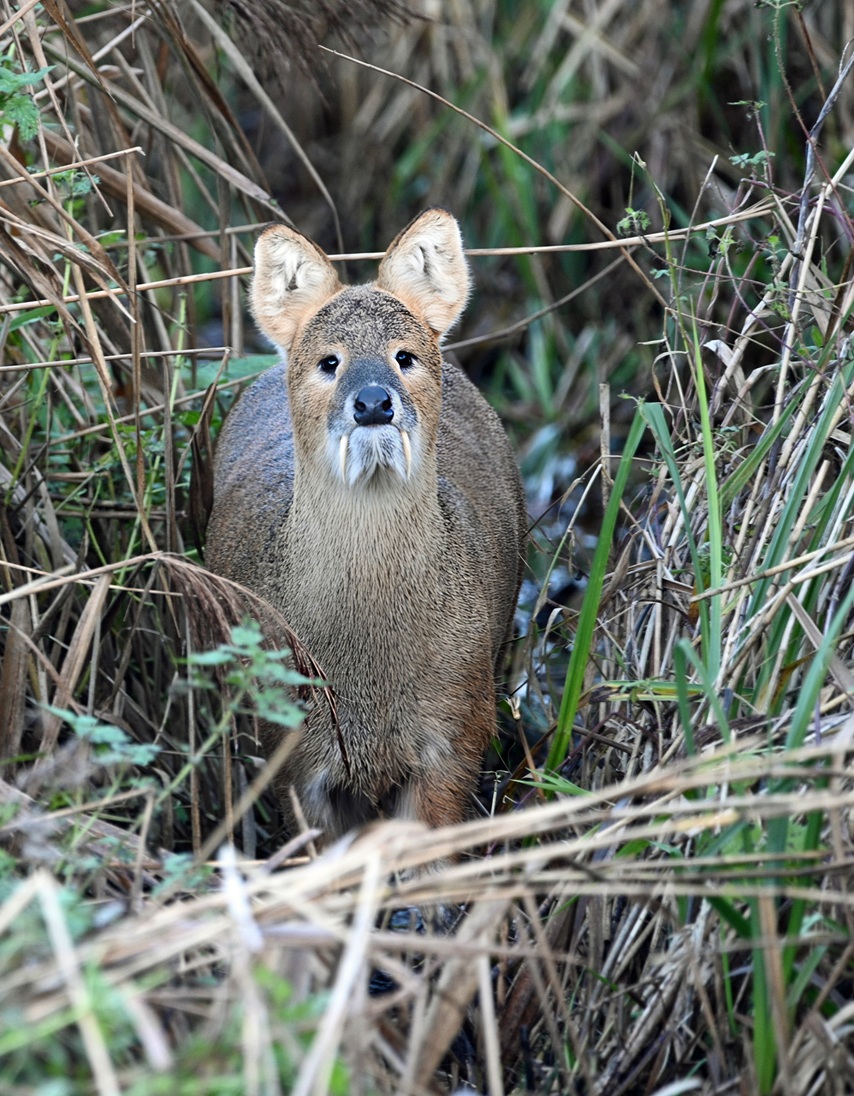
"The Chinese Water-deer (Hydropotes inermis) is locally frequent in wetlands in eastern England, but there is no suggestion that their grazing is having an unduly damaging impact on swamp communities."
One wonders if this view might now have shifted given the species expansion within the county. Certainly, further west, in Bedfordshire, Senior Ranger at the Forest of Marston Vale Nicola Ceconi told me in June 2024 that the reserve did not survey the water deer population or carry out any culling as they weren't seeing any significant impacts from the deer, though they were keeping an eye on the situation:
"Generally speaking, we do find that the Chinese water deer do less damage than the muntjac, but we are seeing more of them in recent years, and they are definitely browsing the hedgerows in the wetlands."
By the spring of 2026, however, the view had shifted as browsing damage to bluebells and herb layers on the reserve had become more evident and a management plan was being drawn up. Likewise, in August 2026, Suffolk-based pest controller Jonathan Tunmore told me that the landowner of a permission he manages for deer in east Norfolk has recently begun complaining about the water deer one of the grazing marshes, having previously asked for them not to be shot because he liked seeing them around.
This shift in perception seems to be part of a bigger picture and, in 2025, Forestry Commission East and East Anglia Deer Manager David Hooton told me that the Commission is receiving increasing reports of water deer impacts within nature reserves and wetland habitats:
"We have seen significant populations of [water deer] developing in East England over the last 10 years, based on the fact that there was thought to be little impact from them. Having met a few owners in the Norfolk Broads recently we are seeing subtle changes in composition of floral interests in grazing marshes, and also impacts to reed beds, attributed to [water deer] and red deer, often difficult to tell the differing impacts apart in reed beds. Reed cutters are reporting significantly less growth on reeds than a few years ago, this has coincided with the increases in both [water deer] and red deer."
David went on to say that one landowner near Lowestoft believes that an increase in water deer on his grazing marshes has resulted in fewer flowering plants and competition for grazing with his cattle.
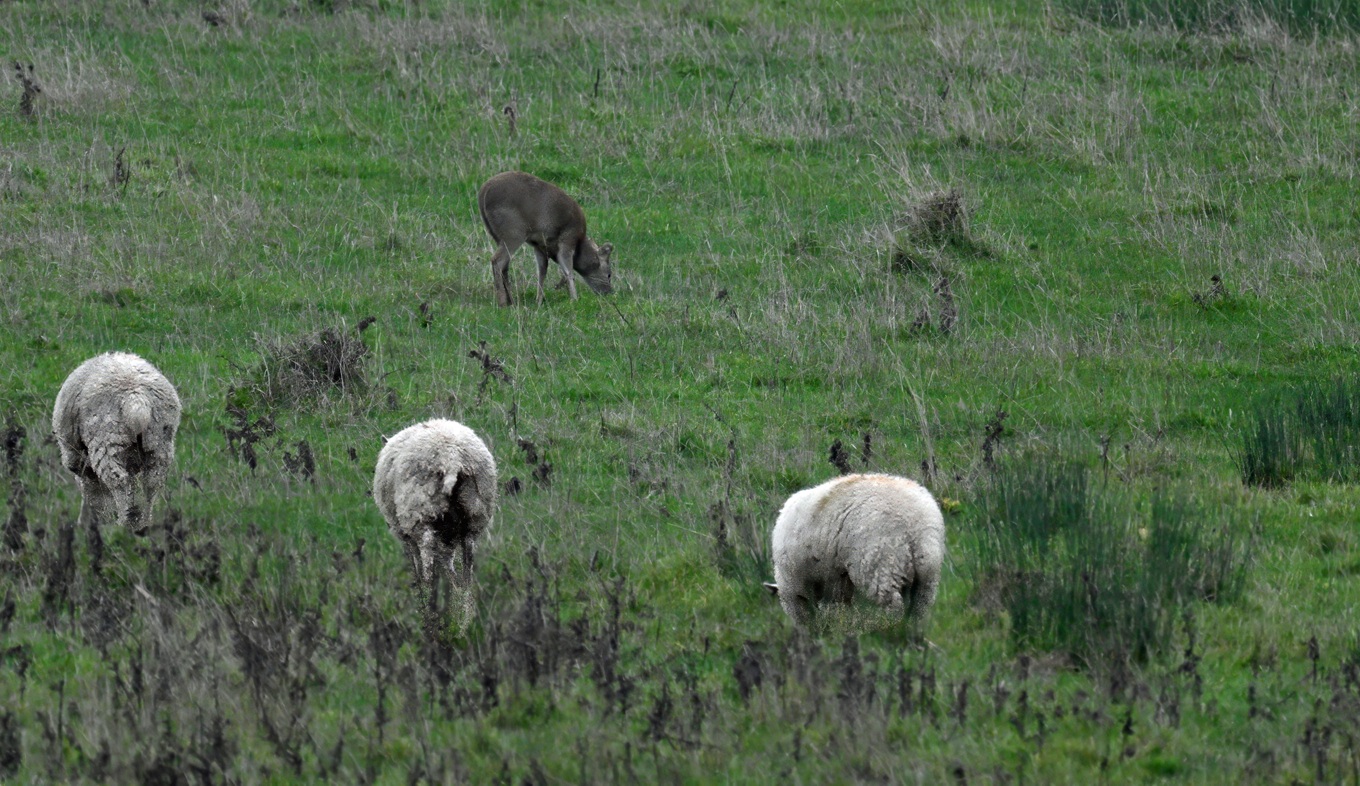
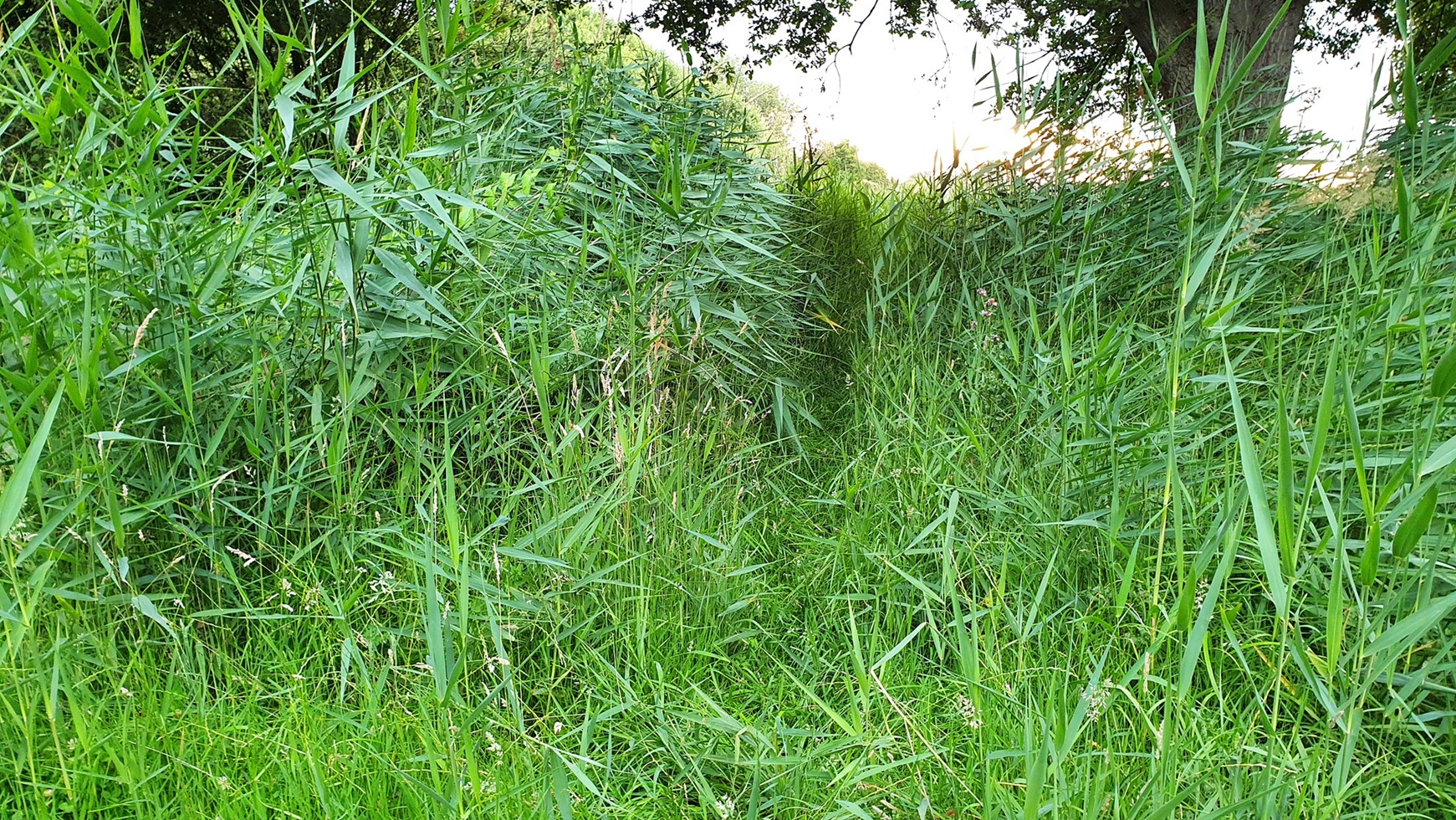
Michael Anker, Project Lead for the Norfolk Deer and Wild Venison Strategy, described to me the impacts felt more broadly across Norfolk: beyond eating and lying in vegetation, water deer create trackways -- well-worn paths of trampled vegetation between resting and feeding sites -- through fields and reedbeds, and fill in ditches as they cross them, disrupting drainage. Andrea Kelly, Environment Policy Adviser at the Broads Authority, added a further concern: trackways in reedbeds concentrate animal traffic, breaking the surface of peat-based sediment and churning the soil, which degrades the peat, triggers carbon oxidisation, and ultimately releases greenhouse gases. This structural deterioration can also make it impossible to get machinery onto Broadland reedbeds where trackways are dense, with unknown consequences for the species that depend on the management they undertake.
Alongside the mechanical damage these trackways inflict on the ecosystem, concerns have been raised that they might allow foxes easier access to nesting birds and protected species (e.g., bitterns, crane, and marsh harriers), though if deer paths through the reeds do benefit fox ingress, they might equally increase fawn mortality, given that foxes are likely a significant predator of fawns. This remains a concern for some reserves on the Broads, but in a correspondence with Arnold Cooke in 2016, Tim Strudwick, the RSPB warden at Strumpshaw Fen in Norfolk, explained that this concern had not been realised on the reserve. Indeed, responding to a Broads Authority survey circulated to landowners and managers in late 2024, the RSPB suggested that deer trackways through reedbeds could actually serve as conduits for species dispersal, including for the critically endangered fen orchid (Liparis loeselii), and may help circulate good quality water around the fen.
Water deer may also pose a challenge for nature reserves working to expand woodland and wildflower cover under large-scale habitat restoration programmes. In November 2025, J. Gumble & Sons Hunting and Fishing published a Facebook post ("The Hidden Impact of Chinese Water Deer in Cambridgeshire") characterising the species as an escalating concern in the county, claiming that rapidly rising numbers within Fenland reserves are hampering conservation managers' efforts to protect plant communities. Describing water deer as "one of the fastest-growing wildlife problems in East Anglia", the post cited heavy grazing pressure on reedbeds, sedges, wetland flora, young willows, and regenerating growth in restored meadows, and suggested that impacts are increasingly felt across a broad range of stakeholders, including farmers, conservationists, land managers, motorists, and those engaged in habitat restoration. The post also alleged bark stripping on tender shoots, inhibiting woodland and scrub regeneration -- though empirical data supporting this in water deer are limited -- and implicated the species in rising road traffic collisions, attributing this partly to what it described as "shockingly high reproduction rates". The post generated considerable social media engagement, being shared more than 120 times and attracting over 400 comments, a substantial number of which called for greater access for shooting and population control on private land.
Species impacts and the case for culling
While awareness of the impacts of water deer at high densities appears to be growing, population management remains limited across many nature reserves. This may be because damage frequently seems not to be considered significant enough to justify culling, as Suffolk Wildlife Trust Deer Manager Matt Gooch told me was the case for all the Trust's reserves. It may also reflect the reputational sensitivities that lethal control of deer can attract. The RSPB has come under fire from animal rights campaigners for allowing red deer to be shot at its Minsmere and Leighton Moss reserves, for example, while in late 2024 local residents campaigned heavily against plans by Leicestershire and Rutland Wildlife Trust to shoot muntjac on a reserve at Holwell near Melton Mowbray. Under some circumstances, however, damage may be sufficient for a conservation body to act.

Orford Ness is a coastal shingle spit in Suffolk that covers about 888 ha (2,194 acres) and is owned and managed by the National Trust. In a note in Essex Naturalist in 2022, John Dobson referenced a conversation with the late naturalist Steve Piotrowski, who reported that water deer were causing considerable damage to the SSSI, particularly through winter grazing of rare lichens. In correspondence during January 2025, Area Manager Sam Cooper confirmed that a cull became necessary. Despite conflicting reports from local stalkers about whether a cull has happened yet, Cooper explained that the population had grown to the point where deer were damaging the shingle crust, which can take a decade or more to recover, and disturbing the wetland grazing marshes used by ground-nesting birds, resulting in nest abandonment and increased predation of eggs and chicks. He emphasised that vegetated shingle of the type found at Orford Ness is both extremely rare and exceptionally fragile: trampling destroys the stone structure necessary for moisture retention and plant establishment, with impacts that can be long-lasting or permanent. Beyond trampling, deer were also grazing the ground flora -- including the rare sea campion (Silene uniflora) and sea beet (Beta vulgaris subsp. maritima) -- placing significant pressure on both the lichen heaths and the wider shingle plant community. Some egg trampling was also suspected, though no direct evidence had been recorded.
Orford Ness may be the first reserve to have at least investigated culling water deer, but others seem likely to follow. In December 2025, Michael Anker told me that his team had been asked to look at reducing water deer numbers at WWT Welney -- approximately 526 ha (1,300 acres) of prime wetland habitat on the Ouse Washes in Cambridgeshire -- where overabundance appears to be disturbing nesting black-tailed godwit (Limosa limosa). Management of water deer, alongside red deer, on the Norfolk Broads also appears inevitable. In the Broads Authority Report on deer impacts mentioned above, Mike Harding noted that thermal drone surveys identified Hydropotes as the most abundant deer in the area, particularly in the fens and marshes of the southern catchments, where densities may exceed 100 per km2 (1 per ha) – above the threshold reported by Cooke to trigger damage at Woodwalton. Increased movement of red and water deer through reedbeds appears to be reducing reed height, dominance, and flowering, with knock-on effects for habitat specialists including bittern (Botaurus stellaris), which has declined within the National Park in recent years. Browsing damage has also been reported on milk parsley (Peucedanum palustre), a critical larval foodplant for the endangered swallowtail butterfly (Papilio machaon). Further survey work is underway to better characterise these relationships.
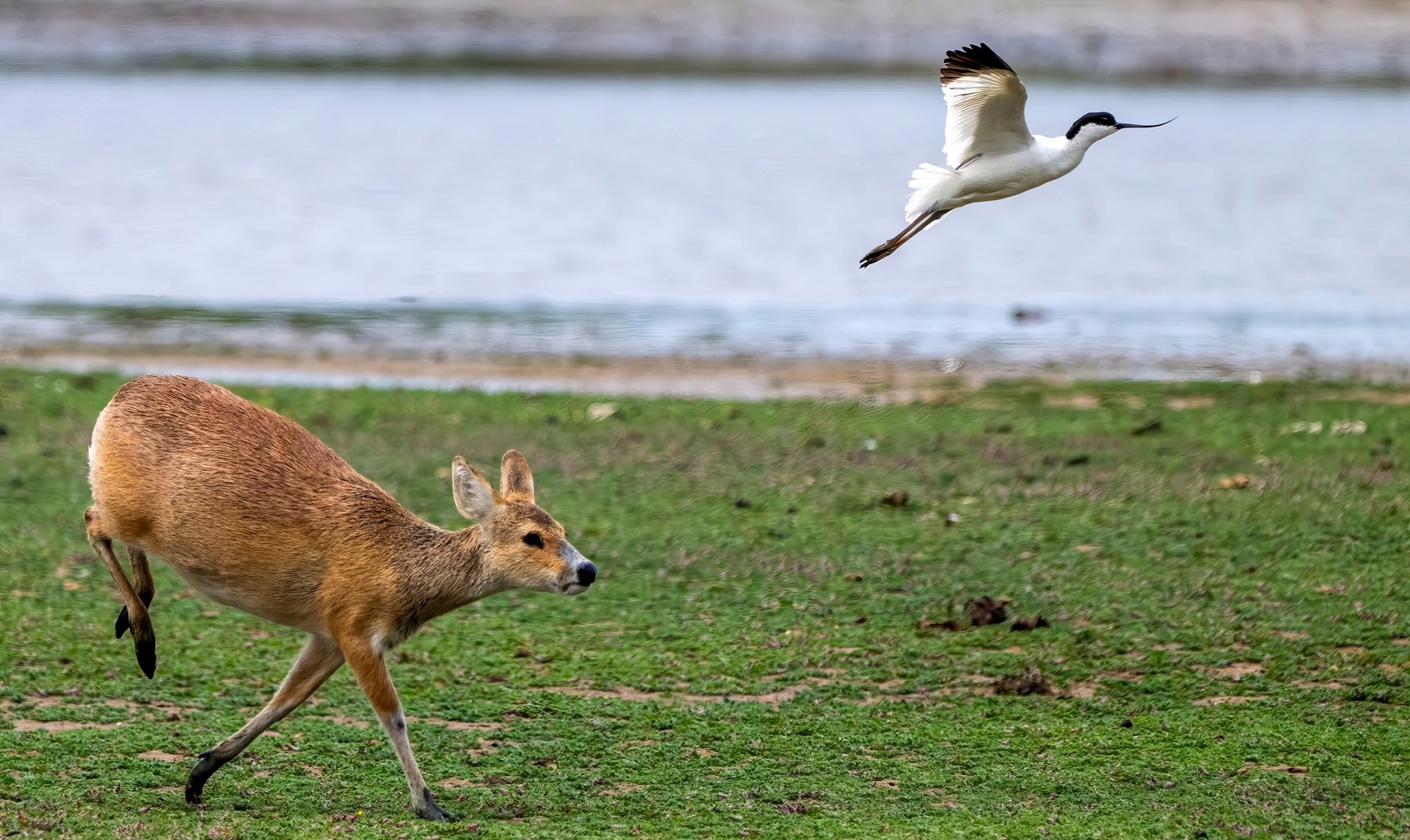
Water deer are less exploratory than muntjac or fallow, being quite strongly hefted to an area, but their ability to build rapidly in areas of favourable habitat, particularly marsh and wetlands, means that a relatively low dispersal ability doesn't necessarily preclude substantial local impacts. Indeed, the impacts starting to emerge both from reserves and from agricultural landscapes were presumably the trigger for the UK Government to explicitly describe water deer as a non-native species "considered to be invasive" in February 2026, when they also announced that Defra will commission an updated risk assessment to establish the current risk they pose in Great Britain. The assessment is intended to inform future action, including measures to prevent new populations becoming established. Depending on its findings, the Government may consider listing Hydropotes under the Invasive Alien Species Regulations as a Species of Special Concern, alongside the muntjac.
References
Anon. (2015). RSPB deer cull under fire from animal rights campaigners. Shooting UK. 30th January 2015.
Anon. (2024). Anger over Wildlife Trust plans to shoot deers on wildlife reserve in Leicestershire. ITV News. 9th October 2024.
Cooke, A. (2009). Chinese water deer Hydropotes inermis in Britain. International Urban Ecology Review. (4): 32-43.
Cooke, A. (2012). The relative contributions of Chinese water deer (Hydropotes inermis) and muntjac (Muntiacus reevesi) to browsing at Woodwalton Fen National Nature Reserve. Nature of Cambridgeshire. 54: 21-26.
Cooke, A. (2019). Muntjac and Water Deer: Natural history, environmental impact and management. Pelagic Publishing, Exeter.
Department for Environment, Food & Rural Affairs (Defra) and Forestry Commission. (2026) Deer Impacts Policy Statement: Managing the impacts of wild deer in England. Published 20th February 2026.
Dobson, J. (2022). Chinese water deer Hydropotes inermis (Swinhoe, 1870), an Essex update. Essex Naturalist. 39: 59-62.
Harding, M. (2025). The Impact of Deer on Wetland Habitats in the Broads National Park. Report to The Broads Authority, Norwich. 69 pp.
Nobbs, D. (2001). Mammals of a Broadland Reserve - Wheatfen. Norfolk Bird and Mammal Report - 2000. 34(2): 295-299.
Tallowin, J.R.B. et al. (2011). Fen-meadow, rush pasture, mire and swamp communities: A review of knowledge gaps, restoration issues and their potential to deliver Ecosystem Services. Technical Report CTE1021 for the Centre for Ecology & Hydrology. 118 pp.