
Around the middle of the month, heatwave number three blanketing most of England finally spread into the parts of Wales and Scotland that had otherwise been plagued with cooler, wetter weather. Even by the middle of last month, we'd set a series of new records: the first year to record 35C (95F) in three months; the first time 35C+ has been recorded on six occasions; the first time 34C+ has been recorded on nine occasions. Indeed, 2026 now holds the record for most daily temperature records set and the most consecutive days where 30C (86F) was reached somewhere in England. The heatwaves weren't only on land – we're also in the midst of an unprecedented marine heatwave, which is likely to drive some intense storms moving into autumn. Rain has been in short supply for much of the UK this summer, with large parts of England having seen none for six weeks, leading to water restrictions.
Website news
Another month of mostly tweaks and minor changes. The fallow deer SpeedRead has been revised and updated to bring it in line with the more comprehensive style. Additionally, I've also overhauled the Q&A on foxes attacking people and pets. This was originally one very long piece, which has now been split into the three pertinent questions:
Is it likely a fox will attack a person?
Is it likely a fox will attack a cat?
Is it likely a fox will attack a dog?
News and discoveries
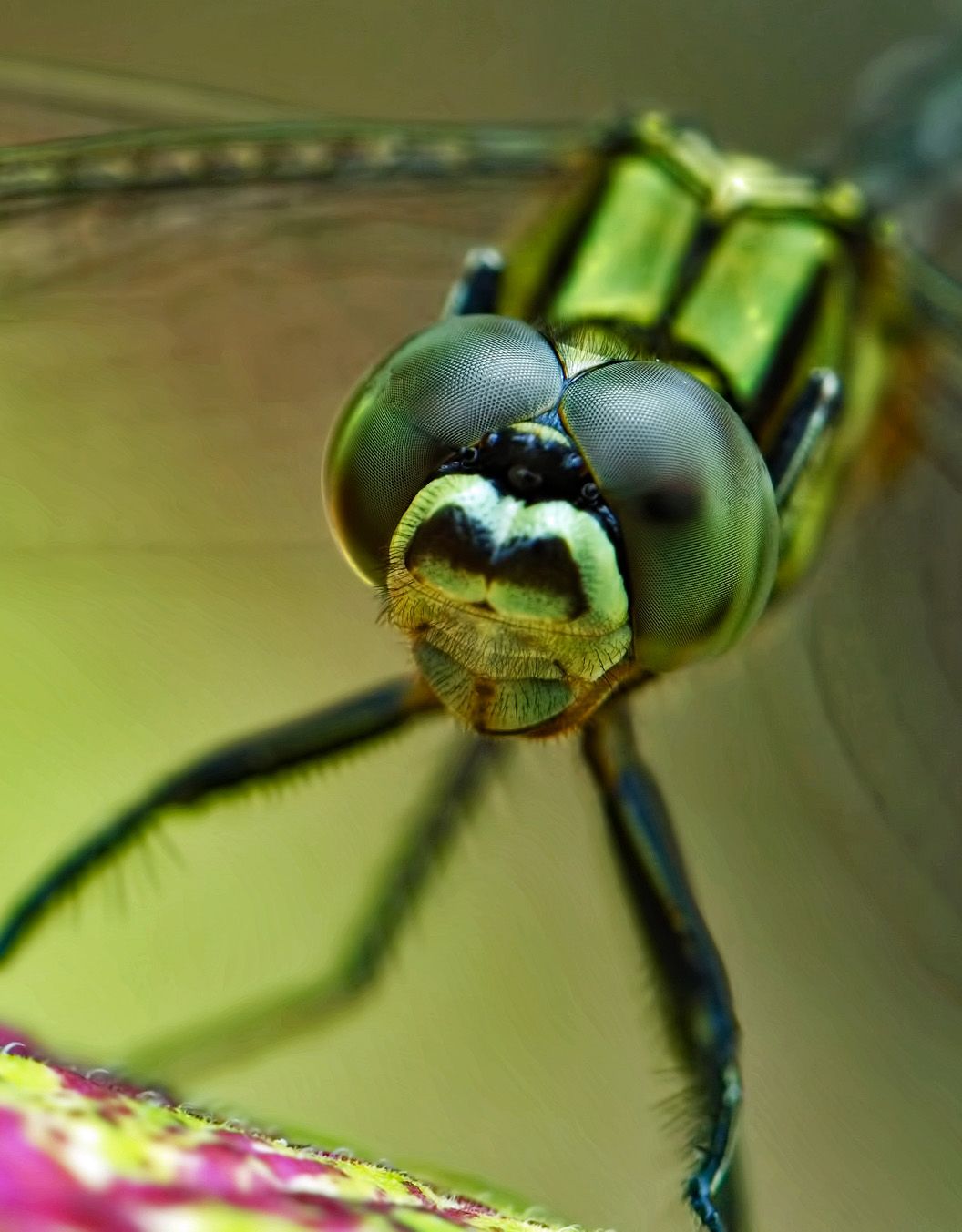
Seeing beyond red. Researchers at Osaka Metropolitan University have discovered that dragonflies detect red light using the same molecular mechanism found in mammals, including humans, providing a striking example of parallel evolution in which unrelated species independently develop similar biological solutions. The team identified an unusually red-sensitive visual pigment, or opsin, that allows dragonflies to detect wavelengths around 720 nanometres -- beyond the deepest red visible to humans -- and found evidence that this ability may help males distinguish females by subtle differences in how they reflect red and near-infrared light. Surprisingly, the molecular strategy used by this dragonfly opsin is identical to that of mammalian red-sensitive opsins, despite the vast evolutionary distance between insects and mammals. Researchers also pinpointed a specific site in the protein that controls its light sensitivity and successfully engineered modified versions that respond to even longer, near-infrared wavelengths. Because near-infrared light penetrates deeper into living tissue, these modified opsins could become valuable tools in the field of optogenetics, enabling scientists to study and control cells located deep within the body and potentially advancing future medical technologies.
Bumble brains. Researchers found that bumblebees can solve problems in a way previously associated mainly with larger-brained animals like chimpanzees. In experiments, bees were trained to associate a blue target with a sugary reward and were given a small ball; when the target was placed out of reach, they independently figured out that rolling the ball beneath it would allow them to access the reward, despite never being taught this strategy. Even when barriers prevented them from seeing the target while moving the ball, the bees still successfully solved the task, suggesting genuine insight rather than simple trial-and-error. While insects have previously been shown to use tools, learn socially, and solve puzzles, this study provides the first evidence that they can spontaneously devise object-based solutions to achieve goals, demonstrating that a brain with only about one million neurons can perform problem-solving comparable in principle to that of a chimpanzee with 2.8 billion neurons.
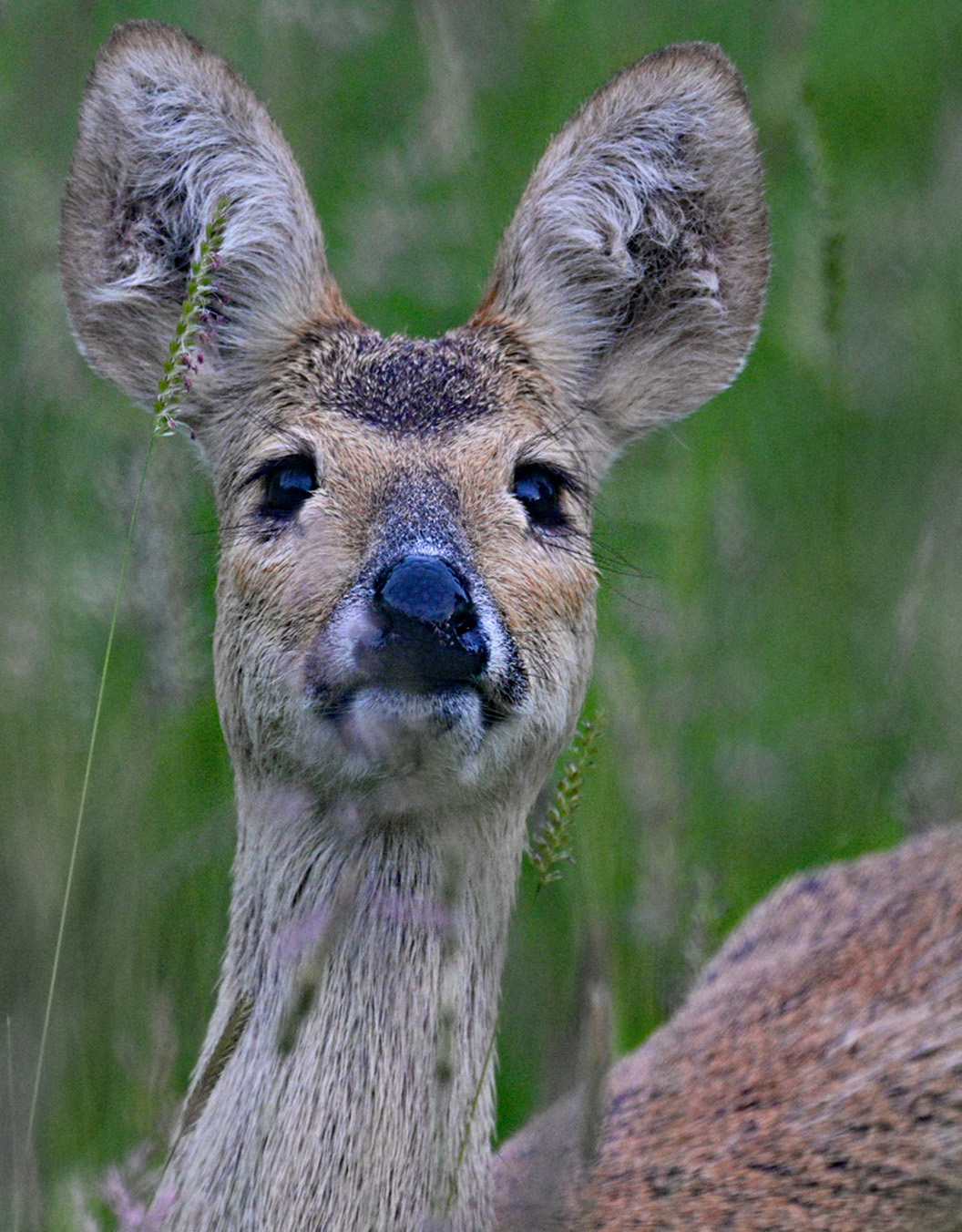
Heterogenous Hydropotes. In its native China, the water deer is considered a Class II protected species, as numbers are in steep decline. Many factors contribute to this decline, including loss of habitat and the population fragmentation that often follows. A recent study of the genetic status of fragmented populations in northeastern China, using non-invasive genetic analyses of 286 individuals sampled across 14 geographic populations, produced surprising results, however. Contrary to expectations that habitat fragmentation would have caused strong genetic isolation, low diversity, and restricted gene flow, the study found moderate genetic diversity, extremely weak population structure, and high levels of contemporary gene flow across the landscape. MtDNA analyses suggested a historical population expansion, while microsatellite data indicated that most genetic variation occurs within rather than among populations. The researchers also found evidence that dispersal may be female-biased -- a pattern unusual among ungulates -- with a greater proportion of females identified as recent dispersers and lower genetic differentiation among female populations, although some analyses produced conflicting results. Despite high connectivity, the data also suggested some degree of non-random mating within local populations. Overall, the study concluded that long-distance dispersal, potentially driven in part by females, and the legacy of historical population expansion together help maintain genetic connectivity and diversity in northeastern Chinese water deer, highlighting the importance of conserving habitat corridors and landscape permeability to support continued gene flow and long-term population viability.
Road to nowhere? Last month, The Wildlife Trusts criticised the UK Government's new 30 by 30 plan to safeguard biodiversity, claiming it fails to provide a credible roadmap for restoring nature. In a blog post on their website, The Trusts argue that the plan largely repackages existing commitments without explaining how the target of protecting 30% of England's land for nature by 2030 will be achieved. The charity calls for stronger land management rules, greater incentives for nature recovery, and immediate action on measures such as banning bottom trawling in Marine Protected Areas and restoring peatlands. It also warns that government-commissioned research identifies biodiversity loss as a growing threat to UK national security, criticising the exclusion of Defra from the new Resilience Taskforce, and urges Andy Burnham to replace rhetoric with coordinated action to protect nature, communities and the economy as he takes up the position of the UK's new Prime Minister.
For a round-up of Britain's seasonal wildlife highlights for late summer, including the roe deer rut, 'shrewicide', ducks and wasp spiders, check out my Wildlife Watching - August blog.