Summary
No. Although foxes are capable of injuring people, 'attacks' (usually minor bites) are exceptionally rare. Every so often an incident receives widespread media attention, leading to understandable concern. The evidence available from Britain suggests, however, that foxes pose only a very small risk to humans, particularly given the millions of fox–human encounters that occur in towns and cities every year.
This does not mean attacks never happen. A handful of well-documented cases have occurred over the past few decades, most involving young children or people attempting to handle or remove a fox from a house. These incidents should be taken seriously, but they remain extraordinary rather than typical.
Like any wild carnivore, a fox deserves respect. The sensible approach is neither to dismiss genuine incidents nor to exaggerate the danger they represent. Common sense precautions are advisable, and irresponsible feeding of foxes is to be discouraged, but there is no evidence that foxes are more dangerous now than they have ever been.
Table of contents
- Fox attacks on people
- The Koupparis twins
- Further incidents
- Quantifying the risk
- Practical advice
- Feeding the problem?
- In conclusion
- References
The Details
The short answer is no. It is, as we shall see, certainly not unknown for foxes to bite people, but such incidents are rare. I must say from the start that I understand and appreciate that this is a sensitive subject, and that all the statistics in the world offer no consolation to someone who has been injured by a fox, or whose child has been. I feel, however, that it's important to maintain a sense of perspective, and to understand that the fact such events do happen does not mean they are likely to happen. What follows is a summary of the information currently available to me regarding fox attacks on people.
Back in 2010, following the case of two young twins who were bitten by a fox in London, the UK saw something of a media 'frenzy' over urban foxes and the danger they pose to people and their pets. The apparently unprovoked attack on the girls left experts confounded and many people afraid of the animals with which they share their streets and gardens. Some newspapers ran stories quoting local pest control companies claiming urban fox numbers are on the rise and they're seeing more problems than ever before.
Fox numbers do appear to have risen in recent years, and a recent estimate from Brighton University biologist Dawn Scott suggests there may be as many as 150,000 in our towns and cities. Interestingly, however, Scott and her colleague Phil Baker at Reading University have found that there is no correlation between fox densities and sightings. In other words, seeing more foxes around doesn't necessarily mean that the population has risen. Similarly, there is currently no evidence that foxes are more of a nuisance or more dangerous now than at any point in the last decade.

When it comes to assessing the evidence, whether it be scientific or otherwise, we must be mindful that we can only observe a fox for a fraction of its time (often using radio-tracking, which only tells us about the animal's movements and generally nothing about what it's doing at the time) and over a fraction of its range. Moreover, anyone who has spent time observing foxes knows each is an individual: some are bold, some shy, some reclusive, some tenacious. We must thus be careful when generalising; applying what we observe in one situation to all situations may over- or underestimate any risk. Naturalist and writer Brian Vezey-Fitzgerald summed it up nicely in his 1942 book A Country Chronicle, in which he wrote:
"Dogmatism in any branch of natural history is not only foolish, it is a sin."
I'm keen to emphasise that this is not a case of 'special pleading' on behalf of the fox, and I am not suggesting that foxes are blameless. I'm simply keen that our opinions and actions are based on a rational and balanced appraisal of all the evidence.
Fox attacks on people
Outside of the UK, especially in parts of Europe, India and America where foxes are a vector for rabies, attacks are reasonably well known, but still far from commonplace. In Britain, they're even more infrequently reported and, until relatively recently, received little widespread media attention.
Concerns about urban foxes here were probably first voiced by the media in an article about "vulpicide" in the London town of Orpington that appeared in The Sunday Times on 17th June 1973. The article told how Bromley Council, the borough in which Orpington sits, had employed a full-time fox-control officer who was responsible for shooting and gassing foxes in the area; apparently, this was in response to a small child having been attacked by a fox. It seems, according to this article, that the "attack" actually took the form of a young boy reporting that a fox had jumped up at him in an outside toilet at the Battle of Britain air show. The article contained excerpts from Bromley Council minutes warning of the threat that urban foxes posed to people and their pets.
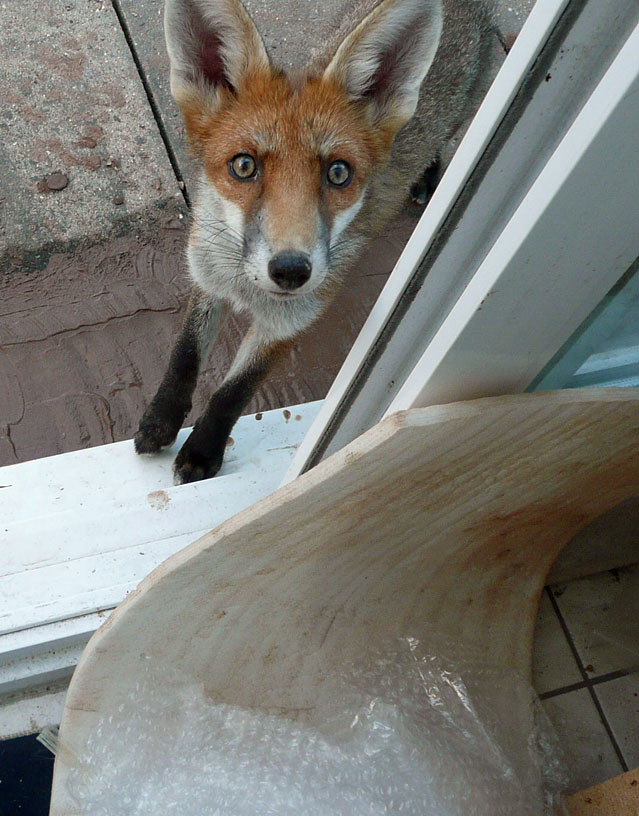
Similar articles crop up from time to time and many carry a quote from a source who says something along the lines of 'it's only a matter of time before someone is seriously injured by an urban fox'. Unfortunately, despite their unequivocal rarity -- especially considering the estimated number of foxes and their proximity to people in towns and cities -- several incidents have been recorded, although the validity of some accounts has been questioned.
The next case of which I am aware made the press, in The Independent, just over two decades after the Sunday Times article. In early November 1996, five-month-old Philip Sheppard needed hospital treatment for an injury to his face after apparently being bitten or scratched by a fox while lying in a pram in his parents' conservatory in south London. According to the media report, his mother came out to investigate his cries and found the fox on top of him. The paper quoted various fox experts, all of whom were astounded by the attack and some who questioned the culprit, suggesting that the wounds were more reminiscent of having been scratched by a cat.
In response to this story, Bristol University ecologist Stephen Harris wrote a short article to Country Life magazine later that month in which he described the hysteria that followed the attack as a "misinformed overreaction". Professor Harris explained:
"The fox did not attack the baby and made no attempt to bite it; at worse, it was slightly too inquisitive."
The title of Harris' article, "Foxes pose no threat in cities", summed up his opinion (and remains the opinion of many fox biologists) on the matter.
In late June 2002, there was a report of a fox biting a 14-month-old boy who was asleep in the lounge of a house in Dartford, Kent and, on 9th September 2003, The Sun carried the story of four-year-old Jessica Brown who was, according to the paper, "mauled by a starving fox" while lying in her bed – the accompanying photo showed a u-shaped bite and localised bruising on Jessica's left arm.

Following several reports of foxes apparently killing pets in Edinburgh, an article appeared in The Scotsman newspaper when a local pensioner was bitten. In August 2004, Margaret O'Shaughnessy was reportedly bitten on her left ankle by a fox while putting out milk for her cat in her garden in the Firrhill area of the city. Additionally, January 2007 saw the case of two paperboys who found a two-year-old baby boy crawling down a street in Croydon, South London at 6 am being followed by a fox. According to an article in The Sun, the boys had to "kick away a snarling fox before picking up the tot". I should mention that there is nothing in the article to suggest that the fox in any way harmed the baby, and one is tempted to think the animal was following the baby out of curiosity.
The Koupparis twins
The incident that fundamentally changed public attitudes was the widely publicised case of two young girls who were bitten by a fox in a London suburb. In a terraced house in Hackney, Greater London, just before 10 pm on 5th June 2010, Pauline Koupparis went upstairs to investigate the crying of her nine-month-old twins Lola and Isabella; she found them in their cots, bleeding from deep wounds to their upper body apparently inflicted by a fox that was still in the room. Mrs. Koupparis called for her husband and together they tried to remove the "medium-sized£ fox, which was apparently unfazed by their lunges. Eventually they managed to chase the animal downstairs and out into the garden. The children were rushed to the Royal London Children's Hospital, where they were treated for soft tissue injuries. Isabella suffered a severe bite to her left arm, while Lola sustained a minor bite to her right arm and a serious bite just above her right eye.

The attack attracted international attention and prompted intense debate about whether urban foxes had become bolder, more numerous or more dangerous. Various fox experts expressed their surprise at the incident and some questioned whether a pet cat or dog was actually to blame. In the documentary on the incident broadcast by the BBC, the Koupparis family reiterated that it was most definitely a fox, and they had no pets. Despite some rather disturbing, and at times frankly appalling, abuse the family received from some members of the public, particularly on social media, a thorough investigation by the police concluded, based on the wounds and expert testimony, that the twins were bitten by a fox. This attack raised many questions about urban foxes and caused much speculation around the reason behind the animal's behaviour, including that it might've been a cub or suffering from toxoplasmosis.
The Koupparis case remains remarkable not only because of the severity of the injuries, but because the fox entered the house, climbed upstairs and appeared unusually confident in an occupied home. No single explanation has ever satisfactorily accounted for its behaviour, although there were reports of a barbecue left cooling in the kitchen, the smell of which may have attracted the animal, and it has been suggested that the fox may have been attracted upstairs by the smell of the nappies, such items occasionally having been found at earths. Writing in British Wildlife in February 2020, however, this was something Stephen Harris considered highly dubious, given what we know about fox biology. Why it bit Isabella and Lola we will never know, but some countryside groups and pest controllers have implied that it shouldn't be a surprise given that "a young baby isn't much bigger than a lamb or piglet".
I don't wish to detract from the fact that this was a serious incident, terrifying for all those involved. I will confine myself to noting, therefore, that, even if this were an accurate comparison, cases of foxes taking lambs and piglets -- especially live ones -- are uncommon in the literature. The bulk of a fox's diet is composed of much smaller prey, namely invertebrates (especially earthworms), rodents, birds and rabbits. For reference, lambs and piglets are most vulnerable within the first couple of weeks after birth when, according to the Food and Agricultural Organization, they weigh about 2 kg (3 lbs 3 oz.) and 1.5 kg (4 lbs 6 oz.), respectively. According to the World Health Authority, a nine-month-old girl weighs in the region of 10 kg (22 lbs), about the same as an adult fox.
Why the fox wandered around the house might be alluded to by Mr Koupparis' comment in the documentary that it "sat at the top of the stairs like a family pet". I have seen many videos showing foxes being enticed into houses by people offering food, and readers have sent me photos of foxes lying by their fireplace or standing in their kitchen waiting for food. Equally, I have seen people strike up that 'special relationship' in which the fox feels secure enough to take food from their hand, and those who have awoken to find a fox asleep on their bed. It seems that foxes are viewed by some more as a pet than a wild predator.
Further incidents
A few weeks after the Koupparis incident, thirteen-year-old Bethany Blackburn was bitten on her left foot by a fox that, according to media reports, tore a hole in the tent in which she was camping with two friends just before midnight on Sunday 25th July. According to one report, the fox spent two hours scratching at the side of the tent before it got in. An article in The Mirror told how the fox:
"... sat, snarling, in the porch area, only turning tail when Bethany's mother, who the desperate schoolgirl had alerted on her mobile phone, switched on the kitchen light and came out to investigate."

This incident happened in the Blackburns' back garden in a suburban part of Long Ditton, Surrey. Miss Blackburn told the paper that the fox, which the girls said was a cub, returned to the garden the next night and urinated on the tent door. There was apparently no food around at the time, so it was presumably curiosity that attracted the fox to the tent. Snarling is most certainly abnormal behaviour and not something I have ever witnessed, nor heard any experienced fox-watcher mention. Indeed, some zoologists point out that foxes cannot snarl and suggest the account was exaggerated, although we cannot say for sure and several news reports of the incident report the girl receiving hospital treatment for cuts. The marking behaviour is not unusual, however; foxes very often scent-mark novel objects in their territory, and a tent would certainly fit the bill.
Subsequently, in September 2010, Annie Bradwell reported being bitten on the ear by a fox while in bed in her house in Fulham, West London, and in the early hours of Sunday 24th October 2010, a 37-year-old man was found unconscious by police in St Michael's Parish Church Cemetery in Musselburgh, Scotland, suffering from hand and facial injuries thought to have been caused by an animal. There is no direct evidence linking the injuries to a fox, but a local councillor was quoted by the BBC as saying: "I stay not far from that area and the only animals around capable of doing such a thing are foxes."

In January 2011, Tammy Page was bitten on her left index finger while trying to expel a fox from her kitchen and, later the same month, Deborah Adams was bitten on her left arm when she tried to touch a fox she found sitting in the road to Gluvian Farm in Cornwall. In February 2013, five-week-old Dennie Dolan was bitten by a fox in a first-floor flat in Bromley and, in July of the same year, Anthony Schofield called 999 after sustaining a fractured wrist and two bite wounds while trying to prevent what he described as "a mangy little fox" attacking his cat in his living room in Catford, South London. The following year, a two-year-old boy who was apparently bitten on the foot by a fox that entered a house in New Addington, south London, via a cat flap in November 2014. The parents found the fox sitting at the end of the toddler's bed. The most recent example I'm aware of, which made the national press, was during August 2026, when three-month-old Josephine Clarkson in Watford suffered minor head injuries after a fox reportedly entered the family home.
These are, of course, the cases that have made the mainstream press, and one wonders how many go unreported. I, for example, know of at least one attack, recounted on an internet message board, that was alleged to have happened in August 2005. A gentleman in south-east England was apparently charged by a fox that "ran the length of the garden squealing" and bit his leg. So engrossed in this activity was the fox that it ignored being kicked by the man and blasted with a hose by his wife; it only fled when the couple's huskies were let out. This incident was reported to his local council, but it doesn't appear that any formal investigation was carried out. Similarly, a man in Flevoland in the Netherlands filmed a fox pacing outside his chicken coop on his mobile phone in August 2015. When the fox spotted him, it turned and ran at him, causing him to turn and run. The video went viral, but doesn't appear to have made the UK press.
Quantifying the risk

According to a pest control officer interviewed about the Koupparis attack on The Fox Attack Twins BBC documentary in 2010, cases of foxes biting people are now common in Britain, but many people don't report them, presumably for fear of not being believed and potentially suffering abuse. This situation is no doubt exacerbated because Britain, unlike most states in the USA for example, does not have a statutory body to whom bites can be reported and that keeps track of cases. The Health Protection Agency's (HPA) Zoonoses Department recommends reporting any bites or attacks to your Local Authority's Pest Control Department, even though they will probably be unable to aid in the removal of the fox. The HPA also advises anyone bitten by an animal (wild or domestic) to seek medical attention as soon as possible. It seems inevitable that some bites will go unreported, but a lack of official reporting in Britain ultimately hampers our ability to assess the risks posed by foxes.
Foxes are medium-sized carnivores and this alone means they have the potential to be dangerous, just as a pet cat or dog does. This capacity does not, however, mean that foxes pose a significant threat to people. Urban foxes today are certainly more familiar with people than those that first colonised British towns and cities during the 1930s and 40s (see When and how did foxes come to live in our towns and cities?). Many tolerate remarkably close approaches, and some regularly forage in gardens even when householders are nearby. In that sense they have become bolder, but it's important not to confuse boldness with aggression. Bites happen from time to time, but such incidents remain extremely rare and most encounters between people and foxes remain entirely uneventful. Every night, thousands of foxes pass through residential streets, gardens and parks without anyone even noticing. If foxes genuinely posed a significant threat to people, serious attacks would be vastly more common than the handful that have been documented over several decades.
This perspective is important. Exceptional cases deserve careful investigation, not dismissal, but they should also be viewed against the enormous number of peaceful encounters that occur every year.
Practical advice
I will spare you the statistical comparisons with dog and cat bites, not least because I don't feel they're particularly relevant. Although the risk of fox bites is very small, a few sensible precautions will reduce it still further. Avoid approaching or attempting to handle wild foxes, particularly animals that appear unusually tame or reluctant to move away. Teach children to admire foxes from a distance rather than trying to touch them. Essentially, be as cautious and sensible around foxes as you would around any wild animal.
Food scraps, pet food and barbeque remains shouldn't be left where they may attract wildlife into the house, particularly overnight. Closing doors and accessible windows after dark will also reduce the likelihood of inquisitive foxes (or other wildlife) wandering indoors. If you wish to take steps to exclude foxes from your property or deter fouling in your garden, there is advice in my Fox Deterrence article.
Feeding the problem?
It's frequently stated that feeding foxes is a bad idea because it causes them to become dependent on the food being offered and teaches them to associate people with food. Personally, I don't believe this gives foxes the credit they deserve for being highly intelligent and adaptable animals. To the best of my knowledge, there's no evidence to suggest that feeding foxes leads to dependency; nor that foxes view all people the same. Indeed, my personal experience is that foxes learn to trust the food-giver and continue to treat others (even those accompanying the 'feeder') with great suspicion. Consequently, I personally don't see a problem with feeding foxes, provided it is done responsibly.

If you choose to feed foxes, do so sparingly and outdoors. A couple of handfuls of dog/cat/hedgehog biscuits or nuts sprinkled on the ground is sufficient to delay a fox long enough to get some decent views without risking over-feeding. The issues associated with over-feeding -- increased local disturbance, higher fox densities, and so forth -- are well documented. Similarly, foxes should not be fed chocolate, cakes or other high-sugar, high-fat processed foods. In addition, never encourage the fox to take food from your hand and never entice them into your house. I know several people who do both and have never had an issue; but in my opinion, it helps neither party in the long run. Foxes are opportunists and, while some are likely to be more prone to enter a house from the outset looking for a meal, others may make the mental link that houses are good places to look for food if some well-meaning human sows the seed, so to speak.
In conclusion
Foxes are medium-sized carnivores and, like any wild animal equipped with sharp teeth, they can inflict injury. That simple fact, however, should not be mistaken for evidence that they present a significant danger to people. The available evidence suggests that attacks on humans in Britain are exceptionally uncommon. Most foxes spend their lives avoiding close contact with people, and the overwhelming majority of encounters end with the fox quietly slipping away.
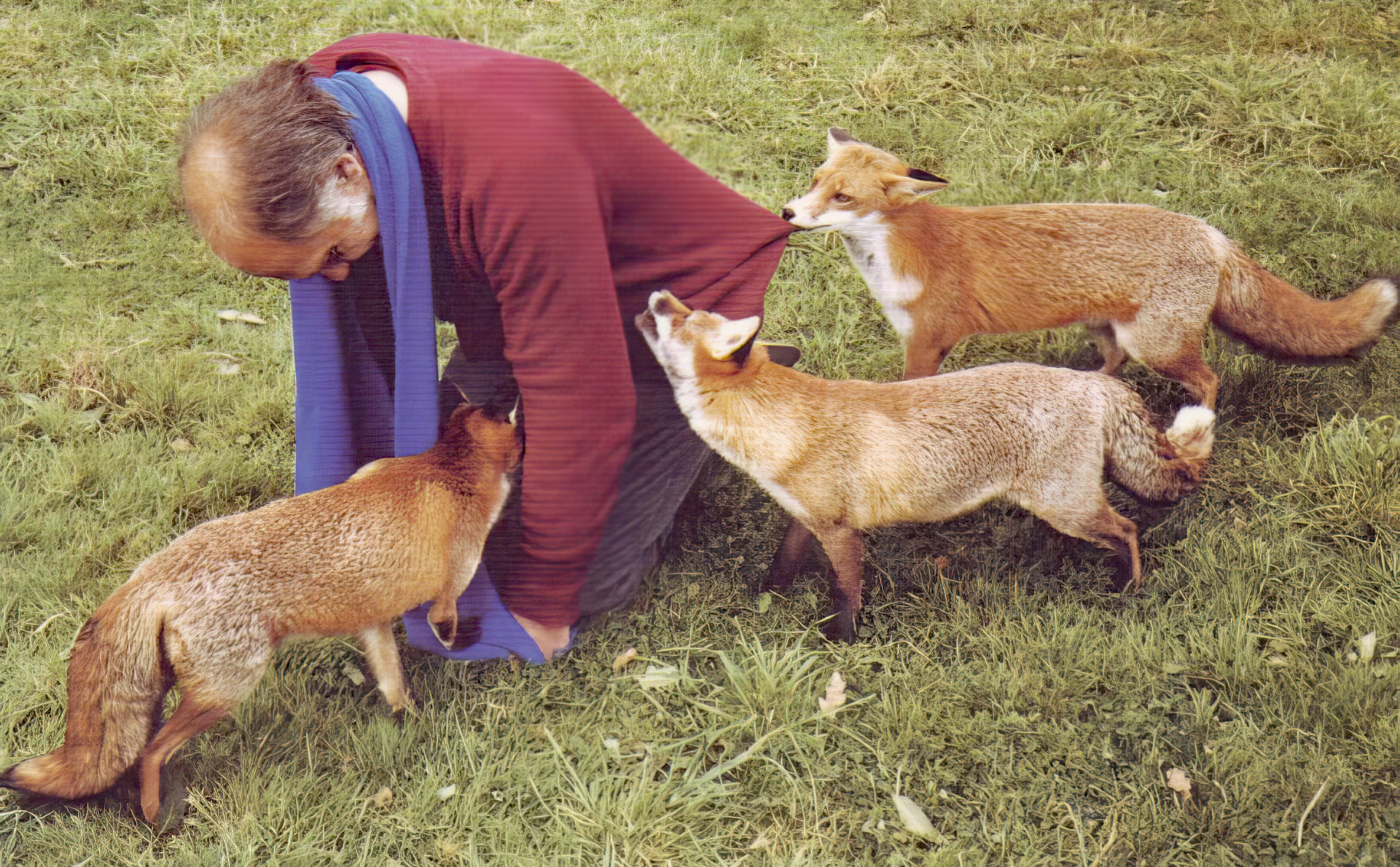
As our towns and cities continue to expand, people and foxes will inevitably encounter one another more often. Eradicating foxes from urban environments is neither practical nor, for many people, desirable. The more realistic approach is to understand their behaviour, avoid encouraging excessive familiarity, and treat them with the same mixture of respect and common sense that we would afford any wild animal. Elsewhere in the world, people share their towns and cities with much larger carnivores than we have here in Britain; a common-sense approach prevails, and problems are surprisingly rare.
Ultimately, the question is not whether foxes can attack people -- they can -- but whether they represent a significant threat. Based on the evidence currently available, the answer remains no.
References
Harris, S. (1996). Comment: Foxes pose no threat in cities. Country Life. 190(48): 28-29.
Harris, S. (2020). Time to stop vilifying the urban fox. British Wildlife. 31(3): 163-170.
McGuinness, F. & Williams, I. (2026). Mother's horror as fox creeps into home and bites baby's head. The Independent. 24th August 2026.
Pettifor, T. (2012). Camping girls attacked by a crazed fox. The Mirror. 27th January 2012.
Vezey-Fitzgerald, B.S. (1942). A Country Chronicle. Chapman & Hall, London.
Wheeler, V. (2007). Boys Save Gutter Tot, 2, from Fox. The Sun. 9th January 2007. p. 17.
Wilks, A. (2003). Jess Aged 4 Savaged in Bed by Fox - It bites into her arm. The Sun. 5th September 2003. p. 39.