
September began warm and muggy. There was some rain, but not enough to break the drought here in the south of England. Several sharp shower-laden systems passed over, mostly through western, central, and northern parts, before high pressure built in from the continent to see the month out on a warm, mostly dry note. 2026 continued to break records last month, too, as we hit 90 days when temperatures of at least 25oC (77oF). The 22nd saw at least a dozen weather stations in east England record 25oC, with Charlwood in Surrey hitting 26.7oC (80oF) – the seasonal average for the time of year is 16-19oC (61-66oF), depending on where you are in the UK. The month ended with another record – Frittenden in Kent recording 27oC (81oF) on 25th and beating the previous record set in Southampton in 1895.
Website news
Not much has happened front-facing this month, aside from a revised and updated pannage article (see link at the bottom of the news section below) and several of the Chinese water deer sections being revised to improve the flow and include references. In the background there are two updated hedgehog Q&As almost ready to go live, and one new Speed Read. The site's technology has also been updated: the meta-tagging has been improved, as has the accessibility. Indeed, you might notice a slight tweak in the colour scheme; this is to make it easier for users with visual impairments to use Wildlife Online. Similarly, alt tags have been added against the images and are gradually being populated as I review the content. These tags are used by assistive technology, such as screen readers.
News and discoveries
Parked up. Hedgehog (Erinaceus europaeus) numbers in the UK are believed to have dropped sharply since 2000, falling by as much as 75% in rural areas. In urban areas numbers may be starting to stabilize or show small signs of recovery thanks to efforts made by some households and councils to enhance green spaces. Urban parks are one such important space for city-dwelling wildlife, including hedgehogs, and a new study has evaluated how habitat diversity and physical barriers affect how hedgehogs used city parks in Spain. Researchers GPS-tracked 30 hedgehogs in two urban parks to see how they navigate city environments and to find a better way to map their home territories. They found that city obstacles heavily influence where hedgehogs can go: hedgehogs avoided steep hills, busy roads, and paved areas, while preferring grassy gardens, natural plants, and outdoor cat feeders. The study also proved that traditional mapping tools are inaccurate because they draw simple shapes that include impossible-to-reach areas (like inside buildings) and dramatically overestimate how far male hedgehogs actually roam. In contrast, a newer mapping method that accounts for physical barriers gave a far more accurate picture, revealing that larger/heavier hedgehogs covered more ground and that hedgehogs regularly visited cat feeders. Ultimately, the authors suggest that city planners should design parks with fewer physical obstacles to help hedgehog populations move around safely and thrive.
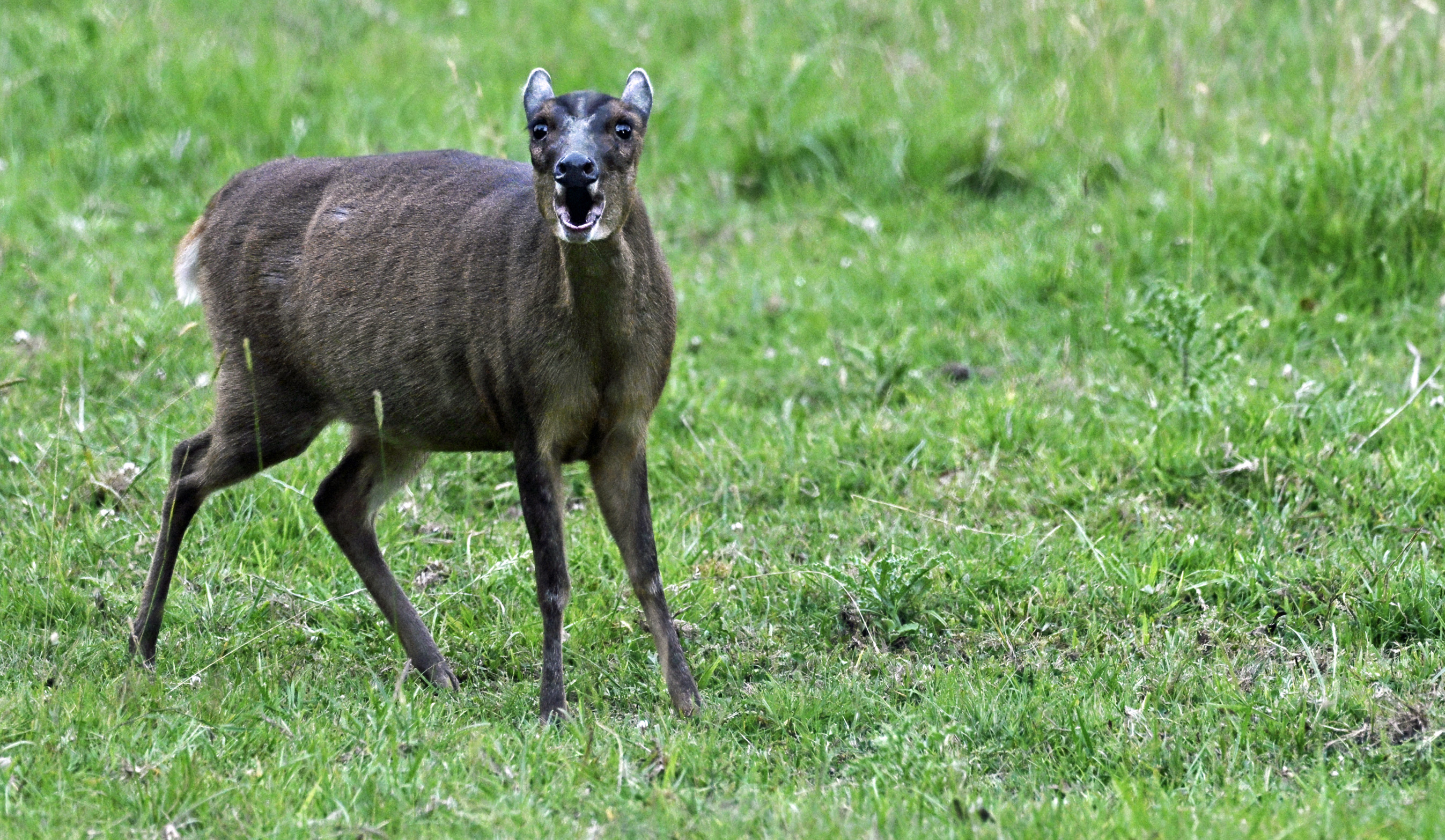
Muntjac monitoring. After escaping from Woburn at some point in the early 1900s, Reeves' muntjac (Muntiacus reevesi) spread rapidly in Britain and are now classed as an invasive species in England and Wales due to significant population growth and heavy browsing that damages woodland ecosystems, suppresses native flora, and impacts ground-nesting wildlife. An often secretive nocturnal species, muntjac can be difficult to monitor using traditional camera traps at low population densities, so a recent study set out to evaluate automated acoustic monitoring as an effective method for detecting these deer. By collecting over 2,200 hours of nocturnal audio across southern England and training an AI tool (a lightweight convolutional neural network machine learning model), researchers achieved high accuracy in identifying the deer's distinct, repetitive barking calls, which averaged roughly 11 minutes per calling session and could be reliably picked up by sensors within a 200 m radius. The authors established that a conservative survey effort of 107 hours per sensor is required to confirm the species' absence with 95% confidence during periods of low activity, while also demonstrating that broadcasting recorded calls via playback can stimulate a three-fold increase in call response to accelerate detection. Ultimately, this study highlights how deployable, AI-driven audio arrays offer good, cost-effective spatial coverage to support early detection of invasive muntjac populations across Europe.
Shifting sharks. In July 2026, the world's oceans reached their hottest recorded temperatures for the month, driven by long-term climate change and developing El Niño conditions in the Pacific. This is inevitably triggering a shift in marine flora and fauna, bringing new species to British waters and causing established species to move northwards. By modelling public sighting data from Norway and the British Isles, researchers found that endangered basking sharks (Cetorhinus maximus) currently favour shallow, sloped coastal waters with sea surface temperatures between 8oC (46oF) and 13oC (55oF) and high concentrations of plankton. Around local hotspots like Lofoten and Vesterålen, these sharks tend to gather where ocean currents meet and where their prey floats near the surface (less than 15 meters deep). As ocean temperatures continue to rise, the sharks are projected to shift their range further north – meaning sightings will likely drop in traditional southern haunts like southwestern England and central Norway, but rise off northern Norway, the Barents Sea, and Svalbard. Mapping these habitat preferences provides a clear baseline to help direct marine conservation efforts and protect the species from human threats like ship strikes and fishing gear in a warming ocean.
Reef revival. One year after the deployment of 20 specialized reef cubes off the coast of Whitburn, South Tyneside, recent dive surveys reveal that a groundbreaking five-year native oyster restoration project -- led by ZSL, Groundwork NE & Cumbria, and partners -- is seeing early signs of success in the North Sea. Designed to help revive a native population that has declined by over 95% due to habitat loss, pollution, and over-harvesting, the one-hectare (2.5-acre) site features reef cubes, 100 tonnes of scallop shell cultch, and thousands of seeded oysters. Monitoring confirmed that 99% of the adult oysters attached to the cubes survived their first winter despite harsh conditions and wave energy, while young oysters overwintered successfully and local wildlife including fish, crabs, and shrimps quickly colonized the structures. Building on these promising results, the team has recently deployed custom inner cages containing an additional 1,000 mature and 15,000 juvenile oysters to foster multi-generational growth and protect against predation, with hopes of securing further funding to scale these innovative conservation techniques across the North East coast before current program funding ends next year.
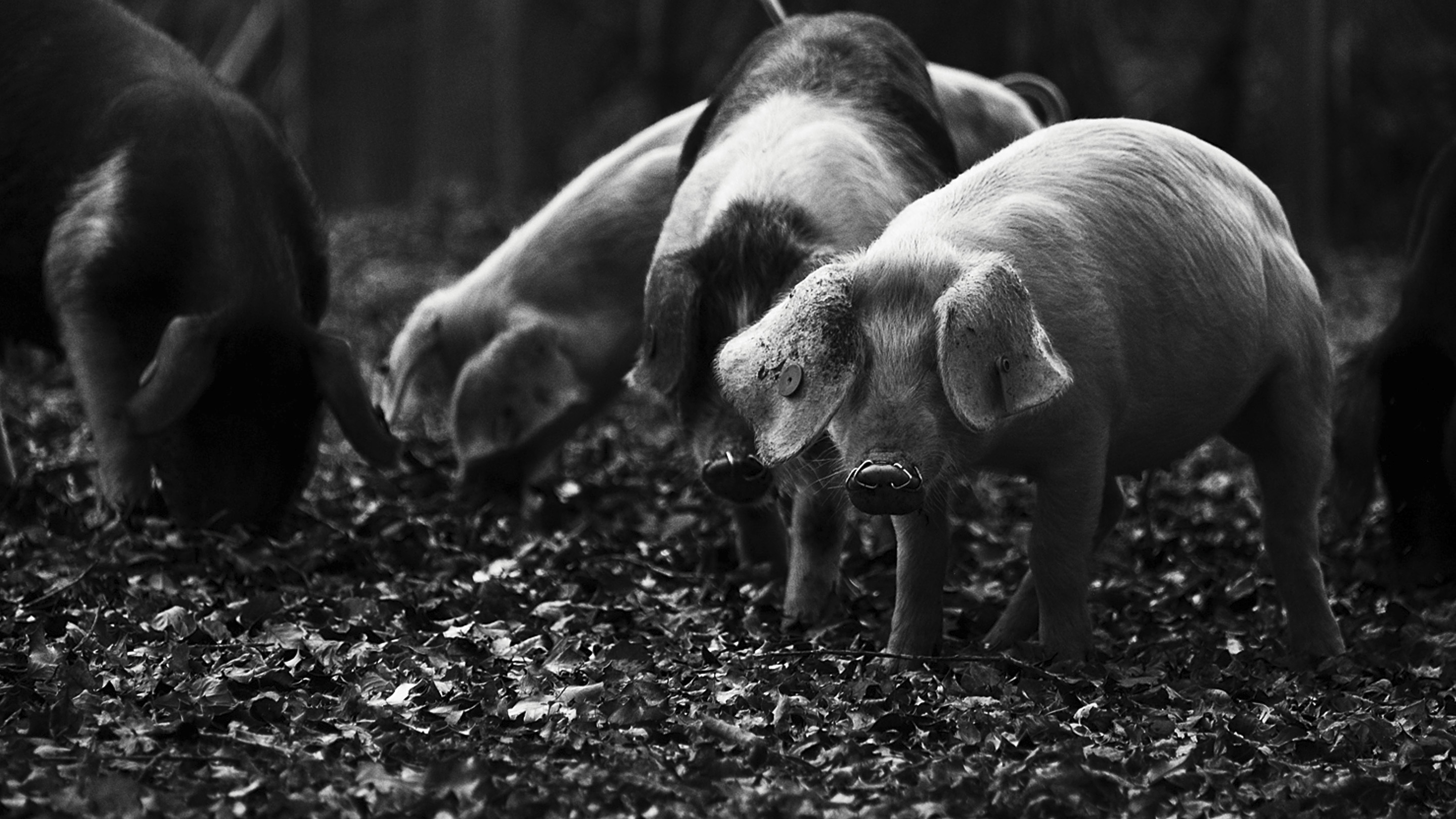
As we roll into mid-autumn, my Wildlife Watching - October blog rounds up some of the seasonal highlights, including the deer rut, shrews, the autumn bird migration, and why leaves change colour in autumn. We're now in the middle of the pannage season, where pigs are released onto the New Forest in Hampshire to feed on acorns and other mast; if you're interested in learning more about this ancient tradition, check out my newly-revised-and-updated article Pigging out in the forest, which now includes updated stats and a full reference section.