Seals
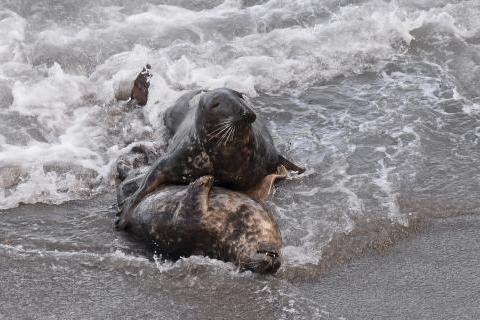
Seals and sealions, collectively termed pinnipeds ('fin-footed'), are predatory aquatic mammals belonging to three families: the Phocidae (true seals), Otariidae (fur seals and sealions), and Odobentidae (walrus). Paradoxically, as a group, pinnipeds include both some of the most abundant and some of the rarest mammals on the planet. Two species routinely inhabit British waters and breed around our coasts, the Common seal (Phoca vitulina) and the Grey seal (Halichoerus grypus). Additionally, five seal species that are normally confined to higher latitudes are occasionally reported in British waters. These vagrants are the Ringed seal (Pusa hispida), Harp seal (Pagophilius groenlandica), Bearded seal (Erignathus barbatus), Hooded seal (Cystophora cristata), and walrus (Odobenus rosmarus).
Instantly recognisable, seals are perhaps Britain's most frequently observed marine mammal. Derived from the proto-germanic selhaz, the word "seal" comes from the Old English seolh and seolhbæð (literally "seal's bath") was an Old English poetic term for the sea. Arguably, no animal in Britain is more deeply entwined in coastal folklore than seals. Innumerable stories have been woven around Ron-Mor, the great seal of the northern islanders, for example. There are also the 'selkies', mythological shapeshifters from Celtic and Norse folklore that transform from seal to human by shedding its skin. Often called "seal folk", they're associated with the Northern Isles of Scotland, can be male or female, are known for their beauty, and frequently involved in romantic tales where their skin is stolen, forcing them into marriage with humans.
Species
No questions exist for this group.