In recent years, the plight of the hedgehog in Britain has gained significant media attention, with various initiatives having been launched to try and reverse the decline that we seem to be seeing in this species. This article provides some advice on how you can make your garden hedgehog-friendly and also what to do if you come across a sick or injured hedgehog in need of help.
Editor’s Note: This article has been produced in accordance with the guidelines set out by several national wildlife charities, including the RSPCA and the British Hedgehog Preservation Society (BHPS), as well as the advice from hedgehog carers. The information here is not, however, a substitute for the advice of an experienced hedgehog carer or vet. If you have any comments or questions about this article, please contact me on: [email protected]
Table of contents
- I’ve found a hedgehog in my garden during the day, should I intervene?
- This hedgehog needs help. What should I do?
- What’s an “autumn orphan”?
- Will me feeding hedgehogs in the autumn stop them hibernating?
- How do I encourage hedgehogs in my garden?
I’ve found a hedgehog in my garden during the day, should I intervene?
Broadly speaking, hedgehogs are nocturnal and seeing them out and about in daylight is a sign that something is wrong, particularly if away from cover. Consequently, the advice of most rescue centres is that any hedgehog abroad during the day should be captured and taken to the nearest vet or wildlife rescue. There are some exceptions, however.

During the long days of summer, hedgehogs will often venture out before it's fully dark and activity an hour or so before and after sunrise/set in the summer is not unusual. Nor is it uncommon for them to leave the nest briefly to defaecate and/or drink, particularly in hot weather, before returning to the nest, although they should keep to cover. In addition, hedgehogs are sometimes disturbed while sleeping during the day and forced to find somewhere else to shelter. Similarly, hedgehogs will often leave their hibernacula during the winter to build a new one, or arouse if temperatures get very low. In such cases diurnal activity is not necessarily a sign that anything is wrong and the animals will keep to cover where possible. Hence, it is a good idea to observe the hedgehog. Is it moving briskly and purposefully while keeping to cover? If so, it is unlikely to need rescuing. Is it listless? Does it appear to be searching for food? Does it seem injured? Coughing? Or sunbathing? Is it holding it's spine jacket high on its back ("walking high" as many rescues call it)? Does it have a pronounced dip at the neck? All of these behaviours are indicators that the hedgehog is unwell and needs veterinary attention. If in any doubt, call your local wildlife rescue who will be able to advise.
This hedgehog needs help. What should I do?
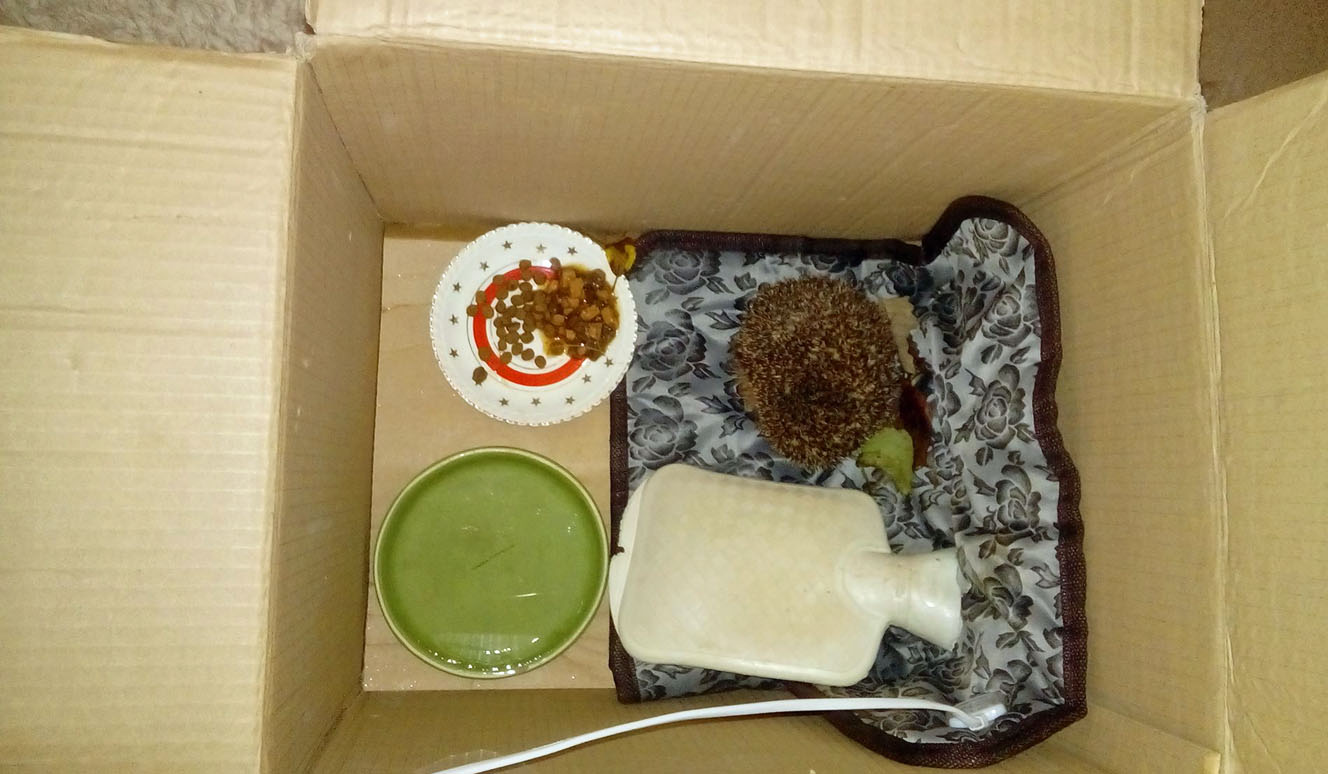
If the hedgehog is visibly in need of help or your local rescue have advised you bring it in for a check-up, you need to capture the hedgehog. Prepare a high-sided box, lined with clean shredded newspaper or a fleecy blanket (not hay or straw) and, if conditions require, a heat source (e.g., hot water bottle wrapped in a towel or electric heat pad). Pick-up the hedgehog using gardening gloves or a towel. If possible, have a quick check over to look for any obvious wounds and/or ticks before placing the hog in the box.
Leave the box in dark, quiet place that doesn't get too hot or cold, while you phone a rescue centre. If the hedgehog is to be kept in the box for a few hours or overnight the rescue will advise whether to provide food (typically meaty cat food or dried biscuits) and water. If the hedgehog is dehydrated it is important not to offer food; fluids are diverted from other organs to the digestive tract compounding the problem. Equally, in severe cases of dehydration, water can exacerbate the problem by flushing electrolytes and the hedgehog would require urgent administration of intravenous/subcutaneous fluids. The rescue should advise on the correct course of action. If a heat source is being provided, keep an eye on it to ensure it doesn't go cold, and make sure the box has enough space for the patient to retreat from it if necessary. Ideally, the hedgehog should be kept at about 20C (68F). The box can be covered with it with a net curtain, or something similar, to protect from flies, dirt, etc.
I would recommend searching the Internet and/or social media for hedgehog rescues in your area. I have a few on file and can help if you e-mail on the address above. Alternatively, you can call the BHPS's helpline on 01584 890 801 and select Option 1 for a list of UK-based hedgehog carers. The RSPCA also have a helpline you can call, on 0300 1234 999. Most carers, even if they don't have space to take the hedgehog, will be able to provide advice on the next steps. Other large wildlife rescue charities in the UK that may be able to provide advice and direct you to a carer include St. Tiggywinkles in Buckinghamshire (01844 292292) and Vale Wildlife Centre in Worcestershire (01386 882288).

What’s an “autumn orphan”?
Some females breed late in the summer and give birth to young that become independent during the autumn. In some cases, the hoglets may be abandoned if the mother is forced to start feeding up in preparation for hibernation before they're fully weaned, or they may be weaned too late to be able to reach a suitable pre-hibernation weight before winter sets in. These are "autumn juveniles". They can be found as early as September, although most are encountered during late October and/or November.
Young hedgehogs can, and will, hibernate at 450g (1 lb) or less, but it's thought they're unlikely to survive. It is preferable for them to weigh at least 700g (1.5 lbs) in order to hibernate successfully and be in sufficiently good condition when they arouse in the spring to start breeding.
Towards the end of October, or if bad weather is expected, the BHPS recommend that any hedgehogs weighing under 350g (12oz) should be rescued, whether they are out during the night or day. It should be noted, however, that these are the BHPS's guidelines and not everyone agrees. Indeed, many wildlife rescue centres advocate rescuing hedgehogs weighing less than about 500g in October, with the benchmark being moved higher with each passing month. The "intervention weight" varies a little geographically, largely because winter generally arrives earlier (and is colder) in the north; southern hogs therefore have a little longer to build up their fat reserves than their northern counterparts.
Will me feeding hedgehogs in the autumn stop them hibernating?
"Don't feed hedgehogs - or they won't hibernate" read the headline in The Daily Mail on 8th September 2017. The article was a short opinion piece by Victoria Allen that reported on an observation made by University of Brighton mammologist Dawn Scott at the British Science Festival, held in the city earlier that week. During her talk, Dr Scott presented some of her findings on the impact of people putting out food on mammal behaviour and questioned whether food left out in gardens may be delaying hedgehogs going into hibernation, perhaps explaining the recent increase in sightings of them during December and January.
Dr Scott was quick to point out that this winter activity was more likely a response to milder winters, but that data for other species (specifically, research on brown bears in Slovenia published in May of the same year) suggest that supplemental feeding can affect (reduce) periods of hibernation/torpor. The Daily Mail interpreted this as householders preventing hedgehogs hibernating by putting out food. This sparked a furore online, particularly among hedgehog rehabilitators, who correctly urged people to ignore the article and continue to feed their visiting hedgehogs. Indeed, supplemental food may be more crucial during autumn than in any other season. So, what's the real story?
Firstly, Dr Scott never told people that feeding hedgehogs stops them hibernating. She never even suggested that people shouldn't feed hogs visiting their gardens. All Dawn did was to make an observation that we're seeing more hedgehogs active during the winter months when we'd normally expect them to be hibernating, and that supplementary feeding might play a role in this.

Secondly, hibernation is a complicated process; one we have yet to fully understand. We know that it's at least partly triggered by a disappearance of (or significant reduction in) food, but that's not the whole story. Indeed, hedgehogs kept in outdoor cages by rehabilitators will usually go into hibernation eventually, despite food and water being available around the clock. Temperature, hours of daylight, age, and body condition all appear to influence when a hedgehog will go into hibernation. As I've mentioned, there are data suggesting the presence of supplemental food can reduce the duration of hibernation in bears, and there's anecdotal evidence that it can delay entry to hibernation in hedgehogs. There are no data showing, even suggesting, that the presence of food alone prevents hibernation, however.
Thirdly, the Daily Mail article gave the impression that failing to hibernate is a bad thing; that hibernation is in some way essential to the well-being of the hedgehog. It is not. Hibernation is a complex physiological adaptation to the disappearance of the hedgehog's food (i.e., invertebrates) during the winter. Given that, during hibernation, hedgehogs are prone to starving or freezing to death, being set on fire if they happen to build their hibernaculum in bonfire fodder, drowning, or being dug out by predators, it is arguably the most dangerous time of a hedgehog's year -- this is particularly true for juveniles undertaking it for the first time. In much milder climates, such as New Zealand's North Island where they were introduced in 1892, hedgehogs don't hibernate. Similarly, recent tracking of hedgehogs on the San Vincent del Raspeig campus at the Universidad de Alicante in Spain has shown that these animals do not hibernate. Ph.D. student Jana Marco suggests that the warm temperatures and year-round food, with the added benefit of food left out for street cats that the hedgehogs take advantage of, may explain why. There's no evidence that failing to hibernate is detrimental to a hedgehog's health, provided there's sufficient food around.
A couple of other points were raised in the article that warrant quick attention:
"The constant food supply stops them realising it is hibernation time, putting hedgehogs at risk of dying during the colder temperatures or being eaten by predators at a time when food is scarce."

The realisation that it's time to hibernate seems to come before the food vanishes. Changing light conditions and cooling temperatures probably indicate that prey will soon disappear altogether and prompt the animal to subconsciously begin preparing for hibernation by laying down fat. The observation that there are no fixed dates for hibernation suggests each hedgehog responds to these external cues differently. Furthermore, hibernation is no guarantee of safety from predation and the main predator in Britain, the badger, is also much less active during the winter.
"If a hedgehog is underweight, below 600g (1.3lbs), then it is sensible to keep feeding it to help it through the winter. It may not have enough body fat to survive through the long hibernation period. However it is suggested that people should reduce their food at this time of year if that is not the case."
Firstly, this was not suggested by Dr Scott. Secondly, there's more to hedgehog health than just weight. There's general body shape and parasite (particularly worm and tick) burden. Finally, assessing weight generally involves catching and weighing a hedgehog, which may be neither desirable nor practicable for many people, particularly if (as in my garden) they often don't arrive until the early hours. Moreover, if one hog was 600+g, do you stop putting out food? Likelihood is you have more than one visiting, and some may be underweight.
So, to sum up, don't believe everything you read in the papers. There's no evidence that we're harming hedgehogs by putting out supplemental food for them, provided food is appropriate (see below). In the end, we may find that the hedgehog response to climate change is that they stop hibernating, but we don't have any data to suggest this is happening yet, nor that it would necessarily be a problem for them.
How do I encourage hedgehogs in my garden?
There are a variety of things you can do to try and tempt hedgehogs into your garden (see: How to make your garden wildlife-friendly for more detail). Generally speaking, though, the single biggest draw will be if you garden for wildlife.
Making a wildlife-friendly garden
It may sound obvious, but the bulk of a hedgehog's diet is insects. If you use insecticides in your garden to kill off insect 'pests' you're reducing the hedgehog's food supply and your garden is going to be less attractive to them. The same goes for using slug pellets. Hedgehogs aren't actually the 'slug munchers' of legend, but they do eat some and there has been suggestion that the pellets may also poison them, not just the slugs and snails.
As well as food, an accessible source of freshwater is invaluable. This may take the form of a shallow bowl of water topped up as and when, or a pond. If you have a pond, please ensure it either has sufficiently shallow sides to allow a hedgehog to get out should it fall in, or place a short plank of wood in to act as an escape route.

If you have food and shelter for the hedgehog, it's important to eliminate as many dangers as possible. Hedgehogs are remarkably accident-prone and can find hazards in even the most innocuous of gardens. Litter can obviously have a big impact, particularly discarded tin cans and McFlurry pots, which hedgehogs can get stuck on their heads or injure themselves investigating. Hedgehogs can also be killed by low-hung electric fencing (their response to the initial shock is to roll up and this results in them staying in contact with the wire and being electrocuted) and are readily entangled in garden netting.
Drains and other holes should also be covered to prevent hedgehogs falling in and bonfires should be carefully checked before ignition; ideally build them on the day of burning.
Making a connection – the importance of joined-up spaces
Once you've gone to the trouble of making your garden wildlife friendly it's important to ensure that the wildlife you're trying to attract can get in. Most birds and larger mammals can scale walls and fences without too much trouble, but these structures will effectively make your garden off-limits to smaller mammals, such as hedgehogs, as well as to reptiles and amphibians. Hedgehogs in particular range further than many people imagine (up to 2km/1.2 miles per night) and this requires access to a lot of gardens. Indeed, habitat fragmentation is arguably one of the biggest threats facing hedgehogs and other wildlife in Europe today.

Fortunately, making your garden accessible need not be a huge undertaking. Drilling a brick out of the bottom of a wall on either side of the garden is enough to allow hedgehogs and other small wildlife in. Similarly, cutting a small, 10-by-10cm (4x4 inch) hole in the bottom of a fence will easily accommodate a hedgehog. If all your neighbours do this, you can fairly quickly connect up a whole neighbourhood to allow wildlife free movement. There's more information and advice on making a hole on the Hedgehog Street website.
Putting out food for hedgehogs
Many people like to put out food for the wildlife visiting their garden. For the most part this does little harm and can bring benefits both to the householder and the wildlife. When deciding what food to put out, however, it's always important to ensure it's appropriate and this is particularly the case with hedgehogs who will readily eat foods that aren't good for them.
This first point to make is that hedgehogs should never be given bread and milk. We've known for a few years now that this combination isn't good for them, yet I still see it suggested from time to time. There are several reasons for leaving bread and milk off the menu. Bread is quite high in sugar and salt while having virtually no nutritional value; it also swells in the stomach, serving only to fill the hedgehog up and prevent it eating its usual protein-rich food. Bread can also get stuck around the teeth, causing dental and gum problems. It's not just the bread contingent of this combination that causes problems for hedgehogs. Milk sours quickly if left out, particularly during the summer, while skimmed and semi-skimmed varieties have lost most of the beneficial fat-soluble vitamins. Perhaps of greater consequence, however, is that hedgehogs are essentially lactose intolerant. The sugars in the milk remain undigested in the stomach, which can promote bacterial growth in the gut that leads to diarrhoea and dehydration.

Other foods to avoid are highly processed items such as cakes, crisps, sausages, etc. It may seem strange to think of offering a hedgehog cake, but I have seen it done. Mealworms, peanuts and sunflower hearts should be avoided. All of these items have a low calcium-to-phosphorous ratio, which can cause problems with calcium absorption and might ultimately lead to metabolic bone disorders such as osteoporosis. In recent years, concerns have also been raised by governmental bodies here in the UK and in Europe that some mass-produced dried mealworms may contain Salmonella bacteria and some sources encourage people feeding mealworms to their garden birds to remove discoloured worms to guard against bacterial infection.
Some argue that sunflower hearts, mealworms and peanuts are essentially "sweets for hedgehogs" -- only to be offered in moderation. It is important to recognise that you're probably not the only person feeding the hogs in your neighbourhood, so "only a few" mealworms can soon add up to a significant quantity over several gardens. If peanuts are offered, they should be crushed before being offered to reduce the potential of them becoming stuck in the hedgehogs' teeth.
So, what should you offer them? This can be a difficult list to produce because, in my experience, different rescues offer differing advice. Some rescues advocate nothing but specially-produced hedgehog food or the complete dried kibble for dogs/cats that is available in most supermarkets. If only this dried food is offered, it is very important that a source of fresh water is also supplied. Many hedgehog carers also recommend meaty wet cat or dog food as a suitable option. Where wet food is provided, kibble/biscuits should also be offered as wet food can stick around a hedgehog's teeth, increasing the chances of tooth decay or gum-related issues. Kibble helps clean the teeth.
No fishing?
It is widely cited that any flavour other than fish can be offered, but there are no data to suggest that fish flavoured foods are detrimental to a hedgehog's health, that they're allergic to fish protein, or that fish is "toxic" to them, as I have seen it claimed. Indeed, most commercial pet food contains some fish derivatives, regardless of flavour, and even specific fish flavoured food often contain less than 5% fish. I have seen it suggested that fish is an unnatural food for hedgehogs (i.e., something they would never come across in the wild); but we know hedgehogs are opportunistic, eating most things, and fish is no more alien to them than beef or lamb. There are also descriptions of coastal-living hedgehogs scavenging along the strand line for food, where they will almost certainly encounter fish and shellfish. Indeed, Nature in Wales carried a short field note on a hedgehog observed eating a swan mussel (Anadonta cygnea) still in its shell on a beach in Anglesey in June 1971. It is also worth remembering that the aim is not to try and replicate their natural diet, that's virtually impossible, but to provide them with a nutritionally-balanced alternative.
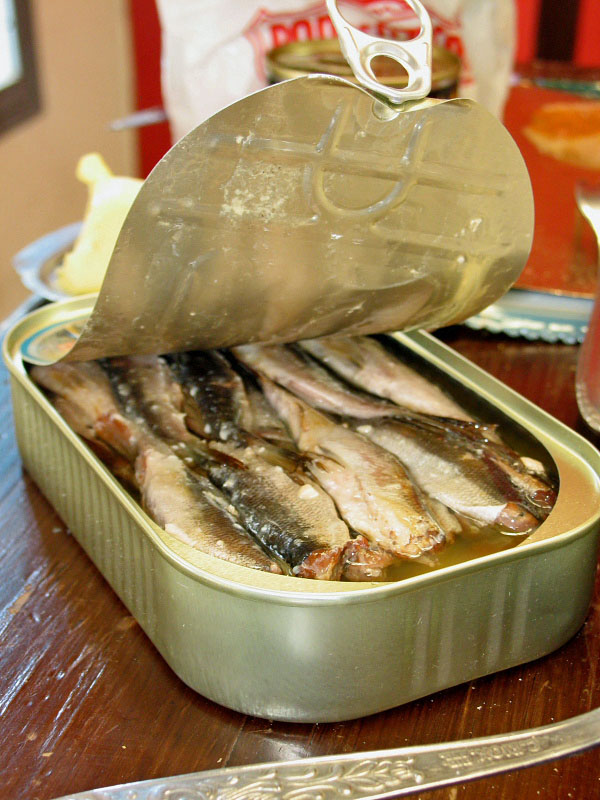
There are probably three genuine reasons behind the origin of the "no fish" policy. Historically, tinned cat food was poor quality and fish flavoured varieties had lots of small bones in it, which cats could cope with but may have caused problems for hedgehogs. Furthermore, fish flavoured foods smell more strongly than other flavours that this may attract cats from further away that may get to the food first. At the same time, fish goes off more quickly than meat and flies may also be attracted more quickly. Finally, several rescue centres have noted that hedgehogs eat fish flavoured food with less relish and for rescues trying to fatten up sick hogs this may be an issue.
It is not uncommon for rescue centres to feed the hedgehogs in their care fish flavoured food, particularly as many are reliant on whatever is donated by the public. Vale Wildlife tell me that they mix various flavours together into a single "slush" to feed to their patients. This mixing of flavours appears an increasingly common approach and some carers have noted that feeding "undiluted" fish flavoured food can have unforeseen consequences. Jayne Morgan, who runs The Happy Hedgehog Rescue, told me:
"Many years ago I was donated alot of fish Winalot cans and I eagerly gave all 40 hogs a bowl each of it. In the morning I opened the Hogspital only to be hit by this wave of fish smell. Who had replaced my rescue with a fishmongers? My first ever volunteer came in later and politely pointed put that if I did that again she wouldn't be back. The cages were awful as they had all had very loose stools. I remember this like it was yesterday. I still feed captive hedgehogs fish flavoured foods but I make sure I use 2/3 meat to 1/3 fish and all is well. Ps. All the hogs were fine and none had weight loss."
Finally, while food can be hugely valuable to visiting hedgehogs, it is arguably more important to put out fresh water, particularly during prolonged warm and dry spells.
Further advice on what to feed hedgehogs can be found in a very interesting article by Lynda Britchford of Oxton Wild Hedgehog Rehab.