Summary
Hedgehogs are declining in Britain, particularly in rural areas (see: Are hedgehogs declining in the UK?), and the proposed causes are many: changes to farming, and the move from pasture to arable in particular; loss of hedgerows and neatening of our countryside and gardens; widespread use of pesticides, particularly insecticides, both on farms and gardens, which reduce the hedgehog's prey and may even poison the hedgehogs themselves; the expansion of our road network and the substantial increase in traffic volume, which not only causes direct collisions and trapping (e.g., in cattle grids), but also fragments habitats; predators, badgers particularly; and a variety of man-made hazards, including strimmers and mowers/robo-mowers, discarded litter, bonfires, drowning in garden ponds, entanglement in netting, AstroTurf replacing grass and soil, and even being fed inappropriate things, such as bread and milk, mealworms, and peanuts.
Fortunately, attitudes towards the environment may slowly be changing. In recent years we've seen a small shift away from pesticides to use less-toxic methods of pest control and more appropriate supplemental feeding. Large numbers of sick and injured hedgehogs are taken to rescue centres each year, where advances in veterinary care mean they stand a better chance of being rehabilitated and released, potentially helping to support local populations. Translocation of hedgehogs from island colonies where they're implicated in seabird declines has also proved successful, offering hope that some depleted mainland populations might eventually be re-established.
Legislatively, the evidence of a decline was considered sufficient for hedgehogs to be included on the government's UK Biodiversity Action Plan in 2007. While that plan has since been superseded, the hedgehog remains listed as a Species of Principal Importance under Section 41 of the NERC Act 2006 for England, although its conservation status has, if anything, become more concerning since then: it's now classed as Vulnerable to extinction on the British Red List for mammals (2020) and Near Threatened on the global IUCN Red List (2024), the latter of which noted declines have been observed in more than half of the countries in which the species occurs. In October 2024, more than 30 conservation bodies came together to launch Britain's first National Hedgehog Conservation Strategy, a ten-year plan aimed at halting and reversing the decline.
Table of contents
- The hows, whys & wherefores
- What's being done?
- Helping hedgehogs: what can we do?
- The bigger picture
- In essence
- References
The hows, whys & wherefores
Knowing, or at least suspecting, the hedgehog population is in decline is one thing, but it's also important to try and get a handle on why, so that it may at least be stopped; ideally, reversed. Even before there were any data pointing to a decline, scientists and animal welfare organisations alike were highlighting the plight of the hedgehog in our modern world.

The threats and misfortunes of hedgehogs are many and nowadays include roads, pesticides, predators, habitat change, disease, strimmers and mowers, miscellaneous natural mortality (e.g., hibernation, old age, fights, climate change, etc.), and miscellaneous human-mediated mortality (e.g., litter and non-mechanised garden hazards). Historically, human persecution was widespread, with hedgehogs considered pests of farming and gamekeeping, and bounties paid for proof of death. Tom Moorhouse's Ghosts in the Hedgerow references old accounts of gamekeeper gibbets containing 150–200 carcasses and some boasts of having killed thirty a night from some. While we don't know how accurate such accounts are, church warden accounts do show rewards of a penny or so per dead hog. Fortunately, landowner attitudes in Britain have largely changed.
Before looking at some of the issues facing hedgehogs in greater detail, it's important to be clear that finding a lot of hedgehogs dead from a particular cause, or brought into rescue centres with a consistent malady, doesn't necessarily mean that cause is driving the national decline. These are all pieces to a bigger puzzle.
Habitat loss and fragmentation
Over the course of the 20th century, changes in farming practices transformed much of Britain's countryside. In some areas, traditional grazing pastures have been converted to arable production, while mechanisation encouraged the removal of hedgerows and the amalgamation of smaller fields into larger ones. In The New Hedgehog Book, Pat Morris contrasts the small, closely grazed fields of the past, with their abundant dung and associated invertebrate prey, with today's larger, more intensively farmed arable (mainly cereal) fields, where pesticides and soil compaction can further reduce the invertebrate prey available to hedgehogs. Indeed, The Tree Council and People's Trust for Endangered Species estimate that Britain lost half its hedgerows since 1950, with 190,000 km (118,000 miles) of this valuable habitat removed. Furthermore, many of the remaining hedgerows have been substantially denuded, reducing their biodiversity.
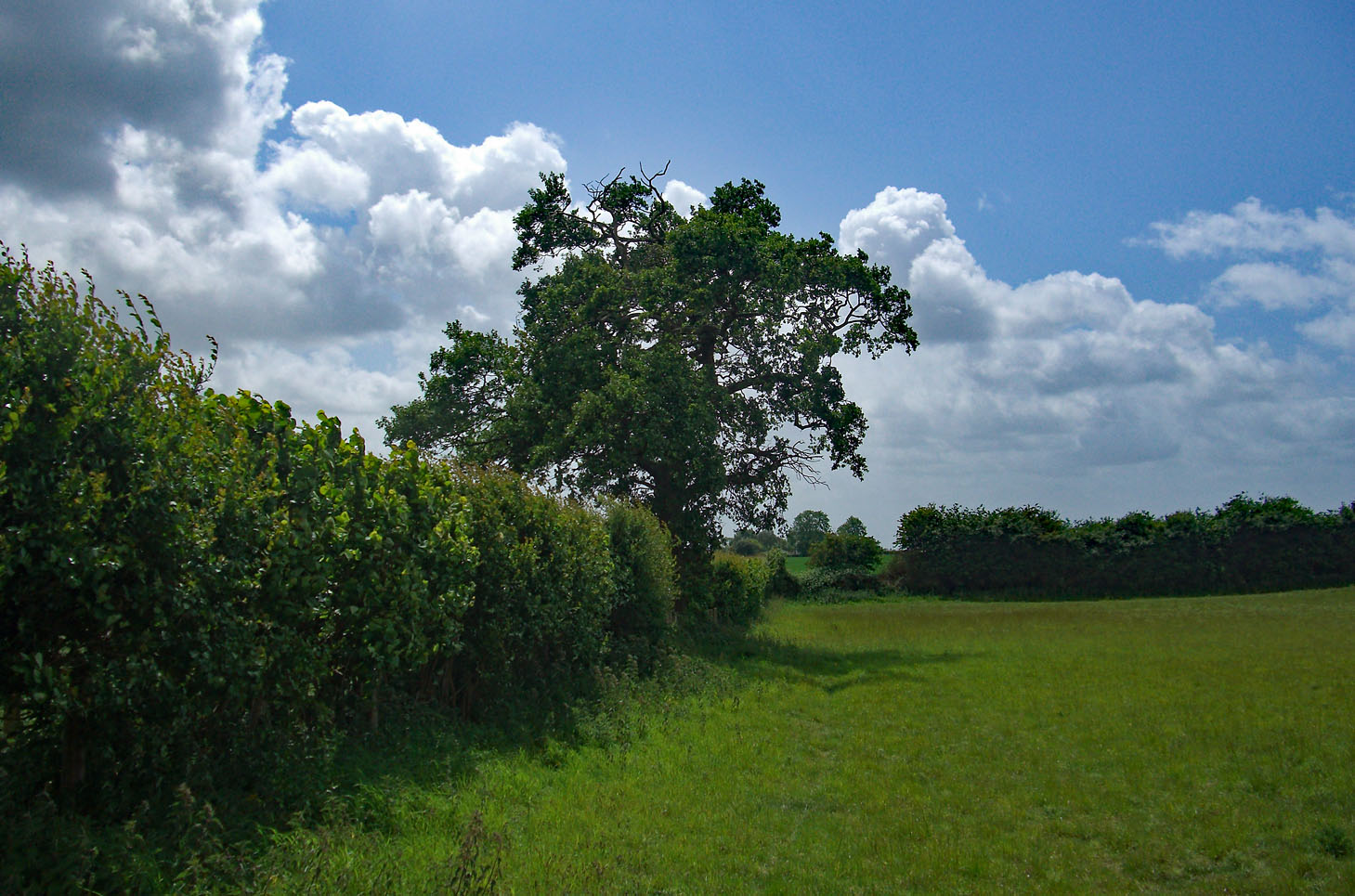
The importance of hedgerows and edge habitat for hedgehogs cannot be overemphasised. During their tracking study of hogs living in a 202 hectare (500 acre) area near Elburg in The Netherlands, Marcel Huijser and his colleagues found that, although hedgerows only comprised about 10% of the study site, their subjects spent one-third of their time in them and along the edge of woods; altogether, they spent 60% of their time either in or within 5 m (16.5 ft) of hedgerows or forest edges. Huijser and his team also observed that 82% of 271 day nesting sites they located were found among bramble bushes, dense shrubs or grasses and herbs situated within hedgerows (60%) or woods (22%). They were only able to locate 15 hibernacula but, of these, nearly half were found in hedgerows; similarly, six (75%) of the eight breeding nests located were in hedgerows. Similar data illustrating the importance of hedgerows and thorny vegetation such as bramble to hedgehogs have been collected in Britain.
At the Day of the Hedgehog conference held at Telford International Centre in 2015, Richard Yarnell presented data collected by his team showing how just over half the nests they found were in bramble and hedgerow and, while studying hogs for her Ph.D. at Oxford University, Carly Pettett found that hogs preferred to nest in shorter and wider hedges and that hedgerows were warmer than surrounding fields. As Tom Moorhouse put it in his engaging 2023 book Ghosts in the Hedgerow:
"Study after study has shown that although hedgerow makes up only a tiny fraction of the overall area of a typical hedgehog’s range, that tiny fraction is where the hedgehogs opt to spend most of their time."
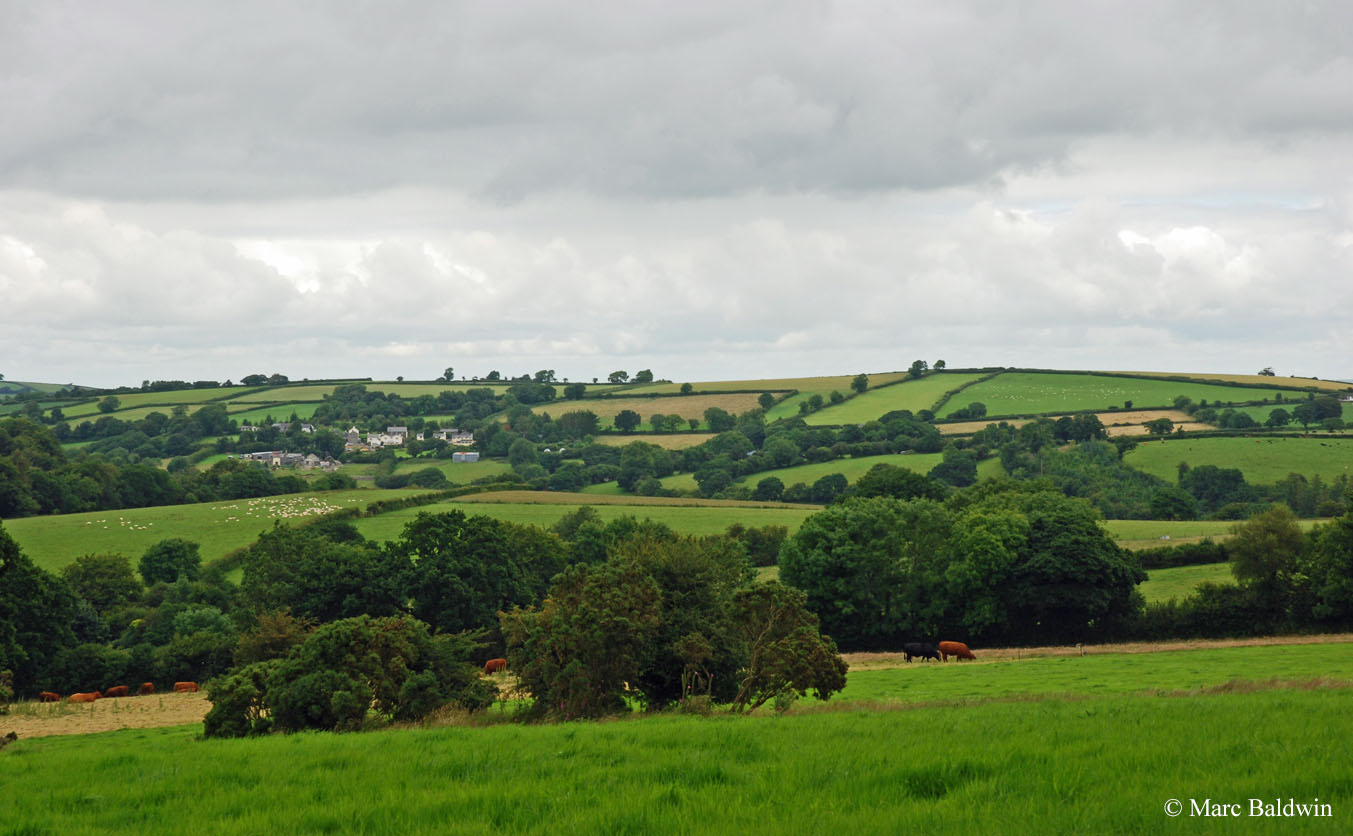
We know from tracking studies that hedgehogs make little use of arable fields, preferring pastureland that provides a mixture of short grassland for feeding and scrub/hedge patches for both feeding and nesting. While there has been something of a drive by the government and farmers to try and restore some of our countryside and farm it in a more sustainable manner recently, it's not difficult to see why many gardens, with their short lawns and mixture of trees, bushes and grasses, provide a refuge for hedgehogs in the face of intensified farming in our countryside.
Not all gardens are equal, though, and not all provide the habitat needed by hedgehogs. Just as it is for farmers, gardeners who take pride in their patches being neat, tidy and pest free are unlikely to receive transient visits from hedgehogs at most. It cannot be overstated how important structural complexity is for wild spaces, offering a diversity of nesting sites and invertebrate prey that are absent from manicured areas. Indeed, with hedgehogs apparently so dependent upon hedgerows to provide safe resting, hibernating and breeding nest spots, it's not difficult to see how the loss or "neatening" of these landscape features could be problematic.
Alongside agricultural intensification Britain is also witnessing increased development of the countryside – turning greenspaces into new villages and towns. This development pressure isn't confined to the countryside, either, and, historically, planning policy also contributed to the loss of garden habitat. Under the UK Government's Planning Policy Guidance 3 (PPG3), residential gardens were treated as previously developed land ('brownfield'), which typically meant development proposals were more likely to be approved than they were for 'greenbelt' land. Conservation organisations subsequently highlighted a trend for developers to purchase bungalows, demolish them and build flats across the former building plot and its garden. The PPG3 was replaced by Planning Policy Statement 3 (PPS3), and in its 2010 revision, the definition of previously developed land was updated to exclude residential gardens, in part to curb this so-called 'garden grabbing'. The National Planning Policy Framework, introduced in 2012, retained that exclusion.

Britain's continuing need for new housing means that more land will inevitably be developed, and the UK Government recently set an ambitious target of delivering 1.5 million new homes in England by the end of 2029, with higher mandatory housing targets for local authorities. Several wildlife organisations have expressed concern about the potential implications for wildlife. At the same time, there's growing recognition that new developments need not always be synonymous with habitat loss. Homes England's 2026 Nature Positive Plan, for example, includes a commitment to make new housing more wildlife-friendly, with hedgehog highways given as one example of how developments can help maintain connectivity. How much impact new development has on hedgehogs will therefore depend, at least in part, on how schemes are designed; particularly, whether existing habitat and opportunities for movement are retained.
The importance of connectivity isn't restricted to the wider countryside. Gardens can provide valuable habitat for hedgehogs, particularly where they're connected to neighbouring gardens and other suitable spaces. A team at the Technische Universität Braunschweig, led by Mario App, working in the north-east German city, found that gardens and allotments being inaccessible to hedgehogs reduced available habitat features by 63% compared with accessible sites. In other words, simply allowing hedgehogs to move between otherwise suitable spaces can substantially increase the habitat available to them.
Habitat fragmentation has also raised concerns about genetic isolation, particularly where populations become small and fragmented. Abigail Gazzard and colleagues noted that roads can cause genetic isolation, and a 2026 paper by Jessica Turner and team reported evidence of lower genetic diversity and greater differentiation in several highly urbanised London hedgehog populations. That said, this doesn't appear universal and other recent genetic studies suggest hedgehogs are surprisingly capable of moving between fragmented habitats. Swansea University biologist Samantha Shove and her team, for example, found little evidence of genetic isolation across a large area of South Wales despite the presence of roads, waterways and habitats considered relatively resistant to hedgehog movement. This suggests that maintaining viable populations and opportunities for movement between them may be more important than assuming that fragmentation will inevitably lead to genetic isolation.
The Long and Winding Road
Roads affect animals in several ways, from causing stress to presenting surfaces they're reluctant to cross. Their most significant impact, however, is probably the risk of injury or death when animals attempt to cross them. The scale of this danger is apparent along almost any A or B road, dual carriageway or motorway, where animal carcasses are a common sight on the verge. Beyond direct mortality, roads can fragment and isolate populations, restrict gene flow, prevent recolonisation after local extinction and concentrate pollutants in surrounding habitats. These effects are discussed in greater depth elsewhere (see QA).

Hedgehogs were once a familiar sight lying dead by the roadside in Britain. Ironically, it's actually the lack of hedgehogs to be found along on roads nowadays that's been the driving force behind the idea that hedgehogs are in decline. The 2015–2018 data presented in the State of Britain’s Hedgehogs 2022 report suggest that, on average, one hedgehog was killed for every 145 km (about 1 per 90 miles) of road. The Mammals on Roads (MoR) survey -- a joint venture between the Mammals Trust and People's Trust for Endangered Species, which used driver surveys showing hedgehog casualties -- recorded about a 70% decline in the number of dead hedgehogs between 2001 and 2015. There was variation in the casualty distribution, though, and when the data were averaged out, it appeared more hedgehogs were being killed per 100 km (62 miles) of Scottish road than either English or Welsh road. In rural areas, the data suggested a decline in numbers of more than 7% per year and the interpretation was that fewer are dying on roads because there are fewer around to be hit by cars.
Interestingly, the regional differences highlighted in the MoR data are also evident in other studies. Between April 2008 and November 2010, Amy Haigh and colleagues monitored two stretches of road (one in County Cork and the other in County Galway) for evidence of hedgehog roadkill. The researchers found a relatively low casualty rate (0.264 per 100 km) compared to other countries, which they suggested may reflect Ireland's lower overall road density reducing opportunities for hedgehogs to encounter major, high-traffic thoroughfares. While most roadkill occurred alongside pasture, the most dominant surrounding habitat, arable land was the only habitat type selected at a rate higher than its availability, likely aided by Ireland's high density of hedgerows and heterogeneous landscape. Spatial analysis revealed that fatalities weren't randomly distributed but clustered significantly, particularly near towns and junctions, indicating specific recurring crossing locations. Furthermore, road casualties showed a strong male bias, with male deaths peaking between May and July and female deaths outnumbering males only in August; these seasonal fluctuations corresponded directly to expanding ranges during the breeding season and juvenile dispersal. Consequently, in their paper to Wildlife Biology, the team concluded that, because hedgehogs utilise predictable crossing hotspots and exhibit clear seasonal activity cycles, mitigation strategies such as underpass construction could be strategically placed at these identified crossing points to further reduce road deaths.

In his The New Hedgehog Book, published in 2010, Pat Morris made a rough calculation suggesting that about 15,000 hedgehogs were killed on Britain's road network each year. In a short paper to the journal Mammal Communications in 2016, however, David Wembridge and colleagues (including Morris) undertook a more systematic analysis of surveys conducted between 1952 and 2004. Accounting for how long carcasses remain on the road and how likely you are to spot a hedgehog from a car, the analysis estimated that between 167,000 and 335,000 hedgehogs died on our road network each year. Depending on the population estimate used, this represented roughly 10–20% of the population annually. Very few biologists think that roads are going to lead to the extinction of the UK's hedgehog population, but on a local scale it can have a large impact.
Studies by Marcel Huijser and his colleagues in The Netherlands indicate that road traffic may reduce hedgehog population density by almost one-third within 200 m (650 ft) or so of roads. More recently, in their 2025 review on the conservation status of hedgehog species throughout Europe, Abigail Gazzard and her co-workers reported that roads present a major barrier to movement, cause genetic fragmentation, and account for significant annual mortality, citing an estimated 9–25% of the total population in the Netherlands and 10–30% in the UK.
A new dataset from England has provided insight into how important population size is when it comes to outpacing road mortality. A study of four hedgehog populations in Nottinghamshire, led by Lauren Moore at Nottingham Trent University and published in Animal Conservation, found that road traffic accounted for 38–41% of recorded hedgehog deaths, with an estimated 15–29% of individuals killed on roads each year across the four sites. Modelling by the research team suggested that even low levels of road mortality can have serious consequences for small populations, with populations of fewer than 15 hedgehogs unable to offset losses to vehicles. In larger populations (those of more than 36 individuals), by contrast, road mortality was offset by births and juvenile survival such that population viability remained unaffected under current roadkill rates. In their paper, the researchers cautioned:
"This present study found that there is a limit to the level of road mortality the larger populations can cope with. That is, 40% annual proportional mortality catalysed a decline in otherwise stable populations, with 50% annual mortality eventually leading to extinction in even the largest populations studied."

Outside of the direct mortality resulting from collisions with vehicles, hedgehogs also suffer mortality in cattle grids. Following public campaigns -- largely championed by Major Adrian Coles, who went on to set up the British Hedgehog Preservation Society in 1982 -- there's now a trend for building escape ramps into cattle grids. Currently, in the UK, cattle grids are designed in accordance with the British Standard 4008:2006; ramps permitting the escape of small mammals, reptiles and amphibians are a recommended inclusion.
Gardens: refuge or hazard?
Gardens can be extremely valuable habitat for hedgehogs, particularly where the surrounding countryside has become less suitable. But they can also contain a remarkable concentration of hazards.
One of the most obvious is water. While hedgehogs can swim, they can easily drown if they fall into a pond with sides too steep to climb out. If digging a wildlife pond, at least one side should have a shallow slope to allow easy access to, and escape from, the water – alternatively, a short plank of wood (wrapped in chicken wire for extra grip) can be situated at one end to act as an escape ramp. As with escape ramps from cattle grids, the gradient shouldn't be too steep; not more than 30° from horizontal.
Netting can also be a big problem for hedgehogs. In The Complete Hedgehog, Les Stocker wrote:

"Hedgehogs make a habit of getting trapped in the plastic bean netting, twisting and turning until they nearly sever a leg or seriously damage their throats."
It's recommended that garden netting is raised at least 30 cm (1 ft) above the ground overnight. Pea and bean netting aren't the only culprits; as a child, I recall watching with interest as a member of staff from a local leisure centre took the utmost care untangling a hedgehog from a football goal net.
Pesticides are another concern, both because they can reduce the invertebrate prey on which hedgehogs depend and because some compounds may pose a direct toxicological risk. The relative importance of these effects to hedgehog populations remains poorly understood, though. In recent years, there has been something of a drive towards encouraging a more ecologically friendly way of life, however, and one area where this has been particularly evident is in gardens. There's now a growing culture of organic gardening, moving away from using pesticides to kill off species that eat your plants. This includes the amateur and commercial use of slug pellets, which have been of particular concern for hedgehog welfare groups historically, although this had been based on the older metaldehyde pellets, which have since been phased out in Britain, but we have no data on their copper-based replacement (see QA for more detailed coverage). Other pesticides and weedkillers continue to be widely used in gardens and the countryside, their effects on hedgehog populations largely unknown.
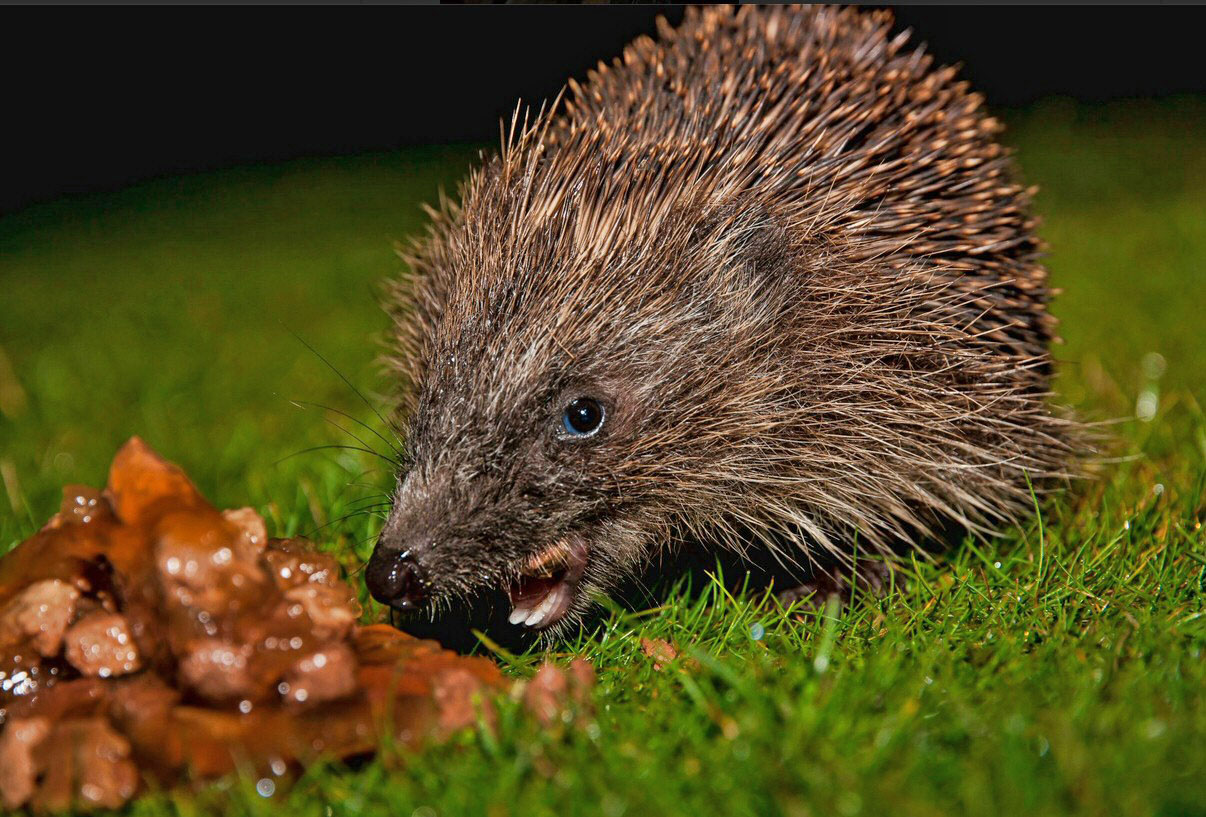
The provision of the wrong types of food can also pose a problem. Bread and milk is still quite commonly offered to hedgehogs, in spite of publicity campaigns from wildlife charities for many years and despite this offering no real nutritional value to hedgehogs and even making them sick (this is discussed in more detail elsewhere on this site). Similarly, while wet pet food is a good option to supplement a hedgehog's diet, feeding it exclusively can potentially lead to dental issues. In an article published in the Veterinary Record during 1996, Pat Morris and biologists from the Institute of Zoology's Veterinary Science Group led by Anthony Sainsbury reported on the fate of 12 hedgehogs released back into the wild having been kept for one winter at an animal hospital in Somerset.
During the pre-release health checks the biologists found that all the animals had inflamed gums, a response that the authors posited might be related to the diet of soft food (particularly pet food) offered in captivity, which sticks to the gums and can lead to microbial infection. The authors suggested that, in the wild, the hard exoskeletons of insect prey probably serve to scrape plaque and tartar off the teeth, helping to maintain dental health, while prolonged feeding on soft food could contribute to dental problems. Providing crunchy cat biscuits or specialised hedgehog food might help offset any issues with wet food in a hog's diet.
The trend for householders to feed hedgehogs potentially unsuitable "treats" such as mealworms, peanuts and sunflower hearts may also lead to future health issues. These are high in phosphorus, relative to calcium, which can retard calcium absorption in the stomach – the result can be osteodystrophy and bone metabolic disease. Indeed, while we don't know whether this is having population-level impacts, in recent years rescues have reported getting hedgehogs admitted with bone deformities that they suggest might be a result of bone-thinning from too many mealworms and peanuts. (See Hedgehog Mortality – Parasites & Diseases for more detail.)

Hedgehogs are particularly adept at falling into things, making uncovered drains and pits, particularly those that collect water, a significant threat. Similarly, there are seasonal hazards, such as bonfires and every autumn there's a plea from hedgehog carers for people to check piles of old wood and garden refuse for hedgehogs before setting them on fire. There aren't any national stats, so we don't know how many hogs are killed in bonfires each year. In the literature, the only specific reference I've found is a 1988 paper to the Journal of Zoology in which Chris Dickman reported that almost 2% of the 109 corpses he collected as part of a dietary study had died from "accidental burning". Talking to some of the hedgehog carers I know, they see relatively few burn victims (maybe only one or two per year), but they suspect this is probably because most either go unnoticed or get thrown away.
As Les Stocker summed the situation up:
"Remember, if there is a hazard in the garden, a hedgehog is bound to find it."
One man went to mow…
When confronted with danger, hedgehogs tend to curl up rather than running away. This has proven a successful strategy for most situations but is more often a fatal choice when confronted with machinery, be that a car or a mower. Indeed, spines are just as ineffective against lawn mowers and garden strimmers as they are against cars. What's worse is that hedgehogs like to lie up in the exact rank, overgrown vegetation that many gardeners want to mow or strim.
In an article to the May 2000 issue of BBC Wildlife Magazine, Pat Morris wrote:
"A newer threat comes from the proliferation of mowing machines, which slice not just grass, but also the legs, nose and skin of sleeping hedgehogs. While other animals would flee to safety at the sound of an oncoming strimmer, hedgehogs lie there motionless, relying naïvely on their spines for protection."
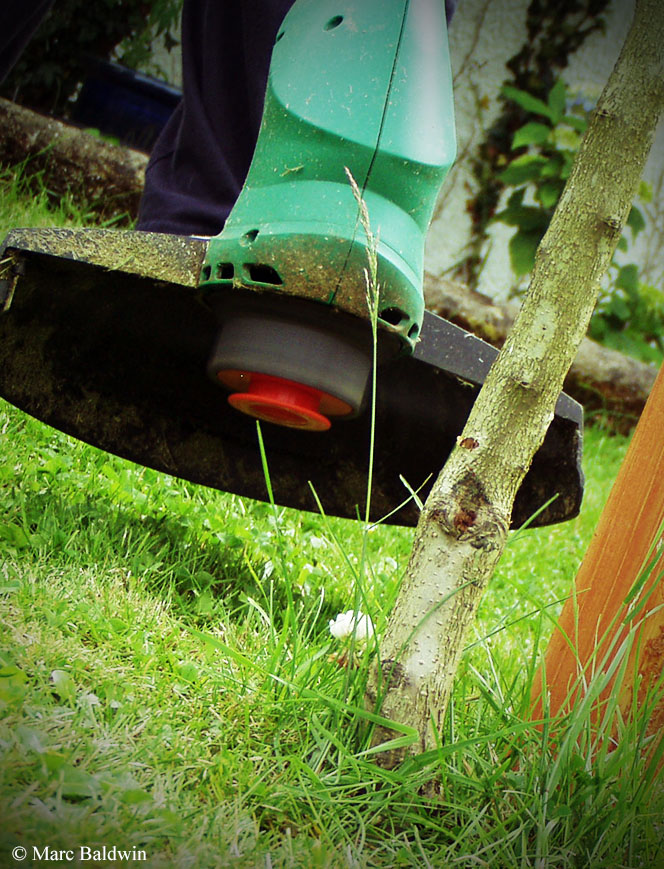
There's no central database of hedgehog admissions to wildlife rescue centres, so we have no "official" figures for how many are injured by strimmers. That said, on their website, the Epping Forest Hedgehog Rescue team report that in 2007 they had 50 hogs brought in with injuries caused by strimmers and that was not an exceptional year. Unfortunately, none of the hedgehogs survived, despite the veterinary care administered.
In 2014, Hedgehog Bottom rescue in Thatcham, Berkshire, took in 722 hedgehogs, 173 (24%) of which suffered from "gardening injuries". Hedgehog Bottom founder Gill Lucraft told me that almost all of these were strimmer-related injuries, with a few mower-related and seven animals impaled on garden forks. This was a pretty typical year for the rescue, apparently. The Jersey Hedgehog Preservation Group, meanwhile, admitted 580 hogs during 2016, about 10 (1.7%) of which were suffering from strimmer-related injuries – this followed a significant publicity campaign on the island aimed at reducing such incidents. Jayne Morgan, who runs The Happy Hedgehog Rescue in Yatley, tells me she received at least 20 hogs with strimmer injuries during 2016, an increase over the 15 they had the previous year. In some cases, skin grafts are possible, but in many instances the hedgehogs do not survive.
There is a thought-provoking (if a little macabre) poem about hedgehogs and lawn mowers by the fantastic late poet, novelist and even jazz critic Philip Larkin, spawned from a fateful day in June 1979, when he was pushing a Victa lawnmower -- which, rumour has it, he never used again -- around his garden in Hull. In his short elegy "The Mower", Larkin describes the mower stalling and, kneeling to investigate, finding a hedgehog he recognised (one he'd fed before) killed beneath the blades. The poem turns on his guilt at having "mauled" the creature's small, unassuming world without meaning to, a feeling any gardener who's made the same mistake may recognise.
It cannot be over-emphasised how important it is to check the area to be cut before starting. It sounds rather melodramatic, but a few minutes of your time really can mean the difference between life and death for a snoozing hedgehog.
More recently a trend of robotic mowers has emerged – autonomous, battery-powered machines that cut the grass without human oversight. Some market analysts put the value of the global market for these mowers at several billion dollars by 2027. Recent work led by Oxford University Research Fellow Sophie Rasmussen suggests, however, that the hedgehog's penchant for curling up in the face of danger means these machines may inflict severe, even fatal, injuries.

Two recent studies published in the journal Animals, one in 2021 and the other in 2024, assessed how a variety of different types of robotic mower responded to differently sized hedgehog cadavers obtained from Danish hedgehog rescues. The trials revealed the full spectrum from a simple nudge to outright maceration. Regrettably, the sensors on all mower types failed to detect the hogs, meaning that in all but one instance the units only turned around once they touched a hedgehog – dependent hoglets (i.e., those under 200 g / 7 oz) were most at risk of being mown. The 2021 study found that pivoting blades, skid plates and front-wheel drive significantly reduced injury risk, a finding the 2024 study built on when designing its safety-test protocol.
Both research papers call for collaboration with the manufacturers to improve wildlife detection – a call some have already answered. Husqvarna, for instance, has introduced a 'Wildlife Consideration' setting that rests the mower from dusk to dawn, when hedgehogs are most active, and delays blade start-up for several seconds after leaving the charging station to let any sheltering animals move away. Such measures, in combination with only mowing during the day, should reduce the risk these units pose to hedgehogs.
Litter liability
Outside of the garden, littering can be a major problem for wildlife and, because of their inquisitive nature, hedgehogs seem particularly susceptible. In The Complete Hedgehog, Les Stocker wrote of cases where hedgehogs had crawled through various plastic hoops, elastic bands and key rings, which had then become lodged and cut into the animal as it grew. Many rescues in Britain have reported receiving hedgehogs with elastic bands (many apparently dropped by Royal Mail workers) cutting into them, prompting several national news stories and campaigns from Keep Britain Tidy in the mid and late 2010s; there's even a WikiPedia page on the subject.
Hedgehogs are also renowned for getting their heads stuck in yoghurt pots and tin cans. Perhaps the most famous of these were the McFlurry® pots, ice cream tubs sold by the fast-food chain McDonald's. Up until 2019 here in the UK, the pots consisted of two parts: a cardboard cup lined with plastic film that held the ice cream and a plastic lid that clipped on to the cup. It was the lid that caused issues for hedgehogs.
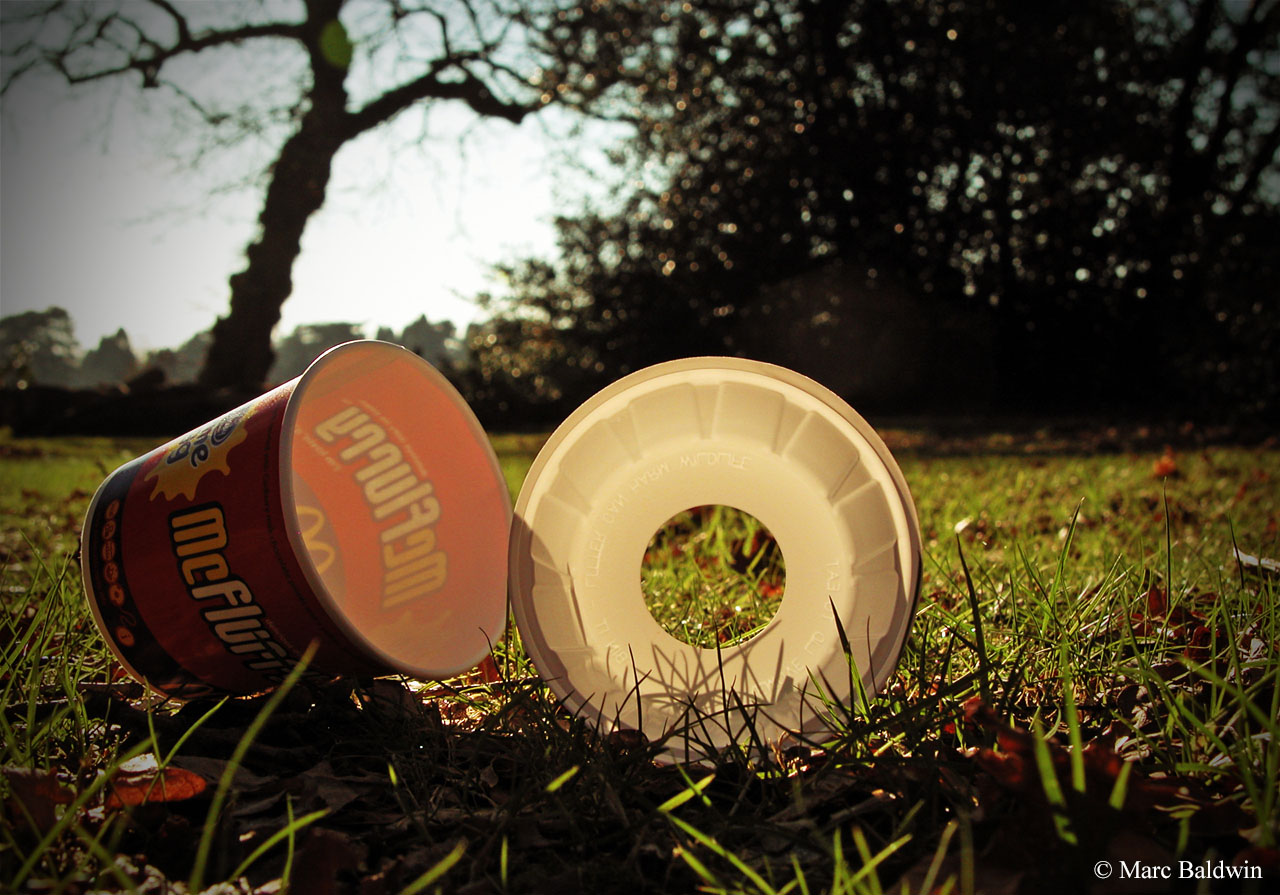
The problem with the original design of the McFlurry® pot was that it had a hole just large enough for a hedgehog to get its head in; unfortunately, the lid had a very deep lip that caught on the spines and prevented the hog from pulling its head back out. In September 2006, following five years of pressure from the British Hedgehog Preservation Society and the public, McDonald's released the new look pot design, with a smaller hole (now only 3.5 cm/1.5 in. wide) designed to prevent hedgehogs getting their heads into in the first place. The lid also contained the warning "Bin it – Litter can harm wildlife" in raised letters. Thirteen years later, in September 2019, the chain stopped using lids altogether in the UK – this was apparently part of a drive away from single-use plastics, although the lids are still used in other countries.
It might be argued that it shouldn't have been necessary for McDonald's to redesign their packaging, given the problem can be so easily overcome with a little thought on the part of the people disposing of their litter; but this chain's packaging is consistently ranked as the most abundant fast food litter on streets in Britain according to Keep Britain Tidy and the second most littered brand in the UK (after Coca Cola) according to Planet Patrol's 2019-2024 Litter Report.
More recently, concerns have been raised about the ubiquity of plastics and microplastics in the environment. One recent study by Emily Thrift at the University of Sussex and colleagues, published in Environmental Toxicology and Chemistry during June 2026, reported that the commercial pet foods frequently fed to hedgehogs contained microplastics. In their paper, the researchers explained that most (84%) of the 19 brands tested were contaminated, with value products having more positive samples than mid-range and premium products. The potential significance of this is currently the subject of further study. We know that hedgehogs will also weave plastic into their nests, which may be another potential source of exposure, and the British Hedgehog Preservation Society has recently started funding investigations into how accumulation of microplastics within hedgehogs may influence their overall health and reproductive potential.
Predation and natural mortality
To this point, we've covered largely manmade threats: roads, pesticides, habitat change, garden hazards and litter. There are, however, numerous "natural" sources of injury and mortality faced by hedgehogs. After all, everything that lives will eventually die, and hedgehogs are certainly no exception.
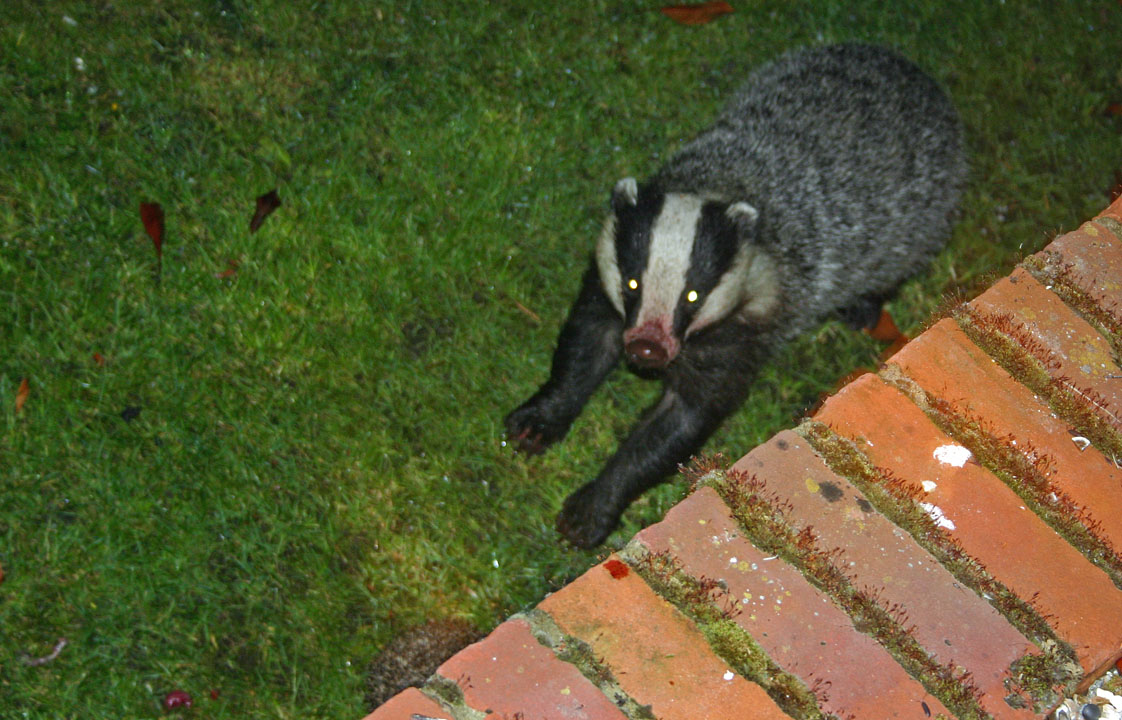
Mortality is naturally high during the first year of life, and winter hibernation -- which represents a major physiological readjustment and an inherently dangerous undertaking -- is one period when inexperienced or poorly provisioned animals are particularly vulnerable. Some estimates suggest that as many as 70% of hedgehogs don't survive their first year, half of those dying during their first winter. While in hibernation, hedgehogs are vulnerable to predators, flooding and quite literally running out of fuel if they can't lay down sufficient fat reserves during the summer and autumn.
Predation is another important source of natural mortality. Hedgehogs have relatively few predators, but badgers (Meles meles) in particular are known to kill and eat them (see QA), and have been widely implicated in the decline of hedgehogs across the UK. Controlled studies on captive hedgehogs suggest they appear to respond to badger odour by making a beeline away from the source. Similarly, data from several tracking studies suggest that the location of badger setts can present a strong barrier to hedgehog movement, and in the presence of badgers hedgehogs range much less -- and stay closer to buildings -- than in their absence.
Some authors have suggested that part of the reason hedgehogs do well in the urban sprawl of our settlements is that these areas tend to provide refuge from badgers, but equally the habitat in gardens and parks tends to be more suitable for hedgehogs nowadays than much of our countryside. In their 2018 paper to Scientific Reports, for example, Ben Williams and his team found that just over 70% of their sample sites across the English and Welsh countryside were devoid of hedgehogs, despite having no badgers. Similarly, during her Ph.D. at Nottingham Trent University in 2021, Katie Lee found that Meles meles seemed to have the most significant influence on hedgehog persistence at densities of around 15 badgers per square kilometre (0.15 per hectare).

This is a relatively high density by British standards, suggesting that the mere presence of badgers isn't necessarily incompatible with hedgehogs, although the relationship between badger density, habitat and hedgehog occurrence is clearly complex. Indeed, a more recent study by Lee and her team, published in Ecology and Evolution in 2025, found hedgehogs were consistently associated with proximity to buildings regardless of whether badgers were present or not, and there was a high degree of temporal overlap in nocturnal activity of the two species.
Foxes are also widely reported to take hedgehogs. A 10-year study by John Gurnell and colleagues examined the small, geographically isolated hedgehog population in central London's Regent's Park. Over the study period (2014–2023), the population declined from an average of 28 individuals to just six, while its distribution contracted markedly to the northeast quadrant and the London Zoo grounds, having originally been recorded throughout the park. Predation accounted for 59% of known deaths overall and 96% of juvenile fatalities, with foxes the principal predator. This is a striking example of the potential importance of predation, although the study concerns a small, isolated urban population and should not be taken as evidence that fox predation is driving the national decline.
Alongside direct predation and displacement, The State of Britain's Hedgehogs 2015 report pointed out that badgers (and foxes) also compete with hedgehogs for food, noting that "one badger eats enough to support five hedgehogs", and a study by Anouschka Hof and colleagues, published in Animal Behaviour during 2012, found that beetle abundance was significantly lower at sites with badgers than those without, albeit the earthworm abundance was higher.
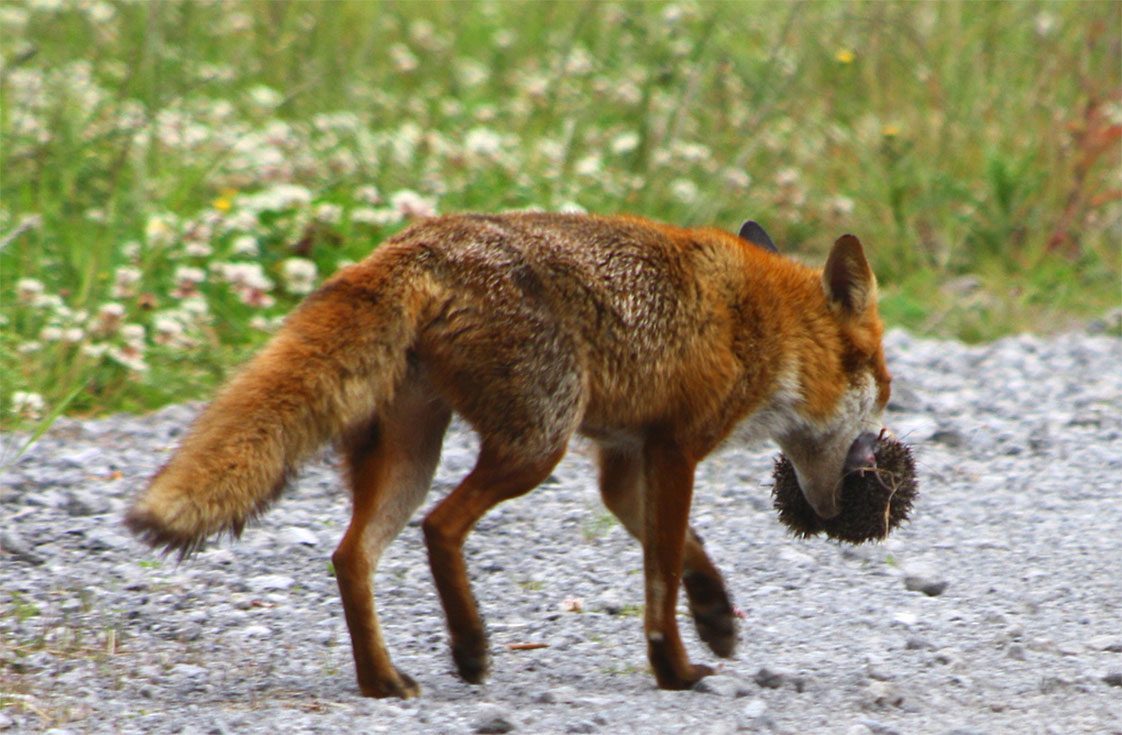
I think Tom Moorhouse summed up the hedgehog-badger situation well in Ghosts in the Hedgerow:
"If hedgehogs didn't give two hoots about badgers, but couldn't live in the wider countryside for some other reason, we'd see much the same pattern. … Badgers almost certainly don't make life easier for hedgehogs, and certainly do kill and eat them, but we still have no proof that they are the ultimate root of the problem. … For me, the ecological space for hedgehogs on farms has been wrung out to the last drop. And badgers are administering the final, fatal squeeze."
Hedgehogs may also be killed by overzealous domestic dogs, birds of prey, and corvids (particularly magpies some authors have suggested), although it's unknown how often this happens. Parasites and diseases -- especially lungworm and the emerging hedgehog arterivirus -- also contribute to natural mortality, although their significance for populations remains unknown.
Feeling hot, hot, hot!
One final aspect to consider is climate change. A warming climate may not be a major threat to hedgehogs per se, and we know they do well in warmer climes with milder winters such as on New Zealand's North Island. Provided their food supply doesn't disappear, we might see a reduction in the period spent in hibernation, or perhaps even some animals foregoing hibernation altogether, which some anecdotal observations suggest may already be happening in southern England. The key problem raised by climate change for hedgehogs is probably the increased unpredictability of our weather, with extremes much more likely, and the effect this may have on hibernation.
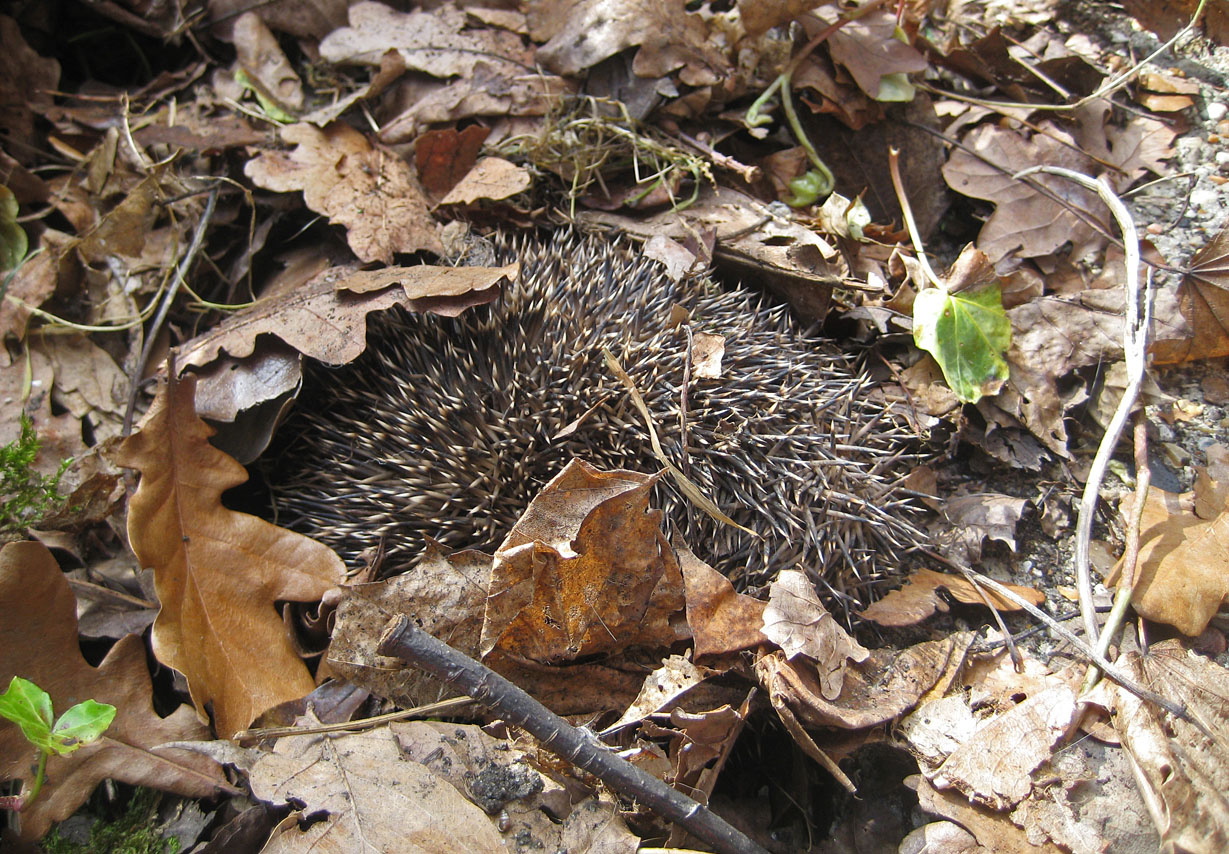
Some of the mechanisms controlling hibernation remain unclear, but once torpor has begun, its duration seems to be largely governed by external temperature rather than an internal alarm clock. Hedgehogs may therefore wake during unusually cold weather, to avoid freezing, or during mild spells, and emerging from hibernation uses considerable energy. Several weeks of mild, wet winter weather may consequently cause them to wake more frequently and search for food that may not be available. This need not threaten survival if suitable weather and food persist, but climate change is increasingly producing mild periods punctuated by shorter spells of sometimes severe cold. Such cold snaps can cause food to disappear and trigger hedgehogs to re-enter hibernation after they have already expended valuable energy, potentially leaving insufficient reserves to survive the remainder of winter, particularly after several such episodes. Wetter winters may also increase the risk of flooding, which can drown hibernating hedgehogs. Conversely, warmer, drier springs and summers can affect the availability of soil-dwelling invertebrates, potentially causing malnutrition and dehydration, particularly in hoglets.
Overall, warmer temperatures may not be a big deal for hedgehogs given that hibernation isn't essential. Changes in the timing and abundance of invertebrate prey, altered rainfall patterns and more frequent weather extremes could affect foraging, breeding and hibernation, however, although the significance of these effects for British hedgehog populations remains poorly understood. In essence, hedgehogs have evolved with warm summers and fairly consistently cool winters; it's difficult to see how the less well-defined seasons we're observing with climate change, where extremes are far more common, are likely to prove beneficial for them.
What's being done?
Protection championed by conservation societies and the public is one thing, but there is often a need for action and legislation from governments, as well as better research to establish what is happening and why.
In August 2007, the hedgehog was included -- along with just over 1,100 other species -- on the government's Biodiversity Action Plan (BAP). The idea of the BAP was to describe the UK's biological resources and set out a detailed plan explaining how they're to be protected. The BAP played an important part in focusing attention on species in trouble, and the protective measures implemented under it did generate some positive outcomes, particularly for several bird species. The BAP itself has since been superseded, with its priority list carried forward as the Section 41 list of Species of Principal Importance under the NERC Act 2006 in England and the corresponding Section 7 list under the Environment (Wales) Act 2016. The lists cover more than 900 species and 56 priority habitats.
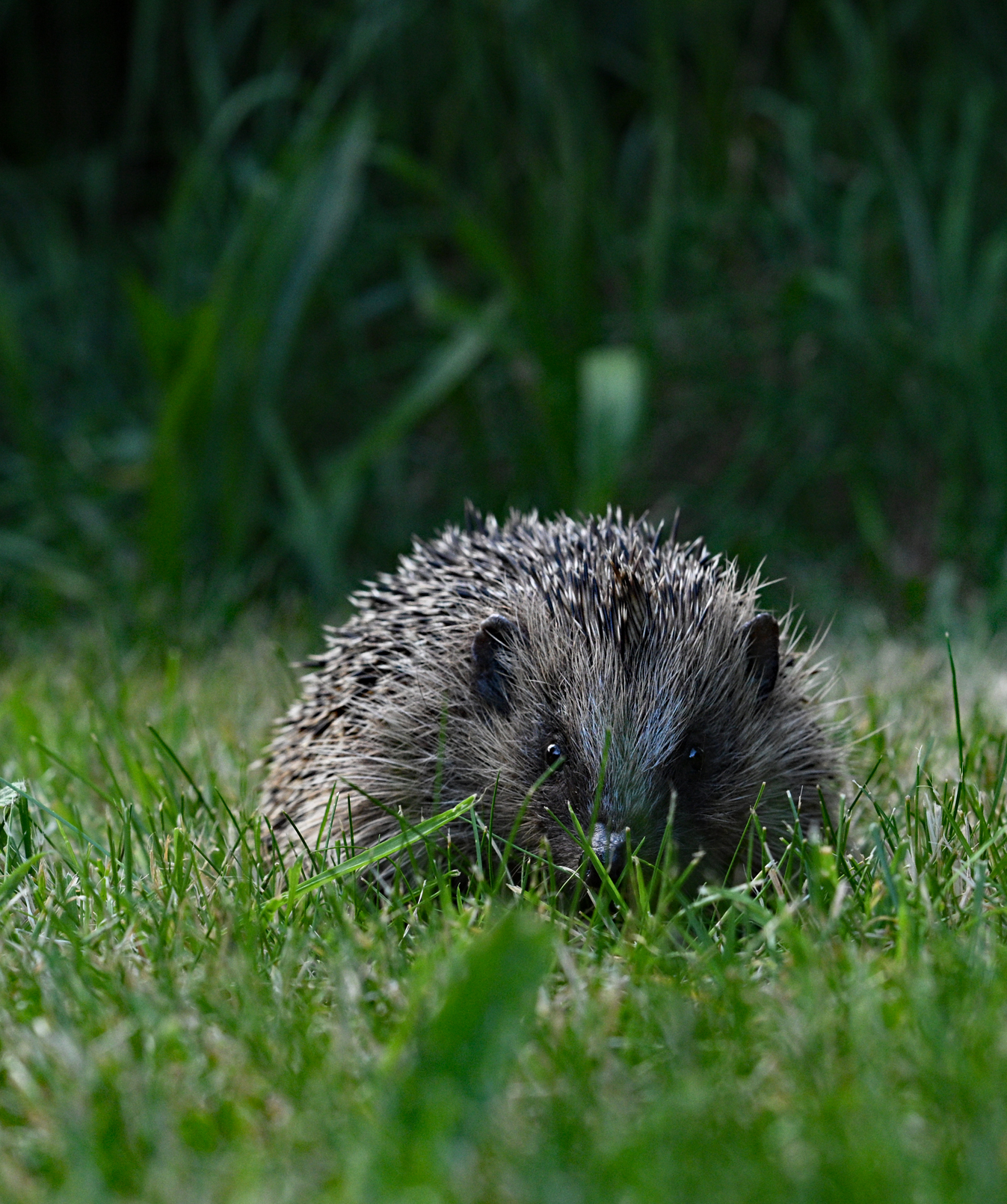
Rather than easing, concern over the hedgehog's status has increased since 2007: it's now classed as Vulnerable to extinction on the British Red List for mammals (2020) and as Near Threatened on the IUCN's Red List (2024).
In October 2024, more than 30 conservation bodies came together to launch Britain's first National Hedgehog Conservation Strategy, a ten-year plan aimed at halting and reversing the decline. The strategy provides a framework for conservation action, including better monitoring, habitat management and public engagement.
Research is also under way by several different bodies, most notably the National Hedgehog Monitoring Programme and Nottingham Trent University, which aims to deliver a more statistically robust national population estimate. Data collected by scientists, coupled with that provided by the general public through driver or garden surveys, should provide a clearer picture of what's happening to our hedgehogs and, perhaps more importantly, why.
During the course of some of the research we've discussed above, scientists have also identified practical avenues for improving hedgehog fortunes. Haigh and her colleagues, for example, have provided valuable data about how wildlife underpasses could help reduce roadkill. Similarly, in their 2026 paper, Moore and her co-workers emphasised the importance of maintaining and expanding good-quality, connected habitat to build larger, more resilient populations.
Helping hedgehogs: what can we do?
There are plenty of things we can do to make life easier for hedgehogs, particularly in our gardens. Providing connected, wildlife-friendly gardens, avoiding pesticides and other garden hazards, leaving areas of rough vegetation, providing safe access to water and supplementary food, and reducing litter can all help individual animals and may support populations at a local level.
For practical advice on making your garden hedgehog-friendly, feeding hedgehogs, avoiding common hazards and helping sick or injured animals, see my article Helping Hedgehogs.
The bigger picture
The difficulty in conserving hedgehogs is that there doesn't appear to be a single driver behind their decline, and consequently there isn't a single solution. Some pressures are relatively straightforward for individuals to address, but garden-level measures cannot substitute indefinitely for good habitat and wildlife-friendly land management at a landscape scale.
The emerging picture is therefore less about finding a single culprit than about maintaining viable populations in sufficiently large, connected areas with enough food and shelter to withstand mortality from roads, predators and other pressures. Research is helping to establish which pressures matter most, where populations are declining fastest, and which interventions are most effective. The hope is that this combination of research, habitat management, public action, education and government policy -- alongside the National Hedgehog Conservation Strategy -- will begin to reverse the decline.
In essence
There doesn't appear to be one single cause behind the decline – instead, it's death by a thousand cuts. Several interacting pressures combine to affect hedgehog populations, including habitat loss and fragmentation (particularly tidy gardens and intensification of farming); reduced availability of natural prey through climate change, pesticide use, over-tidied gardens and intensive farming; increasing traffic on our expanding road network; and perhaps also locally high densities of badgers. We still don't know how much each pressure contributes, but their importance is likely to vary between landscapes and populations. The 2024 National Hedgehog Conservation Strategy sets out measures to halt and reverse the decline. For a discussion on the evidence that hedgehogs are declining, see my companion Q&A, Are hedgehogs declining in the UK?
References
App, M. et al. (2022). Making the case for gardens: Estimating the contribution of urban gardens to habitat provision and connectivity based on hedgehogs (Erinaceus europaeus). Landscape and Urban Planning. 220: 104347.
Dickman, C.R. (1988). Age-related dietary change in the European hedgehog, Erinaceus europaeus. Journal of Zoology. 215: 1-14.
Gazzard, A. & Rasmussen, S.L. (2024). Erinaceus europaeus. The IUCN Red List of Threatened Species 2024: e.T29650A213411773. Accessed on 06 September 2026.
Gazzard, A. et al. (2025). Conservation concern for Europe's hedgehog species (Erinaceidae): Current statuses, issues and needs. Biological Conservation. 304: 111033.
Gurnell, J. et al. (2026). On the brink, a population of hedgehogs in Central London. Ecology and Evolution. 16: e72867.
Haigh, A. et al. (2014). Hedgehog Erinaceus europaeus mortality on Irish roads. Wildlife Biology. 20:155-160.
Hof, A. et al. (2012). Food or fear? Predation risk mediates edge refuging in an insectivorous mammal. Animal Behaviour. 83: 1099-1106.
Huijser, M.P. (2000). Life on the Edge: Hedgehog traffic victims and mitigation strategies in an anthropogenic landscape. M.Sc. Thesis for Wageningen Universiteit, The Netherlands. 165 pp.
Lee, K.A. (2021). Untangling the roles of prey availability, habitat quality and predation as predictors of hedgehog abundance. PhD for Nottingham Trent University.
Lee, K.A. et al. (2025). Does differential habitat selection facilitate coexistence between badgers and hedgehogs? Ecology and Evolution. 15: e70744.
Mathews, F. & Harrower, C. (2020). IUCN – compliant Red List for Britain's Terrestrial Mammals. Assessment by the Mammal Society under contract to Natural England, Natural Resources Wales and Scottish Natural Heritage. Natural England, Peterborough.
Moorhouse, T. (2023). Ghosts in the Hedgerow: A hedgehog whodunnit. Transworld Publishers, London.
Moore, L.J. et al. (2026). Beyond the individual: Multisite population-level consequences of road mortality on a declining mammal. Animal Conservation. In Press.
Morris, P. (2010). The New Hedgehog Book. Whittet Books Ltd, Essex.
Pettett, C. (2015). Factors affecting hedgehog distribution and habitat selection in rural landscapes. Ph.D. Thesis for Oxford University. 225 pp.
Planet Patrol - Litter Report 2019-2024 (September 2025)
Rasmussen, S.L. et al. (2021). Wildlife conservation at a garden level: The effect of robotic lawn mowers on European hedgehogs (Erinaceus europaeus). Animals. 11: 1191.
Rasmussen, S.L. et al. (2024). Testing the impact of robotic lawn mowers on European hedgehogs (Erinaceus europaeus) and designing a safety test. Animals. 14: 122.
Sainsbury, A.W. et al. (1996). Health and welfare of rehabilitated juvenile hedgehogs (Erinaceus europaeus) before and after release into the wild. Veterinary Record. 138: 61-65.
Shove, S.L. et al. (2025). Evidence for high levels of gene flow in hedgehogs (Erinaceus europaeus) across South Wales, UK, despite potential anthropogenic and natural barriers to dispersal. Ecology and Evolution. 15: e71201.
Stocker, L. (1987). The Complete Hedgehog. Chatto & Windus, London.
Thrift, E. et al. (2026). Microplastic prevalence in commercially available petfoods. Environmental Toxicology and Chemistry. 45: 2182-2192.
Turner, J. et al. (2026). Evidence of population fragmentation of the Western European hedgehog Erinaceus europaeus in urban landscapes. Ecology and Evolution. 16: e73489.
Wembridge, D.E. et al. (2016). An estimate of the annual number of hedgehog (Erinaceus europaeus) road casualties in Great Britain. Mammal Communications. 2: 8-14.
Williams, B.M. et al. (2018). Reduced occupancy of hedgehogs (Erinaceus europaeus) in rural England and Wales: The influence of habitat and an asymmetric intraguild predator. Scientific Reports. 8: 12156.