Summary: Short of turning your garden into a militarized zone, it is almost impossible to stop a determined fox from gaining entry. Moreover, the successful physical exclusion of foxes will often also exclude non-target mammals, such as hedgehogs.
There are various repellents (chemical, physical and audible) available that have been used with varying degrees of success; none are guaranteed to work in every situation and some individual foxes simply are more sensitive or persistent than others. Ultimately, the best course of action is to find out what attracts the fox to your garden and remove or disguise the temptation. If the fox raids your compost heap, for example, look at fencing it or investing in a compost bin. Similarly, if the fox is attracted to your garden by livestock or pets you need to ensure that the animals are securely housed
Housing for small pets must include a secure frame, with sturdy wire (steel mesh, not chicken wire or plastic mesh) and either a secure floor or wire buried into the ground to prevent foxes digging into it – most important is that the door must contain secure locks, not simple twist catches. Small pets -- guinea pigs, rabbits, rats, mice etc. -- are most at risk from foxes if insecurely housed. There are occasional reports of foxes killing cats and even small dogs and there have been anecdotal reports suggesting attacks on cats may be increasing; but, despite recent media reports suggesting otherwise, there is no evidence that foxes represent a significant threat to pet cats or dogs.
Foxes have a chequered relationship with humans and are the victim of so many stories and so much word-of-mouth that it has become difficult to separate fact from fiction – this is perhaps one reason why they arguably polarize public opinion more than any other wild mammal. Before we explore how we might go about securing our pets/livestock and making the garden a fox-free zone, it is worth taking a moment to look at why this might be necessary.
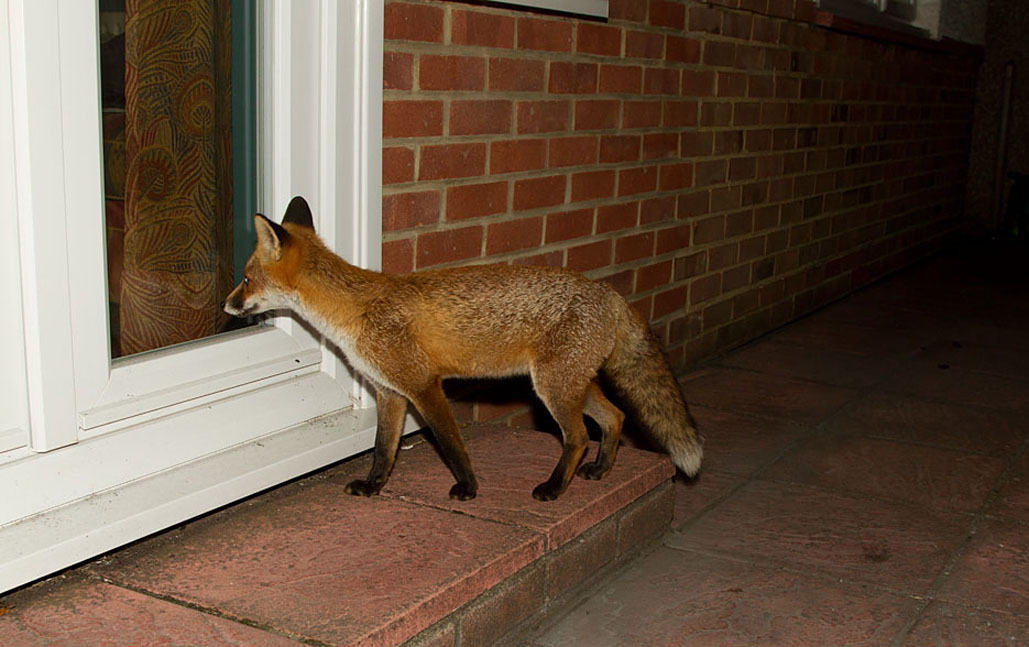
We share our environment with many species that will exploit an opportunity if it arises. Foxes taking chickens/rabbits/guinea pigs/etc fall into this category. It is our job to secure our pets from the attentions of predators. A similar parallel can be drawn when you have a baby in the house. You can't yet talk to the baby to make it understand that it's dangerous to climb the stairs, so you fit a stair gate to stop your budding explorer. You don't assume that the baby will know stairs are dangerous, and you don't just toss down a blanket at the bottom of the stairs and expect it to do the job; the baby can just move it out the way, or climb over it. If you try something and the baby gets through, you change the barrier until it becomes impenetrable. The older your child gets, the more they learn from experience and the more difficult it is to keep them out of "interesting" situations. Foxes are the same; intelligent animals that learn from experience. Managing chickens in your garden when there are foxes around is in many ways like child-proofing your house.
So, if foxes are causing problems for you or your pets, is there something you can do about it? I have heard it said that foxes have endless patience and that this means it's impossible to keep them away from your pets/livestock. They are certainly patient, even resourceful, but it is possible to take steps to secure your animals and make your garden less appealing to them.
Necessity knows no law
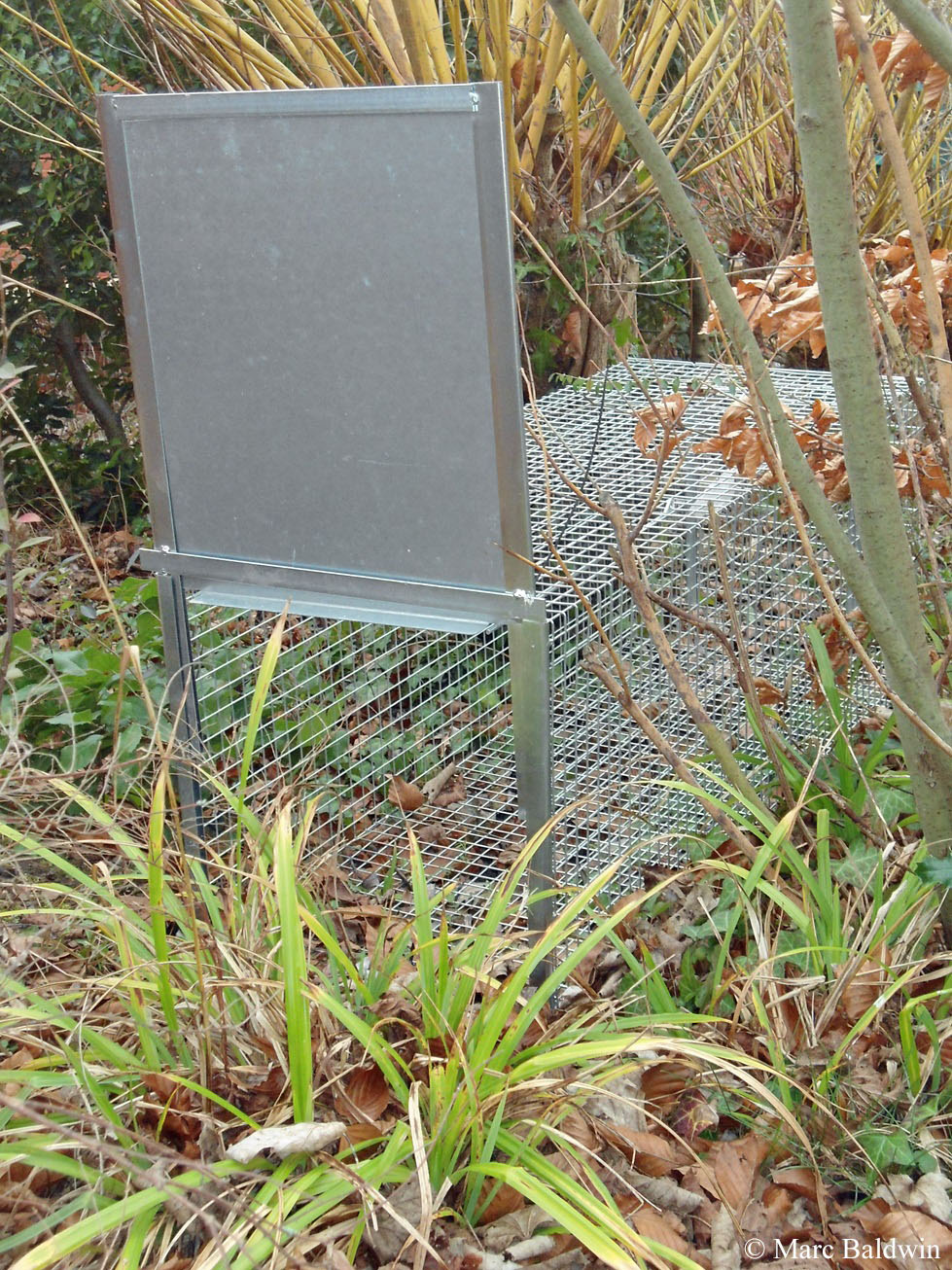
The first point to cover is the legality of fox control. There are no specific laws that prevent the killing of foxes. There are, however, sections of existing Acts that regulate how any control can be carried out, and what materials can be used. Several general Acts, including the Protection of Animals Act of 1911 and The Wild Mammal (Protection) Act of 1996, make it illegal to cause ‘unnecessary suffering’ to an animal. I won’t go into the details of each Act here (follow the links for the full text), but the essence is that it is currently illegal to gas, poison, stab, impale, beat, burn, crush, stone, drag or asphyxiate/suffocate foxes in the UK.
It is also illegal to trap foxes in all but free running snares. Furthermore, there are multiple conditions associated with snare use (especially that they must be checked at least every 24 hours) and it seems unlikely that these conditions could be met in urban areas. The main problem with snares is that they’re indiscriminate. A trial conducted by the Ministry of Agriculture in 1968 found snares caught 155 foxes and 132 non-target animals, including domestic pets, wildcats, badgers, otters, hares, birds and deer.
In his 1980 book The Red Fox, Huw Gwyn Lloyd told how some farmers recommended the spraying of strong-smelling chemicals -- turpentine, diesel, creosote, paraffin and so forth -- to repel foxes, but there was little evidence of their efficiency and, these days, their use is illegal, resulting in a fine if caught. If you wish to use chemical repellents, they must be certified. Repellents currently certified for use as fox deterrents include Scoot, Get Off My Garden and Wash and Get Off – repellents like these often contain pungent-smelling compounds such as citronella oil and methyl nonyl ketone, having been designed to upset a visiting fox's 'scent map'.
Some older texts describe the use of a tar-like repellent, similar to the wood preservative creosote, called Renardine (known colloquially as ‘fox oil’), that was introduced in 1896 and used for the exclusion of foxes, cats, moles and even badgers. In March 2003, however, the Ministry of Agriculture banned the sale, stocking and advertisement of Renardine. In order to permit the ‘using up’ of stocks that had already been purchased, some leeway was permitted; but, as of 30th June 2005 it has been illegal to buy or use Renardine.
Gone shootin’
Lethal control, namely hiring a pest controller to remove the fox, is one potential solution to the problem of fox disturbance. Some individual foxes seem more interested in pets/livestock and more persistent than others and there is no doubt that trapping can be beneficial in the removal of such ‘problem individuals’. Those opposed to lethal control have, on occasion, requested that the fox be caught and released somewhere else – “somewhere else” often translating to ‘back into the countryside, where it belongs’. Contrary to popular misconception, however, this is not a practical solution. Foxes are territorial and there is a large source population. In other words, if you trap and relocate one, there’s a good chance you’re releasing it into another fox’s territory. Even if it manages to avoid confrontation with the owner, depending how far it is transported, the released animal may simply return to its home patch; only to find it has been taken over by another fox. (Hence rescue centres always aim to release rehabilitated foxes as close to their capture site as possible as soon as possible.)
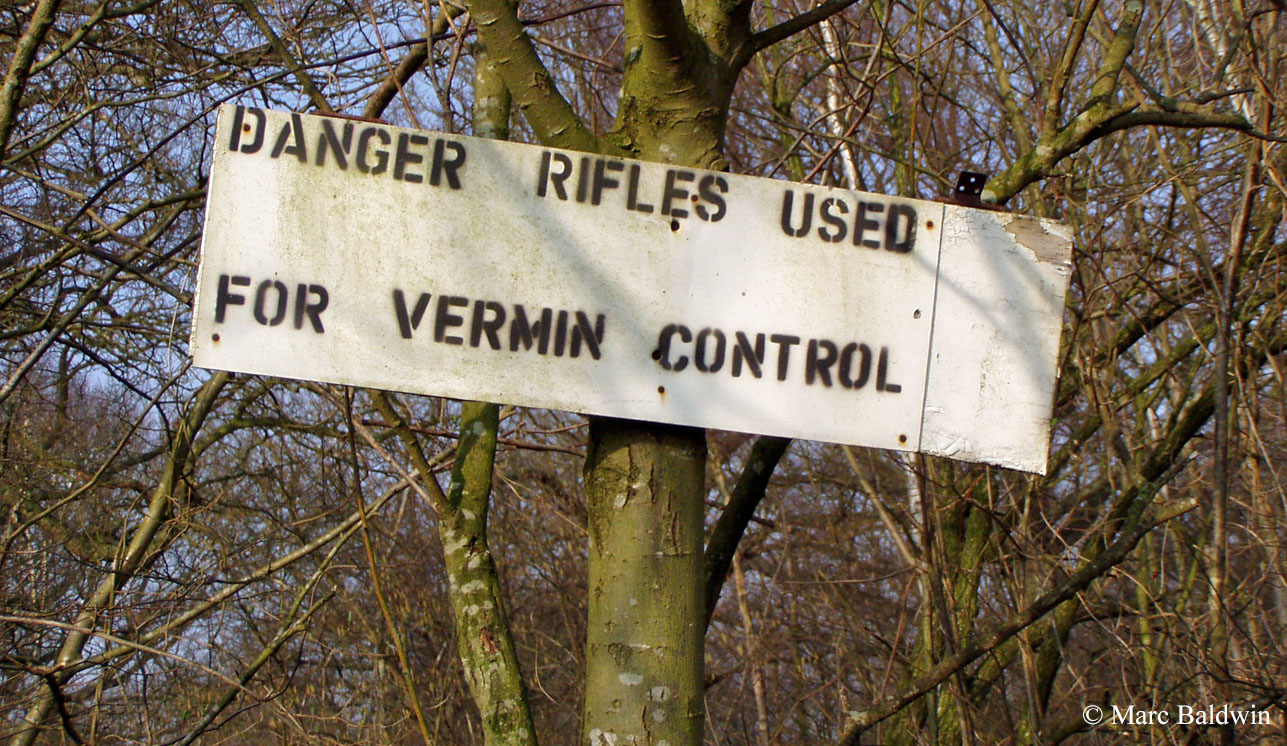
Consequently, the Abandonment of Animals Act (1960), which makes it illegal to leave an animal in a situation where it is unlikely to survive, arguably makes it illegal to relocate foxes unless some sort of provision for their welfare is made. Ultimately, if nobody is willing to put the fox through a proper translocation for you (i.e. keep it in a pre-release pen in the new area for a week or two, followed by providing food after release) any fox trapped will likely need to be dispatched by the pest controller. For this reason, it is always advisable to hire a licensed operator (speak to the British Pest Control Association if you are unsure - see links at the end of this article).
The use of firearms of sufficient calibre to kill a fox (an air-rifle is insufficient) is strictly regulated, especially in urban areas, and it is highly inadvisable to attempt control yourself. In rural locations, away from high densities of people, shooting with a medium-calibre weapon and the use of a ‘long dog’ to ensure any wounded animals do not escape can be efficient in reducing local predation of livestock or protecting colonies of breeding birds.
Before leaving the subject of lethal control, it is worth pointing out that removing a fox, or several foxes, from your garden will not "help keep the local fox population down" (see QA) and the data available suggest any fox killed is likely to be replaced by animals dispersing from the surrounding area within about two weeks. This immigration also means that having a fox removed may offer only temporary respite before another arrives. Indeed, while studying fox visits to a commercial piggery in western Australia, Patricia Fleming and her colleagues noted:
“Despite a cull of nine foxes by the farm manager during the period we were monitoring (5 December 2014), there was no noticeable effect on the rate of fox capture events on camera. Intermittent fox shoots may only offer a short-term solution to reduce fox numbers, particularly where there is not a coordinated control effort across neighboring properties.”
Finally, it is the householder’s responsibility to arrange and pay for any removal. Foxes aren’t legally considered vermin and, as such, local councils are not obliged to provide a control service for them. Costs will vary according to location and the company you employ, but an impromptu vox populi of some of my local pest control companies in 2015 suggested an average figure of between £100 and £150 for the removal of a single fox.
Get orf my land

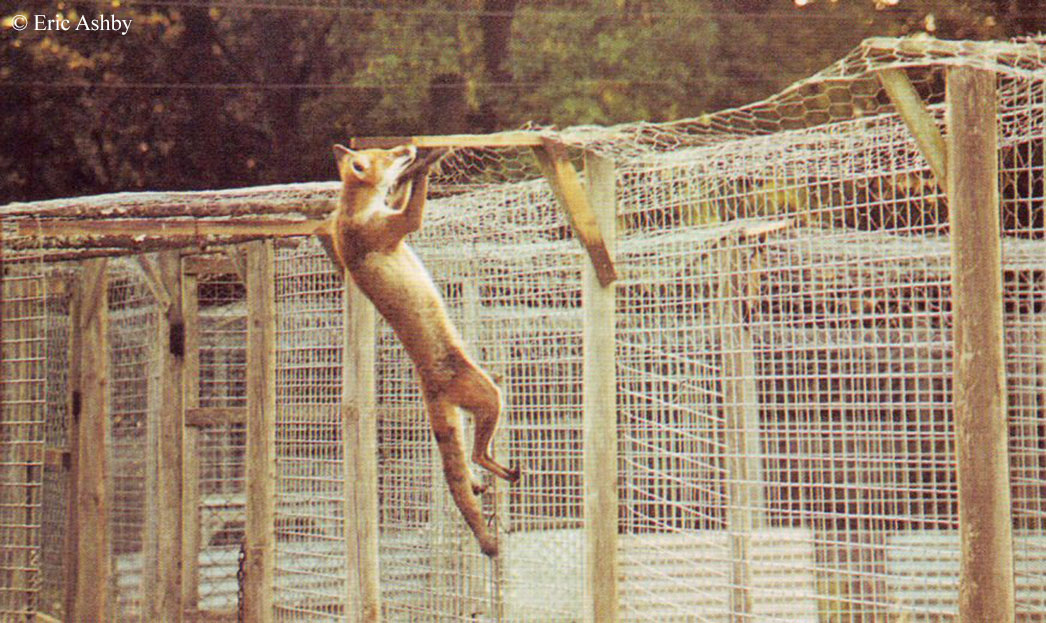
Foxes are medium-sized carnivores that are reasonably proficient diggers and perfectly capable of scaling a two metre (6 ft.) fence from a standing start; larger fences can be cleared with ease if handy props (bins, for example) are nearby to provide a boost. Foxes also have strong, sharp claws, allowing them to climb wire mesh with ease. Consequently, keeping foxes out of your garden altogether is not a simple or straightforward task (equivalent to trying to keep a cat out) and it is important to understand this from the outset. Indeed, as Trevor Williams and Andrew Wilson put it, in their 2000 Unearthing the Urban Fox booklet:
“Let us state categorically that nothing you can do, short of building a fortress, will create a permanently fox free zone”
Bristol University biologists Stephen Harris and Phil Baker concur in their 2001 book Urban Foxes, pointing out that it is “virtually impossible to stop foxes getting in at all”. The fact that you may not be able to totally exclude foxes from your garden, does not mean that you cannot make your garden less appealing to them which, at the very least, should reduce the time they spend there. In his book, My Friends the Foxes, veteran fox rehabilitator Mike Towler notes how foxes appear uneasy with any change in their surroundings:
"[My wife] adores potted plants. Indoors and out, they are everywhere. She bought a new one – a fine blue glazed pot about the size of a football and placed it on top of the bank opposite the kitchen window. Just another one of many. But that was during the time that [one of my local foxes] was in the habit of coming there to look into the kitchen for me. It terrified her. She declined to go near it. “It’s just a pot,” I said to her and tapped it. She leapt back as if I might have been playing with an unexploded bomb. It was months before she ceased to worry about it. But it illustrates how much foxes dislike any change. One method of discouraging foxes is to move the garden ornaments about from time to time."
Foxes can certainly be neophobic (i.e. wary of new objects); but in my experience this is only temporary. sometimes only a few minutes. I have never observed anything as extreme as Mike recounts and the science on the fox as an invasive species supports this view – presumably, much like with people, neophobia is an individual response and varies from fox to fox. Regardless, the periodic rearrangements of garden ornaments is one example of a group of potential deterrents that I class as "home remedies". The category includes some slightly "off the wall" suggestions too and I don’t want to devote much time to them; not least because few show any real promise. There are, however, two that warrant further consideration: the use of radios and putting unpleasant-tasting food out for the foxes.
In the late 1990s, a chance conversation between Abbotsbury Swannery’s swan herd Dave Wheeler and a farmer from Devon raised the potential for loud human voices to potentially deter foxes. Apparently, this Dutchy farmer had successfully kept the local foxes away from his chicken coup when he accidentally left Radio 4 playing one night. The Swannery now use this routinely to keep foxes from crossing the boundary to their site in Dorset. Of particular note is that both the farmer and the Swannery have found that only talk shows on the radio, which presumably deceive the foxes into thinking there are people about, seems to work – playing music is apparently much less effective. I’m not aware that any scientific trials have been conducted to assess the efficacy of talk radio on the behaviour of foxes, but recent research conducted in the Santa Cruz Mountains in California suggests that even moderate human voices can deter large and medium-sized carnivores.

I have read several accounts of people who have put chicken pieces covered in very spicy marinade (Tabasco, chilli, mustard, etc.) in front of their coop and have found that the fox has taken one and never come back. Indeed, in a blog post for Permaculture magazine, sustainable farmer Tim Green explained:
"An old country method took advantage of a foxes [sic] predictable nature. If El Zorro has raided your chicken coup [sic] and killed more than one bird you can guarantee he'll be back for the bodies. In the old days the trick was to liberally coat the dead chicken/s with mustard powder and the fox soon learns that he doesn't like chicken anymore. As a more modern alternative I believe Tabasco sauce is meant to be particularly effective."
The linking of an unpleasant taste or response to a specific action is called conditioned taste aversion and occurs in the medulla of the brainstem. In a paper to the journal Animal Welfare during 2004, David Macdonald and Sandra Baker found that three hand-reared orphaned fox cubs were less likely to sample a bowl of milk after they'd been presented with milk containing a bitter-tasting chemical (denatonium benzoate, commercially known as Bitrex), although developing this response required quite high levels of the chemical in the milk (4,000 parts per million, or 0.4% solution). Taste aversion has also been trialled in Australia, where foxes are significant predators of indigenous wildlife.

The basic premise of such experiments is that a fox eats the carcass of, say, a gamebird that has been laced with an emetic (vomit-inducing chemical) and is then sick. The fox learns to associate eating that bird with the unpleasant experience of being sick and avoids eating them in future. This is not a new idea, if you think about it many species have evolved to appear toxic to prevent ending up on someone’s menu, but it can be very effective when instigated correctly. Indeed, in July 2015, a reader from Buckinghamshire e-mailed me to relay her success using this technique to stop foxes eating her strawberries. Here's her experience, published with her permission:
"Foxes raid my strawberry patch most years. Once they have got the taste for them, they return every night to strip the plants. This year they cut through wire fencing and got in, eating some. After reading your suggestion I heavily dressed some spoiled strawberries with hot chili powder and placed en route to the strawberry patch. Next night, a few chili treated straws were eaten but some left, and although foxes had been in the veg area, the strawberries were left untouched. No more raids since then!"
I would be very interested to hear from anyone else who’s had success using taste aversion to dissuade foxes from causing problems in their garden.
If such, "home remedies" don't work for you, the methods at your disposal can be broadly divided into three groups: chemical repellents; acoustic or other motion-activated devices; and electric fences or netting.
Chemical repellents
Despite H. Gwyn Lloyd’s opinion, given in The Red Fox, that proprietary brands of repellents “are of dubious efficacy”, more recent authors have recommended them as a means of keeping foxes away. That which follows is a summary and the reader is directed to Fox Project director Trevor Williams and former fox researcher Andy Wilson's excellent booklet Unearthing the Urban Fox for detailed coverage of all fox repellent options.
Earths under sheds
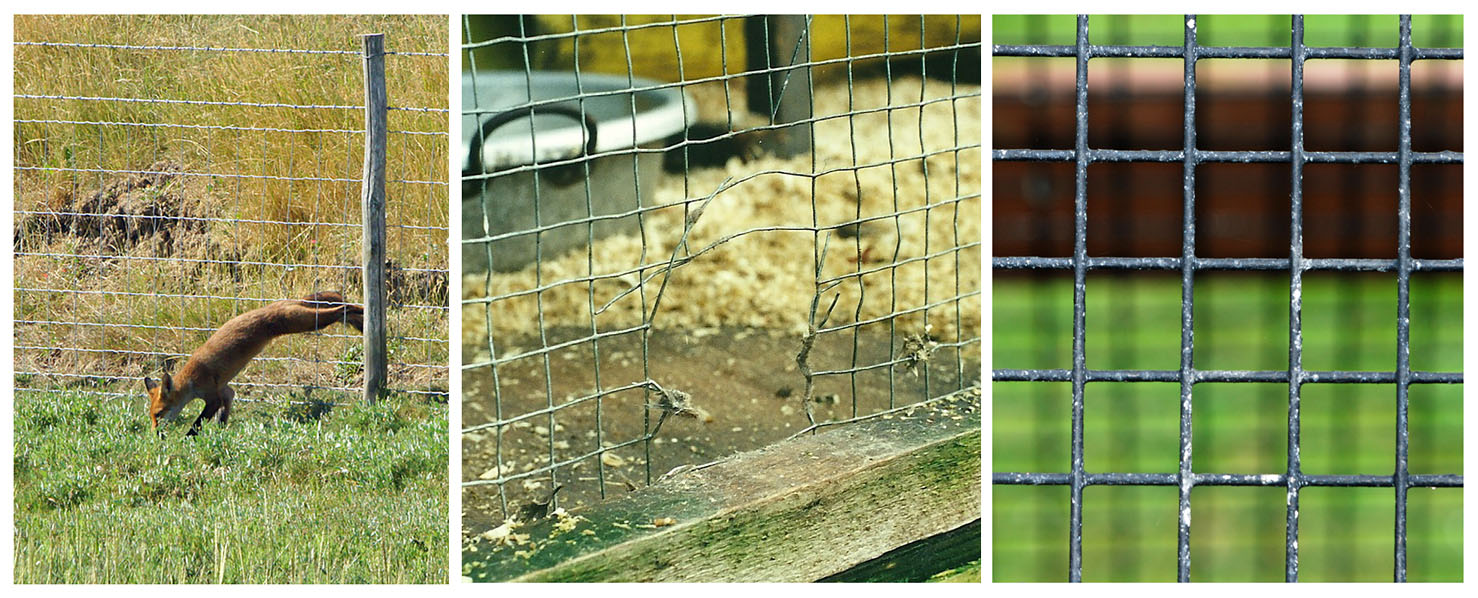
Williams and Wilson point out that, in London, some 75% of fox earths are located under garden sheds, with other favourite places being in bramble patches, under building foundations or in disused buildings. They also note that an adult fox can easily get through a hole 12cm (5 in.) in diameter, while Mike Towler described how one of the vixens he was rehabilitating escaped through an 8cm x 10cm (3 x 4in.) hole she bit in the mesh of her pen, meaning that care is needed to block even innocuous-looking holes to prevent entry. In their Urban Foxes book, Stephen Harris and Phil Baker explain that the best way to remove a fox from under your shed or building is to soak straw or rags in a deterrent and use it to loosely block any entrance and exit holes; the fox will invariably remove the obstruction, but simply replace it and keep doing so.
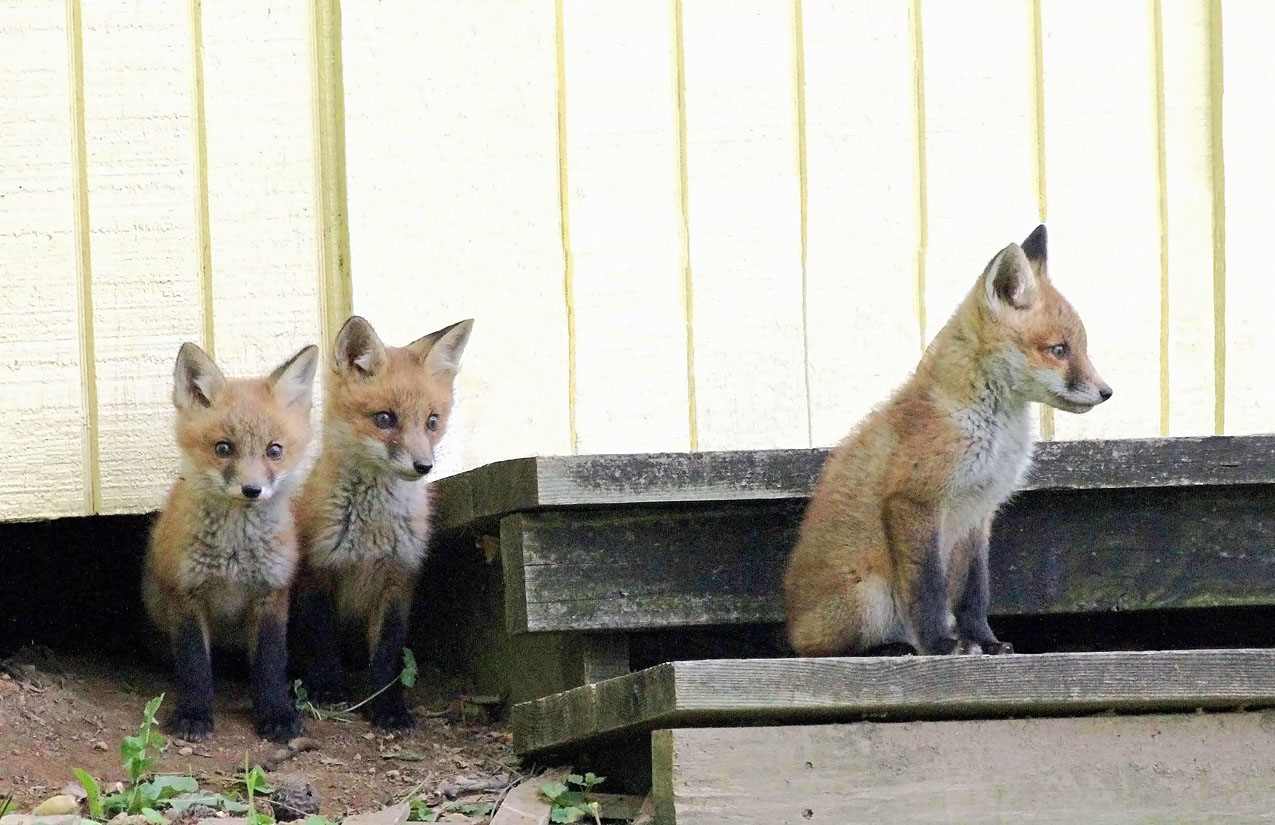
When the blockage has not been removed for two days, you can be sure the foxes have moved out and you can seal the hole permanently with stones, bricks, slabs or wire. It is important not to seal the hole before this because you might entomb the foxes, which would likely cause them to asphyxiate or starve to death – this is not only illegal under the Wild Mammals (Protection) Act, but it would also leave the bodies to decompose in situ. Blocking of the hole should be done quickly; a disused earth can be reoccupied within a fortnight if left accessible. Foxes give birth during the spring and a vixen will start looking for a natal (cubbing) earth well in advance, so it is important any holes are blocked by the end of January at the latest.
Lawn fouling and digging
It is important to remember that foxes are highly seasonal animals and the fact that you have foxes in your garden now doesn’t mean they will be there in a few weeks/months. The disturbance isn’t necessarily permanent. Indeed, much disturbance tends to be confined to the summer months because it is caused by the cubs playing; most will be independent by the end of their first year and many will have moved away to find a territory of their own.

Being territorial, foxes use droppings (faeces) to mark their territory and objects within it. Scat is often deposited on or close to conspicuous objects (shoes, flower pots, stones etc.) where it is likely to gain most attention. Removal of the scat only leads to more being left, usually the following night, and so the problem must be treated. It is suggested that you soak a small amount of sand or sawdust in a chemical repellent and place it next to the droppings, or apply directly to the scat if using a spray applicator.
Digging in lawns and flowerbeds is another form of disturbance commonly reported to the Fox Project. Williams and Wilson note that foxes can smell food, and unfortunately this can include deceased pets, buried up to 45cm (18 in.) below ground; they often also dig shallow holes, or scrapes, while searching for invertebrate prey. As with fouling, the authors recommend soaking a small amount of sand in repellent and placing it into the scrape, or spraying a repellent directly on to the ground being targeted. If there are children in the garden, you can purchase specialist disinfectants (PX Parvo, for example - see Fox Solutions in links below) for use on areas of fox fouling. If the digging is in flowerbeds, repellent-soaked sand or repellent granules can be sprinkled directly onto the affected area.
So, how do chemical repellents work? Much fox communication is achieved with scent, which is applied, in the form of a potently odiferous liquid, to faeces from paired anal sacs, one lying either side of the anus. Most chemical repellents contain either the strong-smelling salt aluminium ammonium sulphate, or the citronella-scented carbonyl methyl nonyl ketone; both aim to over-power the animal’s own scent, introducing confusing smells that appear to have an unnerving effect on the fox. It is worth pointing out at this juncture that studies by Andy Wilson found that chemical deterrents were less effective during late summer, because the cubs are less territorially-aware than their parents and so much less bothered by the scent of repellents.
Mr Wilson also found that repellents were usually ineffective at preventing losses of livestock, presumably because the sight of prey overrides the smell of the repellent, and that subordinate and itinerant (no fixed territory) foxes behaved differently to dominant animals, which can influence their response to repellents. Overall, however, The Fox Project have found chemical repellents to be a useful method of deterrence and, in their book, Williams and Wilson note that consistent and appropriate use of repellents usually stops the dominant animals using the garden, but keeps them in the area (i.e. just shifts their habitat use), which is important because if they stay in the territory they prevent new animals from moving in.

Chemical repellents may take the form of other strong-smelling compounds. Some companies sell predator (especially lion) dung, which they claim can be applied to a garden to deter various predators, including foxes, although as far as I know there are no studies to testify to their effectiveness. Some people have recommended a free chemical repellent, which apparently works well to exclude badgers and foxes: human male urine. Apparently, urinating on the sites of disturbance, or at entry and exit locations, can deter the animals from entering the garden – like we might avoid using the stairwell of the local multi-storey carpark, presumably!
Predator odours are well-known to deter prey animals (fox urine will, for example, deter rabbits, while coyote urine is widely sold as a deer repellent), although they tend to be less successful at deterring predators. I have read testimonies suggesting (male) human urine is very effective, while others have commented on how it made no difference. Again, this presumably reflects both the biochemical profile of the urine donor, probably even his diet, and the individual response of local foxes to repellents.
Acoustic, optical and motion-sensitive repellents
As with chemical repellents, many of these devices work by exploiting a fox's senses or behaviour and their success is equally subject to variations in individual fox determination. In his 2002 book Living with Urban Wildlife, former pest control officer John Bryant recommends a device called a Scarecrow for fox deterrence. The Scarecrow is a water-jet triggered by an infrared sensor, sensitive to objects up to 11m (35ft) away – when triggered by movement it fires a three second jet of cold water from its sprinkler head. Mr Bryant explains that he has “found that it has deterred foxes that have defied all other repellents”, but points out that it can be triggered by any movement, including cats, dogs and plants swaying in the breeze.
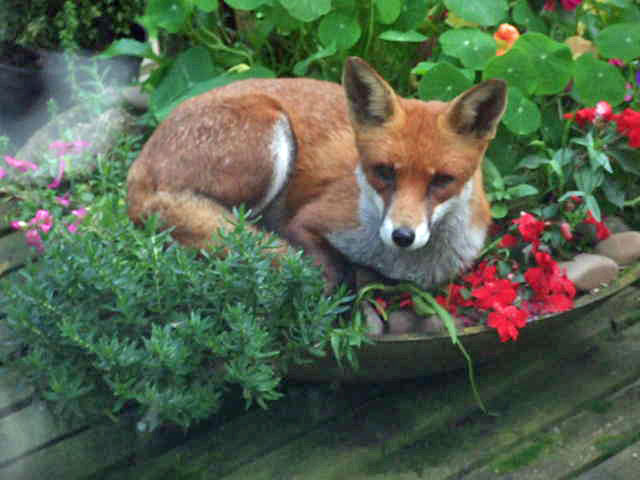
As part of the Foxes Live programme, broadcast on Channel 4 during May 2012, a water jet deterrent was set up in a bid to prevent foxes digging an earth in a lady’s garden in Clapham, south London. The setup was filmed using a remote nighttime camera and the footage revealed that after a couple of initial scares, which caused a fox to briefly retreat to the other side of the garden, the foxes very quickly became used to the device; shortly after initial exposure, one was continuing to dig while being sprayed.
Some devices rely on physically scaring the fox out of the garden and include the use of reflective or light-emitting objects. One such product, called Nite Eyes, consists of a series of flashing red LED lights and is reputed to deter a wide range of species, from owls to bears and cougars. (On the product website the manufacturers go so far as to suggest that if the Koupparis family had owned one it could have prevented the attack on their twins!) The solar-powered device works by trying to fool the predator into thinking it’s being watched – the manufacturers note that “The sense of being watched is the greatest fear night animals have”. I have read some reviews suggesting the device can be very effective, but confess that I have reservations. Foxes aren’t stupid animals and are not easily fooled. Similarly, most urban foxes seem to have little issue with humans watching them and I would contest that being watched is their “greatest fear”. There are also some conflicting statements on the manufacturer’s website and the reviews on Amazon suggest it is ineffective at least as often as it appears to work. I would be interested to hear from readers who have had success using these devices to deter foxes.
As well as chemical and visual repellents, several acoustic deterrents are available. Several companies market ultrasonic (i.e. too high to be heard by the human ear) deterrents; the general idea being that they emit an ultrasonic sinus or siren-like sound, which foxes find unpleasant, every two seconds or so for a pre-set period after the device is activated. The devices are usually activated when movement or body heat triggers a passive infrared (night-time) sensor. Many general purpose units have a broad frequency range (from about 8 to 40 kHz), which can be set according to the animal you're trying to repel. Those designed specifically to repel cats and dogs tend to operate at around 22 kHz, while those for rodents broadcast between 30 and 70 kHz. The units are usually battery operated, with a sensor range of around 12m (40ft) and an effective distance of (i.e. excludes animals from an area of) about 18m (60ft).
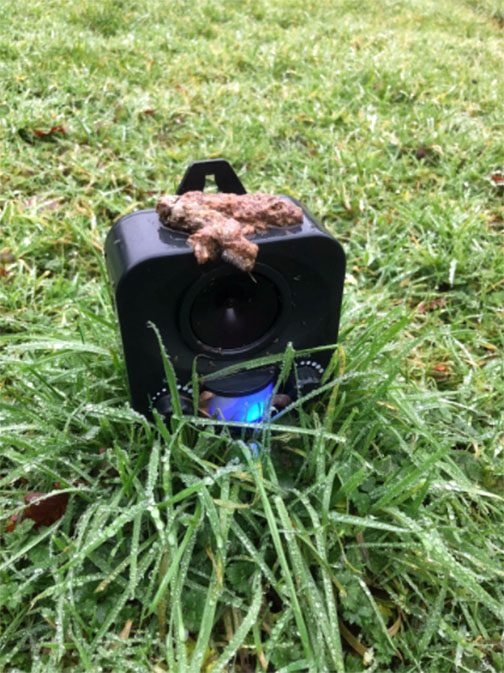
One widely sold ultrasonic device, aimed specifically at deterring foxes, is the FOXWatch unit produced by Concept Research in the UK. The product website makes some impressive claims, including that “Following the largest study of its kind ever undertaken in the UK, FOXWatch is now the only fox deterrent, scientifically tested and recommended”. Unfortunately, at the time of writing, several requests for details of the research (scientific paper citations, report details, collaborative organisations etc.) have gone unfulfilled by Concept Research, so I cannot comment on the science. I have also drawn a blank with a search of the scientific literature. Indeed, there appear to have been very few studies published on the hearing responses of foxes at all, let alone in the context of repellent development.
Concept Research did have their ultrasonic cat repellent (Catwatch) tested by a team of RSPB biologists, led by Sarah Nelson, and the results were published in a paper to the journal Applied Animal Behaviour Science in 2006. The data show that the device had a “moderate deterrent effect”, reducing both the likelihood that a cat would come into the garden and the time the cat would spend there if it did venture in. Nelson and her colleagues found that active devices were about 4% more effective than disabled ones during the first nine weeks of the study, and between the tenth and eighteenth week of the trial active devices reduced the probability of a cat visit by about 30%. As with most repellents, I have read mixed reviews of FOXWatch’s effectiveness, but would love to hear from readers who have found it effective.
Overall, the studies that have been conducted with ultrasonic repellents have been mixed. In their Unearthing the Urban Fox book, Trevor Williams and Andy Wilson describe how their own trials showed success rates of up to 80%, although they do not provide the details and Andy’s dissertation (conducted while he was a student at Greenwich University) wasn’t published – Mr Williams did tell me, however, that some of the companies weren’t happy with the findings of some of their tests. The Oxford Croquet club experienced problems with foxes digging and fouling their green and tried several repellents; on their website, they conclude:
“During experiments carried out in association with Greenwich University, we found ultrasonic devices broadly ineffective, but found a water driven gadget, called "Scarecrow", very effective.”
Electric fencing or netting
By far the most consistently effective method of predator exclusion involves the use of electric fencing and the technique has been widely used to protect nesting bird colonies from the attentions of foxes. In February 1974, for example, a trial electric fence was erected along a leading edge of the nesting sandwich tern (Sterna sandvicensis) colony on the Sands of Forvie National Nature Reserve in Aberdeen (Scotland). Even though foxes were able to get around the fence at either end, Ian Patterson at the University of Aberdeen found that it was still an effective deterrent and reduced fox visits to the general area by over two-thirds. Using tracks in the sand, Patterson demonstrated that the fence turned back 60% of the foxes that approached it and reduced fox activity beyond the fence to about 16% of that before the fence was erected (overall predation was reduced by 84%) – foxes crossed the fence in only 6% of visits.

A similar study, this time at a least tern (Sterna albifrons) colony on the Cape Cod National Seashore in Massachusetts (USA) during the summer of 1978, found that, while new nests established outside of the fence were depredated (raided) by foxes, none of the foxes approached closer than three metres (10ft) to the fences, resulting in a substantial increase in the number of nests within the fenced area. In this case, even when the fence was turned off for a week, it still deterred the foxes. In his summary of the data, published in the Journal of Mammalogy during 1980, Dennis Minsky concluded that:
“…there would have been virtually no production without the fence.”
In a brief paper to the journal Mammal Review during 2002, Central Science Laboratory (CSL) biologists David Poole and Ian McKillop reviewed the effectiveness of electric netting and electric strained-wire at excluding foxes. The researchers set up the two types of fence in the enclosures of seven captive foxes and monitored how readily the animals crossed the barrier. Poole and McKillop found that one of their foxes refused to cross even the un-electrified fence and netting (presumably the same fear of novel items in their territory, or neophobia, that Mike Towler observed in his pot-fearing vixen) while the remaining six crossed it multiple times, illustrating how foxes are individuals with different responses to deterrents.
In the case of the netting, foxes pushed underneath it, pulled it down or chewed a hole in it. In the strained-wire trials the animals either pushed underneath the fence, or jumped through the upper wires where the gap was wider. None of the foxes crossed the electrified netting or fences, except during the daily maintenance checks, when the fright associated with an attendant in their enclosure was sufficient to cause them to ignore the risk and jump over. Curiously, even though the fence was easily low enough for the fox to jump over, they were only seen to do so when an attendant entered the enclosure.

The behavioural observations from the CSL experiments showed that, even though the fences prevented the foxes from crossing in most cases, the animals investigated them regularly and even after receiving a shock only stayed away for about an hour. The foxes investigated the fences with their nose, a highly innervated and sensitive part of their body, and most foxes were only shocked once; one was shocked twice, but none took more than two shocks to get the message. More recently, in his mammal round-up published in the February 2017 issue of British Wildlife, mammologist Gordon Woodroffe wrote:
“It was refreshing to learn that The Vincent Wildlife Trust (VWT) has been working with the Kilcormac Gun Club in a joint project to test the efficacy of electric poultry netting at pheasant pens as an additional deterrent to predators, including [pine martens]. Kevin Sadler, a member of the Gun Club, reported the results of his study and presented video footage clearly showing both martens and Foxes Vulpes vulpes detecting the live current and quickly leaving the area of the pen. No pheasants were lost to predators between the months of June and September when electric netting was in use.”
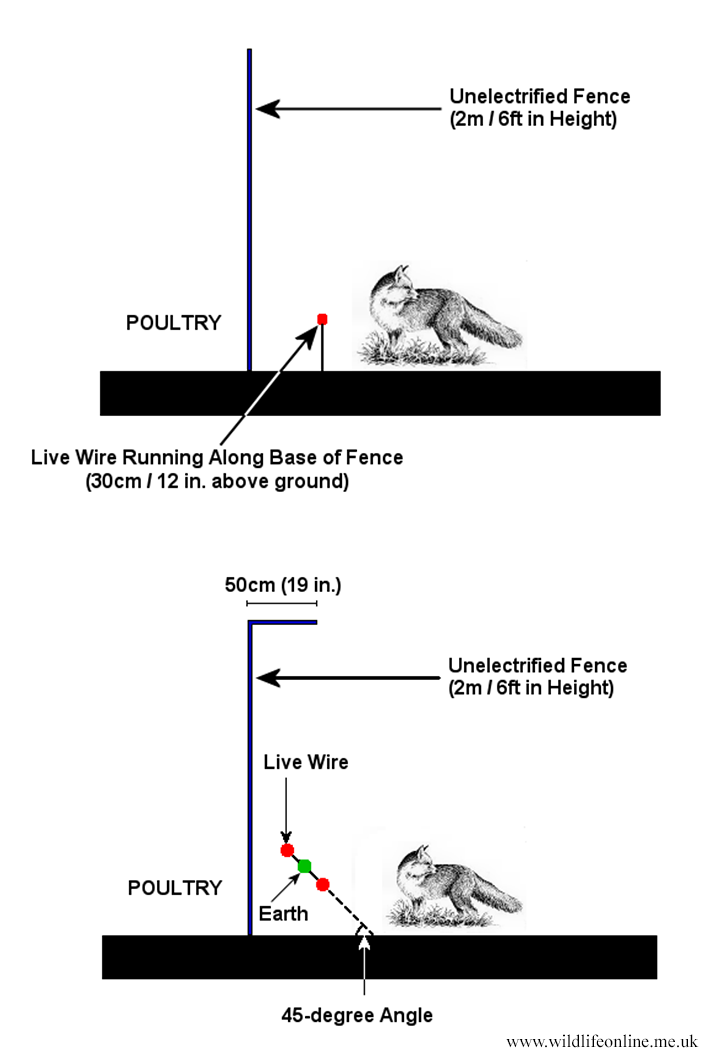
The downside to electric fences is that they can be expensive to erect and maintain, although electric netting is cheaper than strained-wire, and some animals can be very vulnerable to them. In his 1994 book, The Complete Fox, Les Stocker pointed out that the wire of electric fences should be placed at least 15cm (6 in.) above the ground to avoid the risk of hedgehogs coming in contact with them. (It appears that, while most animals move away after receiving a shock, hedgehogs curl up and get shock after shock until they die of exhaustion, heart failure or starvation.) Nonetheless, I know several people who use electric fences to successfully exclude foxes from their property.
Arguably, electric fencing is only cost-effective for large areas, but it can be included in the design of animal housing (especially chicken coops) to add additional fox-proofing. See the diagrams below for some of the most popular configurations of electric fencing.
An electrified fence is basically an open circuit. When an animal touches the fence, it provides a pathway from the fence to the earth through which electrons travel, thereby closing the circuit. The 'shock' that an animal feels is a rapid muscle contraction in response to the electron flow. Animal fur is a poor electrical conductor and can insulate them against shocks delivered by electric fences if the voltage is set too low. Consequently, fences operate at a relatively high voltage, commonly between 4,000 and 5,000 volts, capable of overcoming the resistance of the fur. Note that, if you install an electric fence, you will need to strim around the bottom regularly to prevent grass or other vegetation short circuiting it.
For standard, non-electric fencing, it is possible to purchase “prickle” and “brickle” strips that line the tops of fences and walls, respectively, to deter animals climbing over them. More recently a system designed to keep cats in their owner’s garden was brought to my attention and I suspect it offer similar promise for keeping foxes out. Designed by Australian film-maker Paul Bok in 2006, the Oscillot System consists of a series of four-bladed aluminium paddles that are mounted on the top of fences. When an animal tries to jump up the fence, its paws land on the paddle, which spins, preventing the intruder gaining traction and causing them to fall to the ground. Combining prickle/brickle/Oscillot strips with chemical repellents applied to any entrance and exit holes in the garden, as well as to ‘take-off’ or ‘landing’ sites, probably provides the best opportunity to prevent foxes getting in.
Guardian animals
Finally, in terms of physical repellents, there has been a recent increase in people using so-called “guardian animals” to reduce or entirely prevent foxes taking livestock. A farm near Ruthin in north Wales made the news in late 2010 when they brought in a pair of alpacas (Vicugna pacos), a domesticated camel originating from South America, to protect their free-range chickens from foxes. At the time, this caused quite a stir, but the idea of using one livestock species to protect another wasn’t a new phenomenon. Indeed, Texas Department of Agriculture biologists Murray Walton and Andy Field presented on the use of donkeys to successfully guard sheep and goats from coyotes on 17 ranches to the Eastern Wildlife Damage Control Conference in 1989.
Orange Agricultural Institute biologist David Jenkins was probably the first to suggest that alpacas, with their strong herding instincts, could be useful at guarding livestock, in his 2003 book Guard Animals for Livestock Protection. Subsequently, in May 2004, Jo Bell of Animal Liberation made a submission to Australia’s Agriculture, Fisheries and Forestry Committee regarding the impact of pest animals on agriculture, in which she noted how:

“Putting two mature alpaca wethers in with ewes a few weeks before lambing and leaving them there until weaning, can solve the problem of lamb losses to foxes. Farmers have observed alpacas and llamas chasing foxes away.”
and that:
“Farmers using these animals report an improved lambing rate from 80% to more than 120%. Alpacas and Llamas are also used to protect goats, poultry and even cows when they are calving.”
In a 2005 paper to the Extension Farming Systems Journal, Sara Mahoney and Allan Charry reported that the presence of alpacas in a sheep flock on their experimental farms in New South Wales increased the weaning rate of lambs by about 13% relative to those enclosures without them.
It’s not just alpaca that make good guard animals. So too do some dog breeds; Maremma sheepdogs and Anatolian Shepherd dogs, in particular. A considerable amount of research into this area has been carried out by Australia National University wildlife biologist Linda van Bommel and Chris Johnson at the James Cook University. In a paper to Wildlife Research in 2012, van Bommel and Johnson present the results of a survey of 150 farmers using livestock guardian dogs (LGD). The data show almost 66% of farmers reported that predation ceased altogether once the dogs were on duty, while a further 30% said they’d lost fewer animals to foxes or dingoes. The dogs were effective at protecting a range of livestock, including cattle, sheep, goats, pigs, poultry and even rabbits. Obviously, there are costs associated with buying and keeping the dogs, but the authors concluded that:
“The cost of purchasing and maintaining a LGD was usually fully offset by the values of stock saved within 1–3 years of the LGD becoming fully effective. On average, after a year of training a dog, costs were returned within a year for sheep and lambs, within 2 years for cattle and within 3 years for poultry and goats.”
In her 2010 book, Guardian Dogs: Best Practice Manual for the use of Livestock Guardian Dogs, van Bommel notes that not only did Anatolian Shepherd dogs eliminate fox predation in a flock of 20,000 free-range chickens, but by significantly reducing or eliminating fox visits, their presence resulted in more relaxed chickens that produced more eggs.


As touched on at the start of the section, donkeys have been used to successfully deter canid predators (typically coyotes, but also foxes) from goat and sheep paddocks and, according to Jenkins’ book, their use is increasingly common in the US and Canada. There are several studies suggesting donkeys are broadly effective at reducing livestock predation, although their record appears more variable than for alpacas or dogs. Jenkins suggests this may be largely a reflection of unrealistic expectations or inappropriate training/management by livestock producers. Domestic geese breeds have also been used as guardian animals, although I’m not aware of any formal studies on their effectiveness. Furthermore, geese are can be more difficult to manage than either alpaca or dogs, sometimes being relentlessly aggressive towards people as well as predators, and foxes have been known to kill both wild and domestic varieties. Nonetheless, it appears certain breeds can make an effective fox deterrent.
Overall, the use of certain guardian species, particularly dogs and alpacas, seem a largely viable and cost-effective method of reducing, often eliminating, livestock losses to foxes in commercial situations. Their deployment removes the requirement to use poison (illegal in the UK but widely employed in the US and Australia) or exercise similarly expensive and continual fox shooting programmes.
Rules of attraction
Generally-speaking, all deterrents should be used in conjunction with some common sense actions to remove or disguise whatever it is that attracts the fox to your garden in the first place. Foxes are attracted to garden ponds to drink (consider putting netting over them at night), to bird tables where food has been left out (clear away any leftover food), to compost heaps searching for insects and rodents (consider fencing the heap, or using a compost bin), to lawns looking for insects (if you use a lawn fertilizer and it contains fishmeal or bonemeal, consider swapping it for one that doesn’t, or apply a repellent) and to gardens with trees looking for windfall fruit or berries (gather windfall and store it away). If shoes are being stolen from the garden, tidy them away – the same applies to any litter that may be an attraction.

Feeding foxes
I have heard it said many times that urban foxes thrive on our waste and that the introduction of 'fox-proof' wheelie bins by many local councils has meant that our urban foxes are starving. This, apparently, explains why foxes are growing bolder and are more frequently seen in gardens. I have said this before on the site, but it is an important point so I will reiterate it here: yes, foxes will take advantage of our rubbish if presented with the opportunity, but foxes do not depend on bin scavenge. Moreover, there are no data to suggest that the implementation of wheelie bins has had any impact on the health or behaviour of foxes living in our towns and cities.
The biologists at Bristol University's Mammal Research Unit (MRU) are quick to point out that foxes scavenge from bins far less than people tend to assume, and that foxes are often assumed culprits of knocked-over bins or torn bin bags, based on an expectation of their nature. The culprit may be far from obvious, however, given that cats, dogs, rats, mice, badgers and ground-feeding birds, especially corvids, will also break into rubbish sacks. Interestingly, one survey by the MRU found that so much food was deliberately provided for foxes by householders in the city that they had no need to look anywhere else to meet their daily energy requirements. Indeed, if your neighbours feed the local foxes, it might be worth assessing how much they are putting out. Studies by the MRU suggest there is a tendency to put out far more food than is necessary; this certainly ties in with my experience of people feeding 'their' foxes.
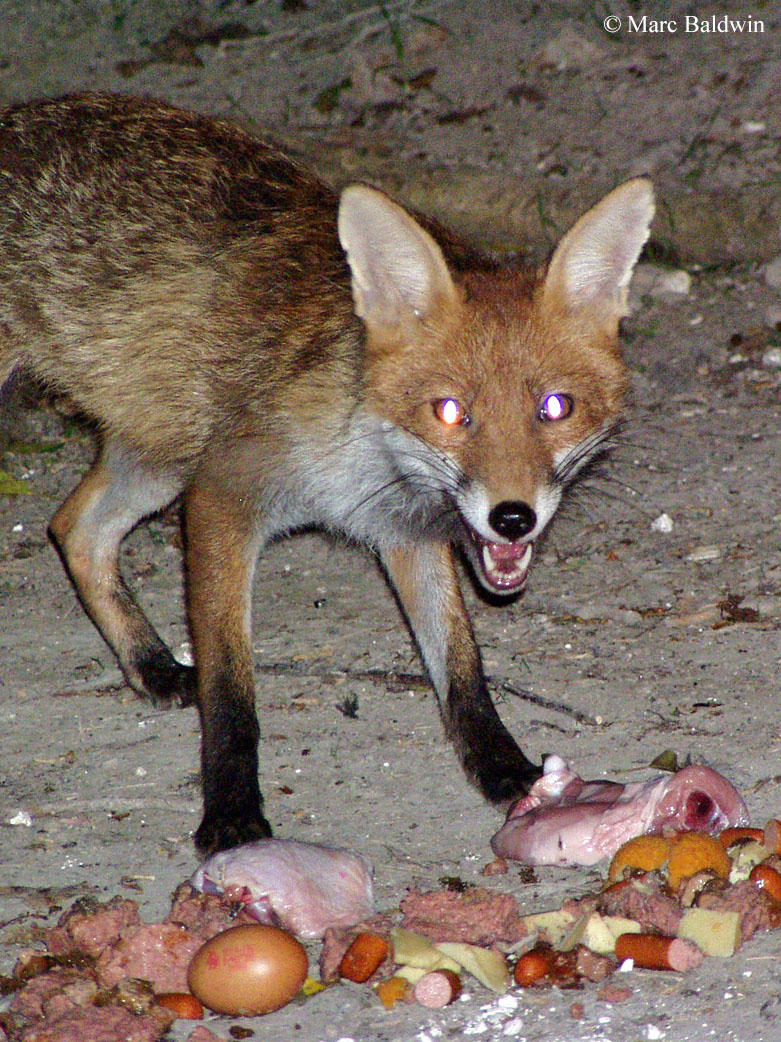
The problem with putting out a lot of food is that it alters the foxes' behaviour – specifically it has the effect of concentrating their activity and, hence, any disturbance they may cause and recent work by Jo Dorning and Stephen Harris at Bristol suggests it affects female more than male behaviour. When bountiful food is provided, two things initially happen.
Firstly, the foxes tend to move around less; they don't need to cover as much ground to get their daily 'rations', and this gives them more time to relax and play in and around the garden. Secondly, they start caching surplus food for later retrieval; some will be buried in the garden in which they're being fed, but more will end up in neighbouring gardens. Over a longer timescale, if food provision remains high, the foxes may reduce the size of their territories and this can lead to more foxes in the area. When food is abundant there is also often less pressure for cubs to disperse, resulting in an increase in family group size.
Everyone has their opinion on the right, and wrong, way to feed foxes; in the end, it’s likely to vary based on the fox(es) you're feeding, where you live, and how tolerant your neighbours are of wildlife. In my experience, a couple of handfuls of peanuts or dog biscuits sprinkled around the garden every few days will keep the fox occupied long enough to get a decent view and probably some photos without having any significant impact on its normal foraging behaviour.
Always a fox?
There is no doubt that one substantial attraction for foxes is livestock and they have a bad reputation for killing small pets and fowl. The kill itself is seldom witnessed and assumptions are often made. It is worth remembering, particularly in an age of ‘fake news’, that things are not always as they appear. Let’s be clear, foxes will take chickens, rabbits, guinea pigs and most other small pets if the opportunity presents itself. They may also attack cats, although, contrary to popular tabloid headlines, such incidents appear to be rare (see QA). Before you go to the trouble and expense of purchasing repellents, however, it is worth taking the time to ensure the culprit is actually a fox.
A case in point occurred recently when some friends of my parents came home to find all the chickens in their coop, in their garden in rural Cornwall, dead. In this particular case, however, the culprit was still in the chicken run among the bodies; not a fox, but a neighbour’s Jack Russell. Had the dog found its way back out of the coop before the owners arrived home, one wonders whether the losses would've been attributed to a fox. I am aware of other examples where badgers, stoats, weasels and even rats have caused similar damage having gained access to a coop, and I know of at least two instances where a pet cat was attacked by a dog that had gotten into the residents’ garden in the early hours.

Assuming the disturbance is caused by a fox, if one of the main attractions in your garden is other animals, whether small pets or livestock, then the attraction must be put out of reach of the fox. The easiest way to do this is to ensure they are locked away in a secure coop/run at night and, because foxes may be around during the day as well as at night, only allowed free range of the garden while you're there to supervise. The following covers housing small pets and livestock in domestic gardens. Enclosure, fencing and guardian animals are variously practical for large domestic or commercial situation.
Securing pets and livestock
Ducks, geese, chickens, rabbits and guinea pigs should be put away at night in secure hutches or cages. When thinking about what constitutes “secure”, it is exceedingly important not to underestimate how resourceful and persistent foxes can be. Hutches with simple twist closures are insufficient to prevent a fox gaining access, each door must have at least one -- ideally two, one at the top and one at the bottom -- bolts that latch in place. Pets should be shut away at or before twilight. Most fowl will begin to settle down for the night at twilight, and my experience suggests that it takes only a couple of days of being ushered into a hutch for the night for them to realize this is where they should sleep, although I know chickens sometimes rebel.
Securing a flock of chickens for the night is more involved than securing a pet rabbit or duck. In their book Ducks and Geese at Home, Michael and Victoria Roberts present three practical alternatives to sitting outside the chicken coop all night with a shotgun. The first, and most elaborate, method involves building a two metre (6 ft.) high wire fence around the chickens, with electric wires running around the perimeter of the fence at the top and bottom. The second method involves a two metre (6 ft.) fence with an overhang at the top, slanted out at about 45-degrees and wire at the base of the fence running out to about 60cm (2 ft.). The third method is the same as the second, but with a one metre (just over 3 ft.) plateau at the top to stop the fox climbing up and over the fence. It seems that the most important factor to remember is that foxes will dig as well as climb, so netting should be dug into the ground or laid flat on the ground around the fence to prevent the fox from digging its way under.

In her 2014 book A Family Guide to Keeping Chickens, Anne Perdeaux notes that, if the run is a permanent fixture, you can pave the floor and cover the slabs with wood shavings or hemp bedding. (Anne points out, however, that the chickens’ persistent scratching means that they may start digging themselves out of permanently sited runs, which is why people often opt for movable ones.) The wire mesh should be buried at least 30cm/12 in., and ideally 50cm/20 in., into the ground, or a secure floor (wooden, metal, paving slabs, etc.) included in the design.
In most cases, placing paving slabs around the perimeter of the enclosure, perhaps also either burying the mesh into the ground or having it run out under the slabs, is sufficient to prevent the fox digging under the fence. Ideally, to do away with lips and over-hangs, the roof of the run should be covered by mesh thus completely enclosing the residents. When thinking about what to construct your run/coop from, the frame must be either metal or treated wood (which will, over time, still rot) with sturdy fixtures.
Perhaps the most important point to remember when constructing or purchasing a house for your livestock is that chicken wire is not sufficiently strong to keep a fox out and foxes can easily bite through it – it was designed to keep chickens in, not keep predators out. Fences should be composed of strong welded mesh, the lower the gauge the better – choose 12 or 14 gauge for maximum security. How ever you construct your coop/run, it is important that you regularly check it for weak spots (signs of digging/scratching/biting, rust/rot, loose fixtures, and so forth) and repair them as they arise.
Cats can be vulnerable to fox predation, and there have been suggestions that cases have increased in recent years. I appreciate that statistics offer no comfort to someone who has lost their cat, but incidents are still thought rare and there are no data suggesting that foxes in general pose a significant to cats (see QA). Indeed, in the majority of documented accounts the two either ignore one another, or the cat chases the fox. It is obviously not possible to lock your cat away in a hutch at night, but keeping it in at night will reduce the likelihood of it encountering a fox; it may also benefit the local wildlife as cats tend to do most of their hunting in the early hours.
Ultimately, I think it is fair to say that foxes can cause problems for people and, in order to resolve the problem, we need to employ a common sense approach. Remove or disguise, as far as possible, the temptation that draws foxes in and, where this isn’t possible, repellents and fencing can be extremely successful in addressing the problem. Remember, despite what we may think, foxes are individuals and will vary in their response to repellents; there are many different options available, so if one doesn’t work, try something else. Don’t give up, persevere and if you need step-by-step advice on building fox-proof enclosures, or on any aspect of fox deterrence, The Fox Project operates a deterrence helpline on 01892 826222.
Fox Deterrent Links
British Pest Control Association - The body representing the Pest Control industry.
The Fox Project Deterrent Helpline - Free advice on the application of repellents and pet security.
Fox Repellent Expert - Reviews of deterrents as well as blogs and FAQs on keeping foxes out of your garden.
Fox Solutions - Advice and online shop for fox deterrents and repellents.
FoxWatch Ultrasonic Deterrent
Home and About - Selling various repellents, including a spray repellent to deter foxes.
Agrisellex Electric Fencing - Information on, and sales of, electric fencing. This page contains details on the exclusion of foxes using such fences.
National Fox Welfare Society: Fox problems - Information about common fox nuisance problems and how to address them.
Check-a-Trade - A reliable, rated searchable database including various pest control companies from across the UK.
DISCLAIMER: Links are provided for the purposes of information and further research only – their inclusion here is not an endorsement of the product(s).